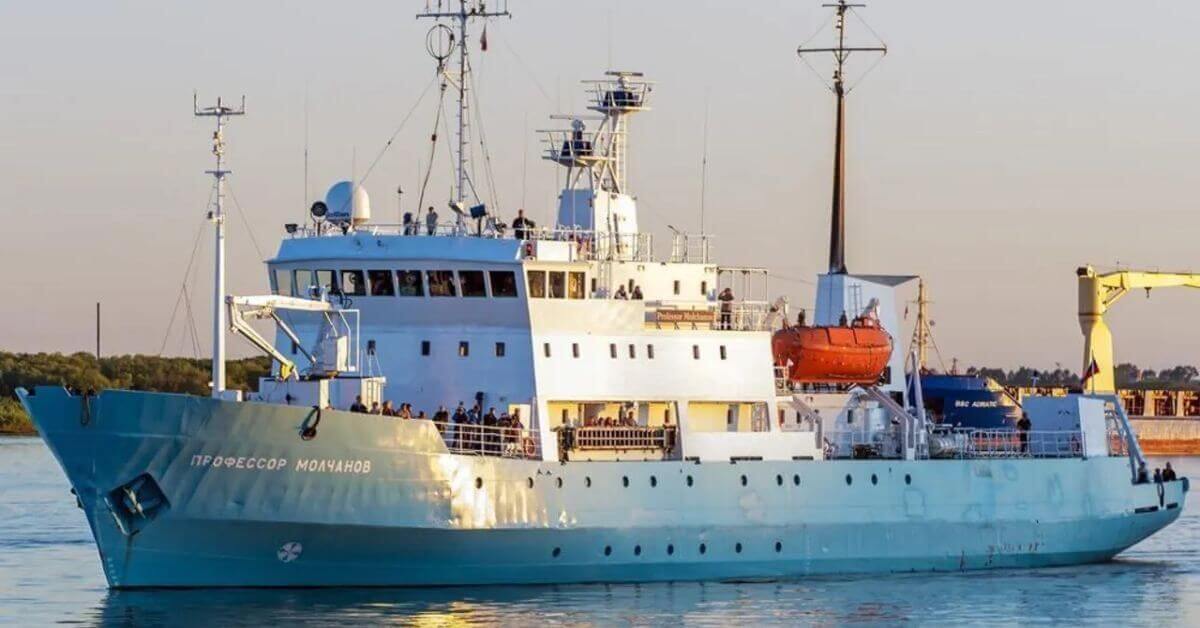
When a Norwegian court ordered the seizure of the research vessel *Professor Molchanov* at the request of Ukraine's state energy company Naftogaz, the immediate story was one of legal entanglement and diplomatic friction. Yet the subsequent stranding of 69 Russian crew members in the Arctic, and Norway's decision to assist them, reveals a more layered reality. This is not simply a case of maritime law colliding with geopolitics. It is a calibrated test of how scientific and humanitarian norms survive when they are pulled into the crosscurrents of international dispute.
The vessel itself is a research ship, not a military asset. Its crew were not combatants. Their stranding in a remote Arctic port underscores a practical consequence of sanctions and asset seizures that often goes unremarked: the people operating oceanographic and climate monitoring platforms can become pawns in conflicts far removed from the science they support. This is a pattern we have seen before. Russia's recent push to Russia Calibrates Export Revenue for Northern Sea Route Icebreaker Fleet suggests a state willing to pour billions into Arctic infrastructure for strategic leverage. Meanwhile, the Vostok Project Launches Arctic Oil Exports Amid Geopolitical Shifts signals that commercial extraction will continue regardless of diplomatic temperature. In this context, a research vessel's detention is not an anomaly, it is a symptom of the Arctic becoming a theater for resource competition dressed in legal arguments.
Our take is straightforward: the ocean does not recognize the borders we draw, but the ships that study it are entirely subject to them. For researchers and policymakers who rely on integrated data ecosystems and climate indicators from the Arctic, this incident is a warning. When a vessel like *Professor Molchanov* is immobilized, the data stream it generates is interrupted. That is not a political abstraction, it is a measurable loss of empirical coverage in a region where longitudinal records are already sparse. We would tell any colleague asking about this story to watch how Norway balances its legal obligations under the seizure order with its humanitarian duty to stranded mariners. That balance will set a precedent for how other Arctic nations handle similar incidents.
The concrete point to watch is whether the crew's repatriation creates a diplomatic channel that outlasts the legal dispute. If Norway's assistance leads to a de-escalation in maritime tensions, it could offer a model for separating humanitarian action from political conflict. If it does not, the Arctic's research fleet will continue to operate under the shadow of seizure, and the ocean intelligence we depend on will be the quieter casualty.