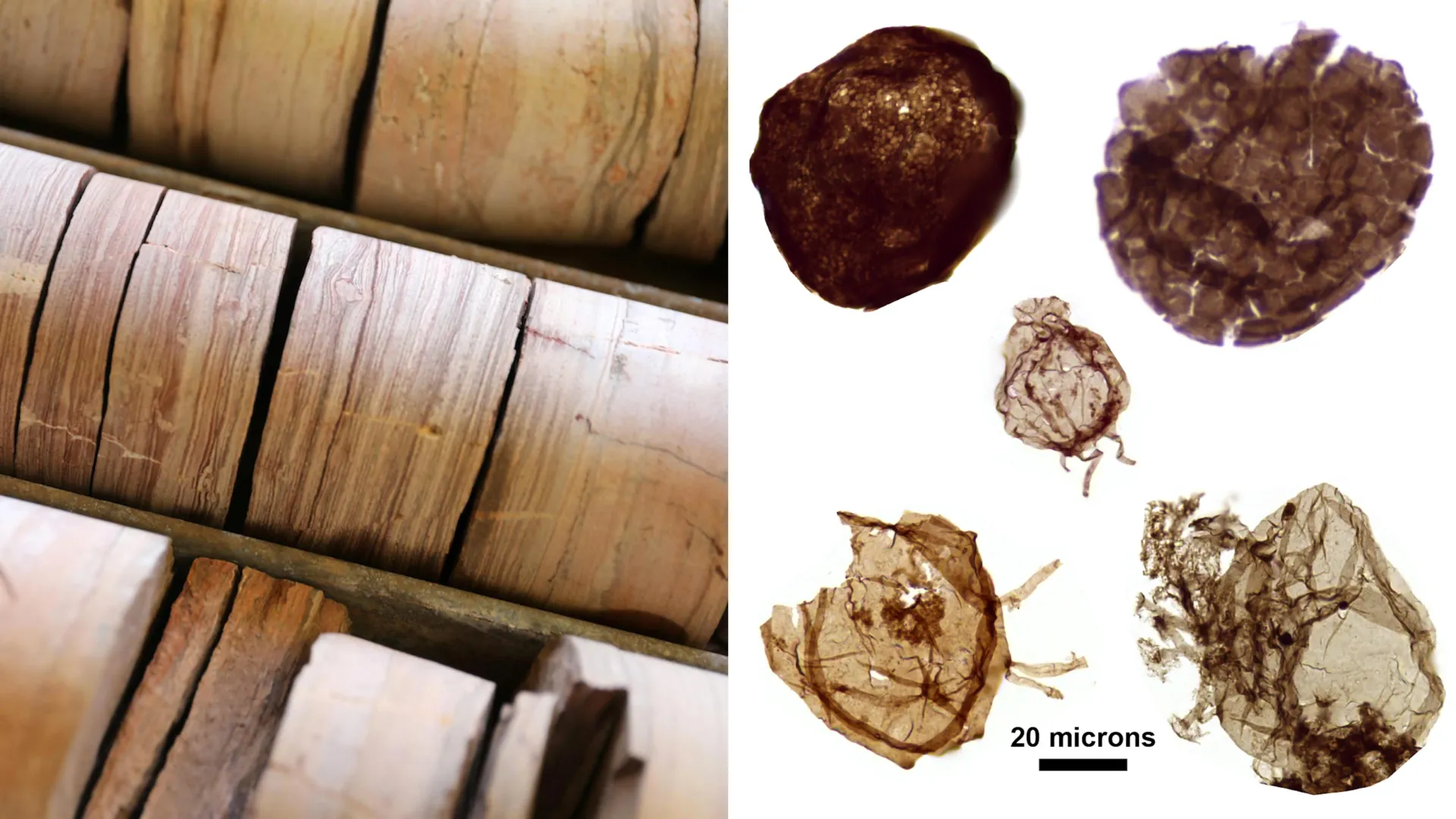
A twelve-thousand-fossil record linking oxygen to the rise of complex life is exactly the kind of empirical anchor that science needs. Researchers examining ancient Australian rocks have uncovered more than 12,000 fossils from some of the earliest eukaryotes, mapping where these complex cells could and could not survive. The pattern is clear: oxygenated environments harbored these cells; anoxic zones held only simpler microbes. It is a straightforward, measurable correlation that strengthens a long-standing hypothesis with a dataset large enough to demand attention. This is not speculation. This is a calibrated observation of what the fossil record actually contains.
What makes this study particularly illuminating is its granularity. The fossils span environments from coastal mudflats to open ocean, meaning the correlation between oxygen availability and eukaryotic presence holds across varied settings, not just a single favorable niche. That geographic range adds weight to the inference that oxygen was a prerequisite, not merely a coincidence. For readers tracking climate indicators and ocean health, the practical implication is immediate: oxygenation has shaped life's trajectory at a fundamental level. If we want to understand how marine ecosystems respond to deoxygenation today, a trend documented in real-time across warming seas, this deep-time record offers a baseline. It suggests that declining oxygen does not just alter habitats; it may structurally limit the complexity of life those habitats can support.
This study also connects to adjacent puzzles. For example, recent work on Magma and microbial activity may rewrite a 2-billion-year-old carbon signal questions whether ancient chemical signatures always mean what we thought. Both studies remind us that the geological and biological records require constant recalibration. Meanwhile, research on an Extreme Thermophile Amoeba Expands Limits of Complex Life's Heat Tolerance shows that the boundaries for eukaryotic survival are wider than previously measured. Taken together, these findings paint a more integrated picture: oxygen opens the door for complexity, but temperature and chemistry set additional constraints. The integrated data ecosystem we now build, linking paleontology, geochemistry, and microbiology, is what will let us test these interactions.
Our take is straightforward: this twelve-thousand-fossil record is not merely a confirmation of an old idea. It is a dataset that should inform how ocean intelligence models project the limits of complex life under future scenarios. The specific takeaway a reader could quote is this: "Oxygen availability was the gatekeeper for complex life's emergence, and that relationship remains active in today's deoxygenating oceans." Watch for follow-up studies that model precisely where oxygen thresholds lie, those numbers will be the ones that matter for conservation and policy.