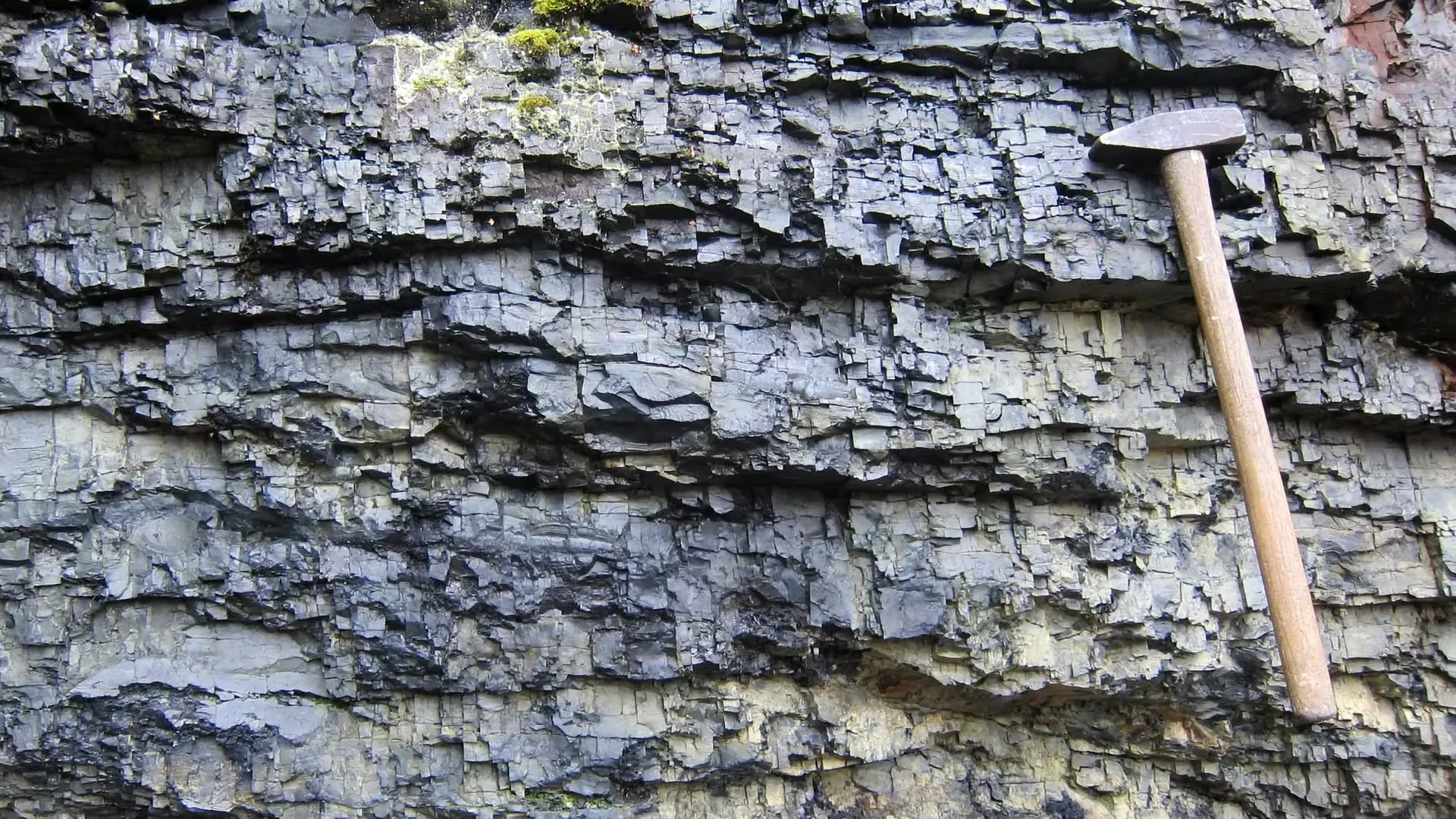
For two billion years, a single chemical signature has stood as a pillar in our understanding of Earth's ancient carbon cycle. Now, researchers suggest that pillar may be partly an illusion, the product of local magma, hydrocarbons, and methane-eating microbes rather than a planetary-scale event. This is not a small footnote in the geological record. It is a reminder that the deeper we look, the more we realize how much of what we "know" is built on interpretations that can be revised, recalibrated, and, when necessary, rewritten.
The finding matters because it speaks directly to how we read deep time. The original interpretation of that carbon signal was elegant, and elegance is often suspicious. It fit a narrative about oxygen rising and life responding in kind. But the new work suggests that local processes, active near ancient volcanic systems, could have generated the same chemical fingerprint without any global upheaval. That distinction is not academic. It changes the questions we ask about the early Earth and, by extension, the frameworks we use to model long-term climate and carbon dynamics. If we misread a two-billion-year-old signal, how many other assumptions are we carrying forward uncritically?
This is where the story connects to the present. In our own coverage, we have seen how El Niño's Unprecedented Ocean Warming: A Record Broken forces us to confront the limits of short-term observational records, while Long-Term Monitoring Reveals Carbon Cycle Dynamics in Bohai Sea demonstrates the value of sustained, empirical data collection in a system under pressure. Both stories share a common thread with the magma and microbial discovery: they remind us that context matters. A single measurement, a single signal, a single year of data, none of it means much without a framework that accounts for local variability, background noise, and alternative explanations. The same discipline that keeps a marginal sea honest applies to the Precambrian.
What should readers take from this? First, that scientific authority is not about certainty but about the willingness to overturn a comfortable story when the evidence demands it. The researchers did not set out to dismantle a classic; they followed the data. That is the empirical method working as intended. Second, this should temper how we speak about climate indicators today. If we are still revising the narrative for events that happened two billion years ago, we should hold our modern projections with appropriate humility. Not because the physics is uncertain, but because the Earth system is complex in ways we are only beginning to map.
The concrete point to watch is this: if local processes can mimic global signals in the ancient rock record, then our confidence in any single proxy, whether for carbon, oxygen, or temperature, must be calibrated against independent lines of evidence. The next time you read a headline about a planetary tipping point or a carbon cycle shift, ask whether the underlying data could be explained by something more local, more mundane, and more difficult to see. The answer might not be comfortable, but it will be honest. And honesty, in science and in stewardship, is the only sustainable foundation we have.