eukaryotes
2 stories filed under eukaryotes on World Data Ocean. The newest of them: “A twelve-thousand-fossil record links oxygen to the rise of complex life” and “Incendiamoeba Sets New Limit for Eukaryotic Heat Tolerance”. Twelve thousand fossils from ancient Australian rocks now offer the most direct evidence yet that oxygen enabled complex life to emerge. A single-celled organism has just redrawn the upper limits of complex life. A Global Hub for Ocean Intelligence 4 World Data Ocean is a centralized digital platform where researchers, scientists, and ocean enthusiasts converge to… The list below is every eukaryotes story on World Data Ocean, newest first.
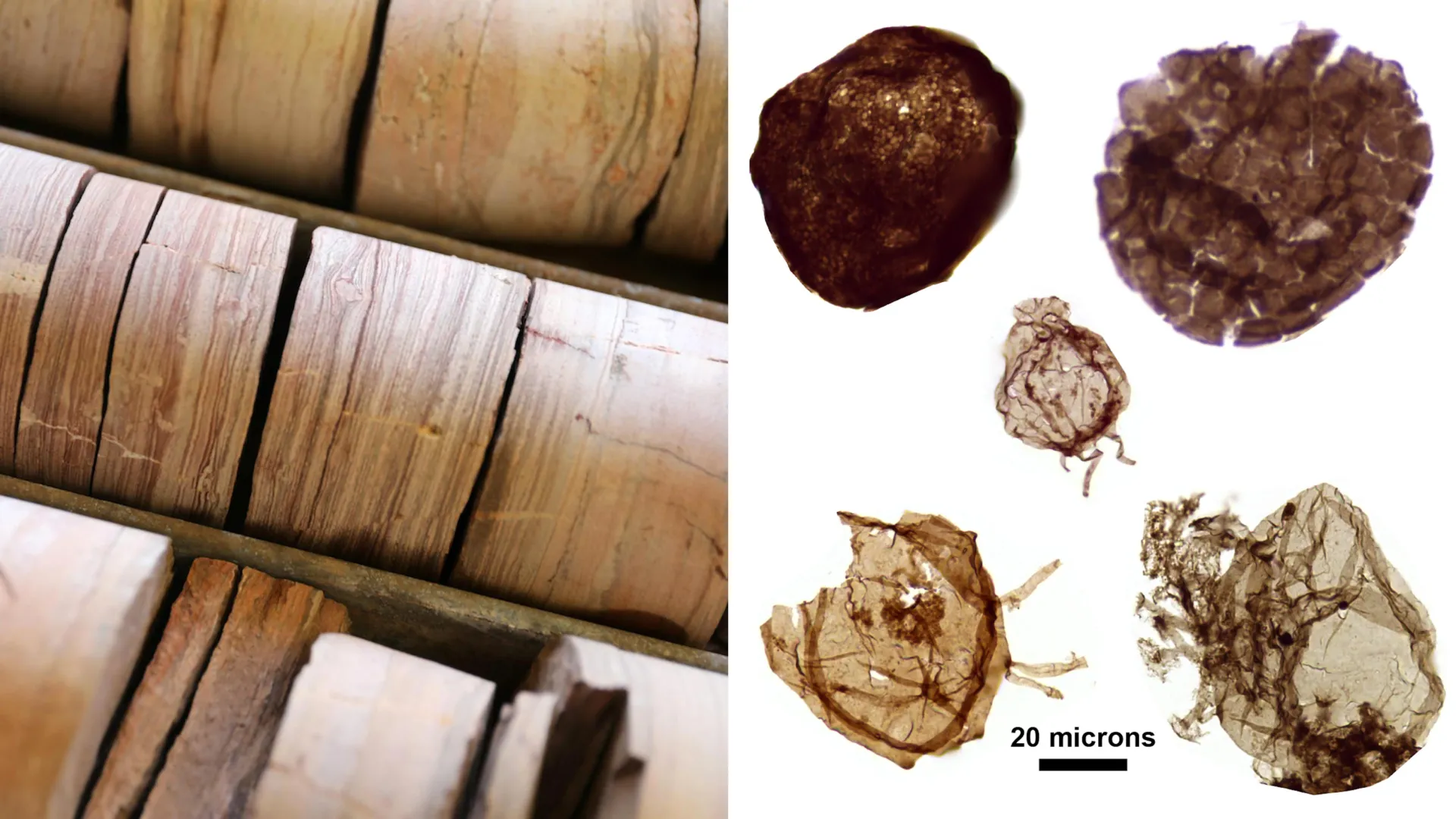
A twelve-thousand-fossil record links oxygen to the rise of complex life
Twelve thousand fossils from ancient Australian rocks now offer the most direct evidence yet that oxygen enabled complex life to emerge. These early eukaryotes flourished in coastal mudflats and open seas, but only where oxygen was present. Oxygen-free zones hosted only simpler microbes. This empirical record strengthens a long-held hypothesis with measurable, validated data. For deeper context on how environmental factors shaped early life, see our coverage of "Magma and microbial activity may rewrite a 2-billion-year-old carbon signal.

Incendiamoeba Sets New Limit for Eukaryotic Heat Tolerance
A single-celled organism has just redrawn the upper limits of complex life. Incendiamoeba cascadensis can replicate at 145° F, a new record for eukaryotic heat tolerance that recalibrates what we thought possible for organisms with a nucleus. This isn't a marginal uptick; it's a genuine expansion of a biological boundary. The discovery invites us to rethink the resilience of life's building blocks. For deeper context on how survival traits manifest across species, our piece on fossilized dinosaur plumage offers a compelling parallel.