ecosystem health
ecosystem health at World Data Ocean is a file of 36 stories. The newest of them: “Rebuilding reefs with engineered structures to restore lost marine habitat complexity”, “Prey fish nutrition shapes health risks for Indo-Pacific humpback dolphins”, and “2024 Follows 2023, a Second Record Year of Rising Climate Indicators”. Rebuilding reefs with engineered structures is a response to a measurable crisis: coral habitats across the Western Atlantic are flattening, losing the structural complexity that drives biodiversity and ecosystem… The nutritional quality of prey fish directly shapes health risks for Indo-Pacific humpback dolphins, a finding grounded in empirical, peer-reviewed data. A Global Hub for Ocean Intelligence 4 World Data Ocean is a centralized digital platform where researchers, scientists, and ocean enthusiasts converge to… The list below is every ecosystem health story on World Data Ocean, newest first.

Rebuilding reefs with engineered structures to restore lost marine habitat complexity
Rebuilding reefs with engineered structures is a response to a measurable crisis: coral habitats across the Western Atlantic are flattening, losing the structural complexity that drives biodiversity and ecosystem function. This is not about simple restoration, it is about deploying habitat support structures designed to instantaneously increase relief and promote species persistence across life stages. The approach is empirical and integrated. For deeper context on how such structures connect to broader infrastructure, see our coverage of Belgium's First Artificial Energy Island.
Prey fish nutrition shapes health risks for Indo-Pacific humpback dolphins
The nutritional quality of prey fish directly shapes health risks for Indo-Pacific humpback dolphins, a finding grounded in empirical, peer-reviewed data. This is not merely a food web observation, it is a calibrated, measurable link between diet and disease in a sentinel species. Understanding drives protection. For deeper context on how observation and biodiversity science inform marine health, see our related coverage of "Biodiversity and human pressure reshape marine ecosystem science."

2024 Follows 2023, a Second Record Year of Rising Climate Indicators
2024 has followed 2023 as a second consecutive record-breaking year for climate indicators, a pattern that demands our attention. The data is measurable and validated, confirming the oceans are sending us early warnings that are growing more urgent. Our related coverage on the accelerating ocean signals is a natural next step. This is not an anomaly; it is a trend that empirically links warming seas to rising atmospheric CO₂. Scientific clarity, not alarm, will guide the response.
Proposed US monitoring cuts risk global loss of calibrated ocean intelligence
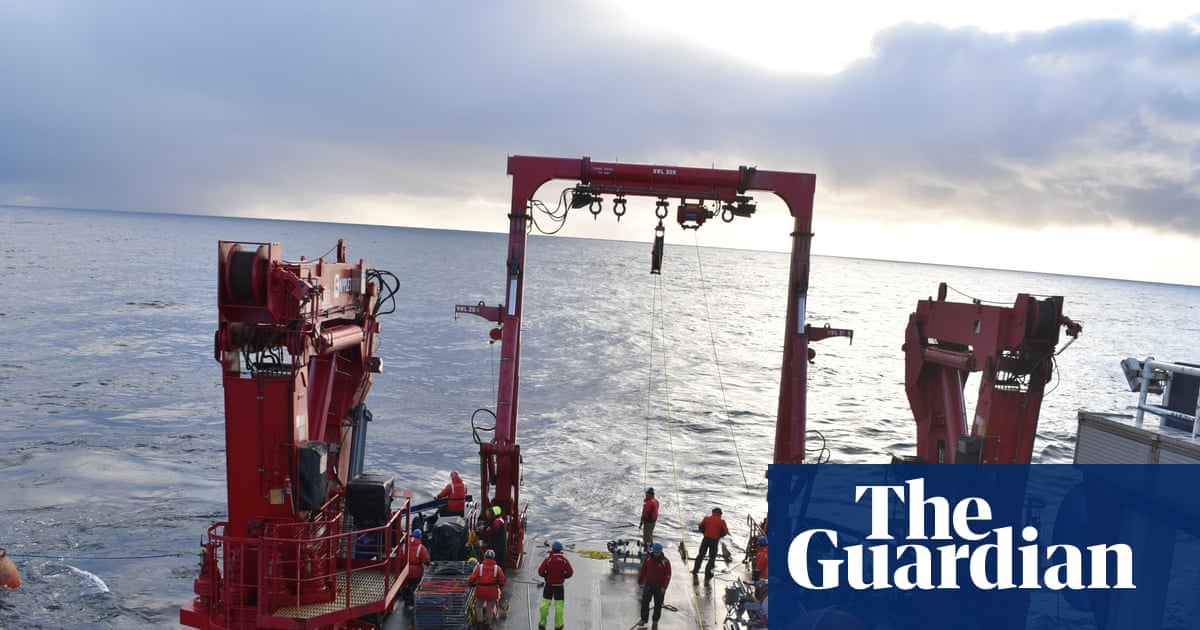
The Trump administration's proposal to eliminate US ocean monitoring systems would strip the world of calibrated, real-time climate intelligence. Scientists warn this leaves us flying blind on ocean warming and sea-level rise. Protecting this integrated data ecosystem is not optional, it is a matter of global scientific integrity. For context on how validated ocean data is built, see our related piece on the NCEI's *Ocean data expands from measured depths to validated insights*. Understanding drives protection; abandoning it invites risk.
Eleven data-driven innovations sharpen our ocean intelligence
Eleven measurable innovations are sharpening our ocean intelligence. From validated carbon tracking systems to data-driven models revealing how the atmosphere forces ocean dynamics, each tool adds a calibrated layer to our understanding. These are not abstract concepts, they are empirical, peer-reviewed advances that make ocean stewardship actionable. The Ocean Carbon and Acidification Data System in *Nature* exemplifies this: validated data powering a measurable path forward. Understanding drives protection. From orbit to ocean floor, the evidence is building.
Validated hawksbill stocks reveal a hidden reef sentinel in the Florida Keys
Seventy-six hawksbill turtles hand-captured across a decade of shallow-reef surveys in the Florida Keys National Marine Sanctuary tell a clear story: these waters are critical nursery grounds for a highly imperiled species. Mixed-stock DNA analyses reveal a shifting population, with Mexican rookery dominance waning and diversity increasing. The sanctuary's shallow reefs serve as essential entry points for post-oceanic hawksbills. For deeper context on sustained ocean observation, see our coverage of Africa's first permanent ocean observatory. Understanding drives protection.

Photon Marine's floating battery powers a new electric workboat for New York waters
A floating battery is about to prove its worth in New York waters. Photon Marine has secured a $1 million award to deploy an electric workboat, fast charger, and floating energy storage platform. This is practical ocean intelligence, empirical, measurable, and deployed where it matters. We track coastal innovation because understanding drives protection. For another look at how data meets real-world marine challenges, see our coverage of satellite and field data merging to track harmful blooms in El-Mex Bay.
Satellite and field data merge to track harmful blooms in El-Mex Bay
In August, Sentinel-2 pixels in El-Mex Bay lit up with red tide signals, marking the season's most intense bloom. The study's strength lies in pairing RTI and NDCI spectral indices with field data to confirm what drove the summer succession: warm water and nutrient pulses favored *Prorocentrum cordatum* and *Heterosigma akashiwo*. That integrated approach turns satellite imagery into a practical early-warning tool. For readers tracking broader monitoring efforts, our related piece on citizen science offers a complementary view of closing coastal observation gaps.
Tracking Wetland Change: A Satellite Framework for Coastal Resilience
The Coastal Bend of Texas has lost 193 square kilometers of wetlands since 1984, a 17% decline that accelerated sharply between 2008 and 2016. That is not a distant problem; it is a measurable transformation happening now. The study's tools, WET-MUD and WHAMS, turn satellite records into actionable intelligence, distinguishing wetland extent from wetland health with 93% overall accuracy. This framework matters because it makes long-term monitoring reproducible elsewhere, turning raw data into a practical defense for vulnerable coastlines. Understanding drives protection.
Fiddler Crabs' Adaptive Strategies Reveal Resilience to Warming Mangrove Habitats
For over sixty years, the mangrove fiddler crab *Paraleptuca chlorophthalmus* has been recognized as a sentinel of ecosystem health, yet its full thermal response remained unmeasured. Our new research closes that gap. We find that while the crab's metabolism peaks near 33°C and falters beyond 42°C, its locomotor activity remains stable across a far wider range, 22 to 38°C. This behavioral buffer suggests the species is thermally equipped to persist under projected warming.

Indian Ship Recycling Yards Gain EU Approval, Boosting Sustainable Practices
The European List's inclusion of two Indian ship recycling yards marks a measured step toward higher operational standards. This approval validates years of investment in safer, cleaner practices, aligning the subcontinent's capacity with the compliance demands of global shipping lines. It is a practical win for an industry often scrutinized for its environmental record. For readers tracking naval advancements, our coverage of the Kiwi Frigate's sanctions monitoring offers a complementary look at maritime governance.
Microbial Shifts Reveal Ecosystem Health in Shrimp Aquaculture Systems
Microbial communities do not merely reflect conditions in aquaculture; they carry a measurable signal of system health. This study tracked prokaryotic succession across three commercial *Litopenaeus vannamei* systems, pairing 16S rRNA sequencing with functional predictions to connect diversity shifts to cultivation design. The contrasts were sharp: earthen brackish ponds offered stability but hosted rising pathogenic genera, while concrete seawater systems showed higher metabolic potential yet greater turnover. That tension, between resilience and risk, is precisely the kind of empirical trade-off worth heeding.

EU Ship Recycling Decision Risks Undermining Regulation Standards
Approving these two beaching yards would signal that the EU Ship Recycling Regulation is open to interpretation, and not the rigorous kind. The NGO's concern is valid: such a decision risks undermining the very standards the regulation was designed to enforce. We cannot claim to champion ocean stewardship while endorsing practices that fall short of measurable, peer-reviewed safety and environmental benchmarks. This is a moment for calibrated, integrated oversight, not a step backward.
Ballast Water Filtration: A Practical Tool for Reducing Marine Microplastics
A 50 μm screen filter on a commercial ballast water management system captured 83.5% of microplastics during a single backwash event. That is not a lab-scale estimate; it is a measured retention from 147,769 particles entering the filtration unit. This study offers quantitative evidence that existing infrastructure can intercept plastic pollution during routine operations. The finding reframes ballast treatment as more than a compliance step; it is a practical tool for ocean stewardship.
New Zealand Dolphins Show Accelerated Aging Linked to Environmental Contaminants
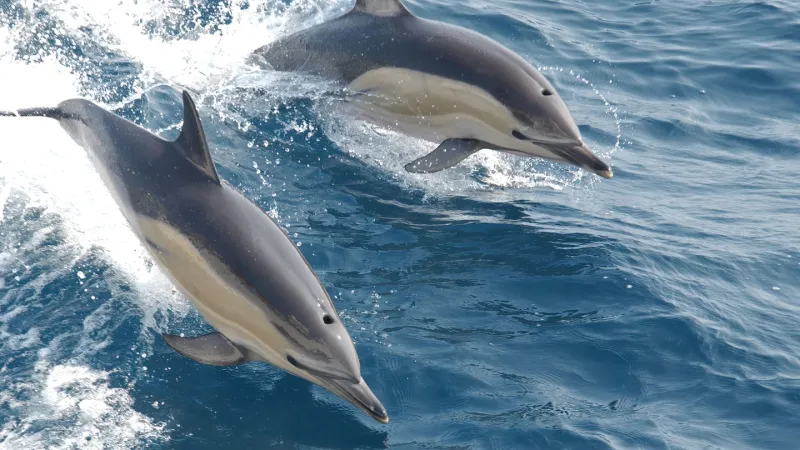
New Zealand's common dolphins are aging faster than their years, and the evidence points to a toxic burden we can no longer ignore. Trace metals and per- and polyfluoroalkyl substances, the so-called forever chemicals, are likely accelerating biological aging in these animals. This is more than a striking data point; it is a measurable indicator of ocean health that demands our attention.
Island Fish Diversity Linked to Climate, Environment, and Human Activity
The waters around China's islands hold more than biodiversity; they hold a diagnostic signal. Our study of eight islands reveals that fish assemblage diversity, measured through taxonomic, functional, and phylogenetic lenses, is not randomly distributed. Northern islands lead, while central ones lag. Marine environment factors exert a strong, positive pull (0.675), whereas socioeconomic pressures push back negatively. Climate acts indirectly, but its negative influence is clear. These empirical findings give us a calibrated baseline for conservation, a step toward integrated ocean intelligence.
Market Tuna in Somalia: Abundance as Indicator of Sustainability?
Visible abundance is not the same as verified sustainability. In Somali markets, the steady presence of tuna can easily read as a sign of healthy stocks, particularly where data is scarce. Yet this perspective article argues that market visibility can mask ecological uncertainty, shaped by demand, global connectivity, fishing pressure, and weak governance. The proposed framework introduces *perceived abundance bias* to explain how frequent sightings mislead. Market signals alone cannot substitute for empirical monitoring, a lesson that extends beyond Somalia to data-poor fisheries worldwide.
Shifting Seagrass: Belize Study Links Decline to Warming and Nutrient Changes
Seagrass ecosystems, vital foundation species for coastal resilience, face escalating threats from climate change and human activity. A longitudinal study within the Turneffe Atoll Marine Reserve, Belize, utilizing the SeagrassNet protocol, reveals a concerning trend: declining *Thalassia testudinum* abundance and a shift towards *Syringodium filiforme*, with complete habitat loss observed in shallow transects by 2025. These changes correlate directly with reduced light, elevated phosphate, and increased water temperatures.
eDNA: Illuminating Biodiversity for Effective Conservation and Ecosystem Health
Biodiversity loss presents a critical global challenge, demanding innovative monitoring solutions. Environmental DNA (eDNA) offers a transformative, non-invasive approach to ecological assessment. By analyzing DNA shed by organisms in soil and water, eDNA enables detection of rare species and provides ecosystem-level insights, revolutionizing conservation research. While advancements continue, rigorous calibration and validation remain essential.
Shifting Seal Habitats: Caspian Regression Impacts Endangered Population
The Endangered Caspian seal ( *Pusa caspica*), a vital indicator of Caspian Sea ecosystem health, faces increasing pressure from ongoing sea-level regression. Recent aerial surveys reveal a critical concentration of molting seals on shrinking island haul-out sites in the northeastern Caspian Sea – areas experiencing a dramatic coastline shift averaging 44.1 to 163.7 km westward since 1995. Geospatial analysis of satellite imagery underscores this rapid transformation, with islands disappearing at an accelerating rate, potentially forcing seals into conflict with expanding industrial activity.
Mapping Cetacean Habitats: Understanding Mediterranean Ecosystem Health
Cetaceans serve as critical indicators of marine ecosystem health, yet comprehensive understanding of their spatial ecology within the Mediterranean Sea remains a challenge. This study presents a basin-scale assessment of habitat suitability for eight cetacean species, utilizing validated survey data from 2006-2016 and rigorous species distribution modeling. Our analysis, integrating oceanographic zoning and predictive modeling, identifies key environmental determinants—primarily sea surface temperature, productivity gradients, and seabed topography—shaping cetacean distribution.
Human Impact and Climate Shape Oxygen Levels in South American Estuaries
Dissolved oxygen (DO) dynamics in eastern tropical South American estuaries are critically influenced by both human activities and climate variability, impacting overall ecosystem health. A recent study examined temporal and spatial DO fluctuations across three coastal sectors, identifying hypoxia (DO <4.0mgL⁻¹) linked to elevated pollutants, particularly in the Metropolitan sector. Climate events, such as El Niño–Southern Oscillation (ENSO), exacerbated hypoxia during drought periods.
Mapping Macrofauna: Linking Estuary Life to Turtle Nesting in Rushikulya
The Rushikulya estuary, located on the eastern coast of India, is a vital habitat for the Olive Ridley turtle (Lepidochelys olivacea) and supports a rich macrobenthic community. This study investigates the relationship between macrobenthos and environmental drivers over four seasons, identifying 43 taxa, predominantly polychaetes. Significant correlations were found between macrofauna distribution and factors like salinity and nitrite levels. The findings highlight the importance of macrobenthos as bioindicators, providing essential insights for ecological monitoring and sustainable policy development.
Imidacloprid Exposure Alters Lobster Behavior, Raising Ecosystem Concerns
Recent research highlights the impact of low-dose imidacloprid (IMI) exposure on the defensive behaviors of adolescent American lobsters (Homarus americanus), a vital species for both ecosystems and economies. This study reveals that even sublethal concentrations of IMI significantly impair crucial behaviors, such as tail flipping and righting performance, with potential long-term ecological consequences. Notably, the findings suggest that behavioral assessments may serve as more sensitive indicators of environmental stress than traditional physiological measures.