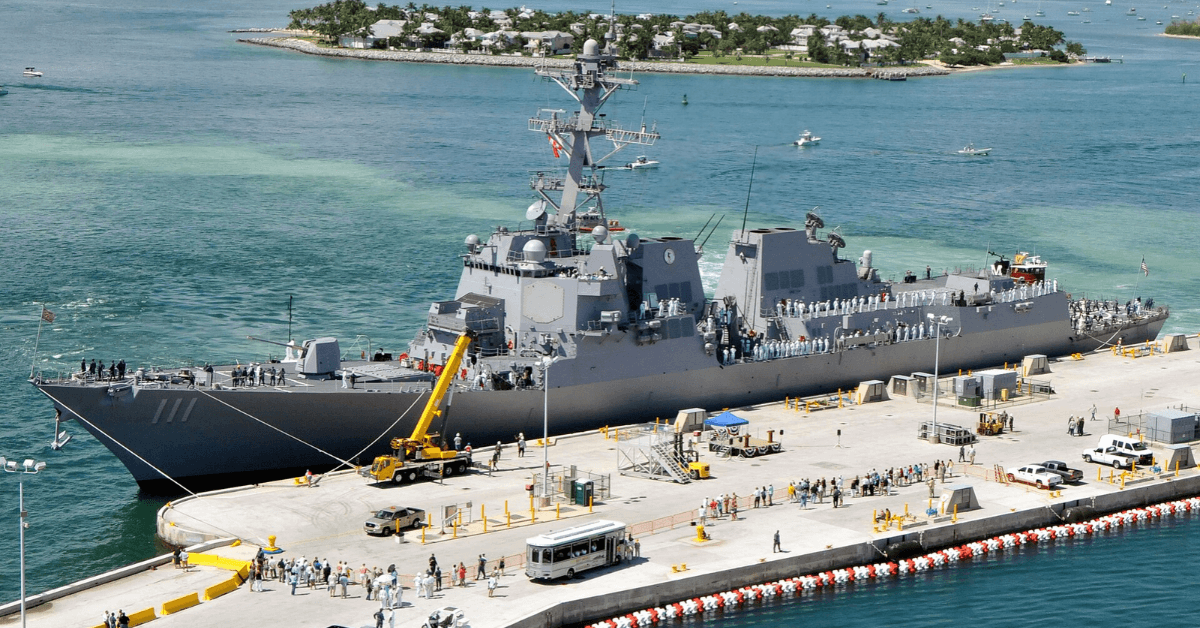
The USS Spruance's 357-day deployment is not just a new record for naval endurance; it is a calibrated stress test of how maritime power must operate in an era defined by persistent threat and logistical precision. This was not a routine patrol. The destroyer fired Tomahawk missiles into Iran during Operation Epic Fury, shot down 16 inbound drones and anti-ship cruise missiles, and enforced a blockade that included disabling the Iranian-flagged cargo ship Touska. These are not abstract metrics. They are empirical data points that redefine what sustained combat readiness looks like for a crew of 300 sailors operating across three fleet areas over 88,000 nautical miles.
For our readers, researchers, policymakers, and those tracking maritime security, the practical takeaway is that endurance has become a strategic variable as measurable as missile range or sensor coverage. The Spruance's deployment was originally planned for seven months and was extended to support operations against Iran. That extension required 43 underway replenishments and the transfer of 8.6 million gallons of fuel. This is the integrated data ecosystem of naval logistics in real-time: every gallon transferred, every helicopter sortie flown by HSM-71, every hour of flight time becomes a validated input for future force planning. Compare this with the immediate consequences of failure in the same region. A recent incident saw Naval Mine Ignites Tanker in Strait of Hormuz, Iran Reports, illustrating how quickly ungoverned maritime spaces can turn into kinetic hazards. The Spruance's crew operated under constant threat; their ability to sustain operations for nearly a full year directly correlates with the kind of enforcing maritime safety in the Strait of Hormuz saves lives and ensures data integrity that the IMO has urged states to adopt.
What matters most is what this record means for future deployment models. The Spruance beat the 333-day record set by USS McFaul just a month earlier. That is not a coincidence; it is a pattern. The Navy is testing the outer limits of crew endurance, mechanical reliability, and supply-chain resilience under combat conditions. The ship earned the Presidential Unit Citation and the Combat Action Ribbon, but the real question is whether the human and material costs of such deployments are sustainable. The commanding officer called it the honor of a lifetime and rightly credited the families. Yet the data from this deployment, 190 sorties, 1,150 flight hours, dozens of missile engagements, will be peer-reviewed by planners who must decide if this is a benchmark or a ceiling. The specific detail to watch is how the Navy adjusts its maintenance cycles and crew rotation policies in response to the Spruance's longitudinal performance. That answer will tell us whether this was a one-time surge or the new baseline for naval power.