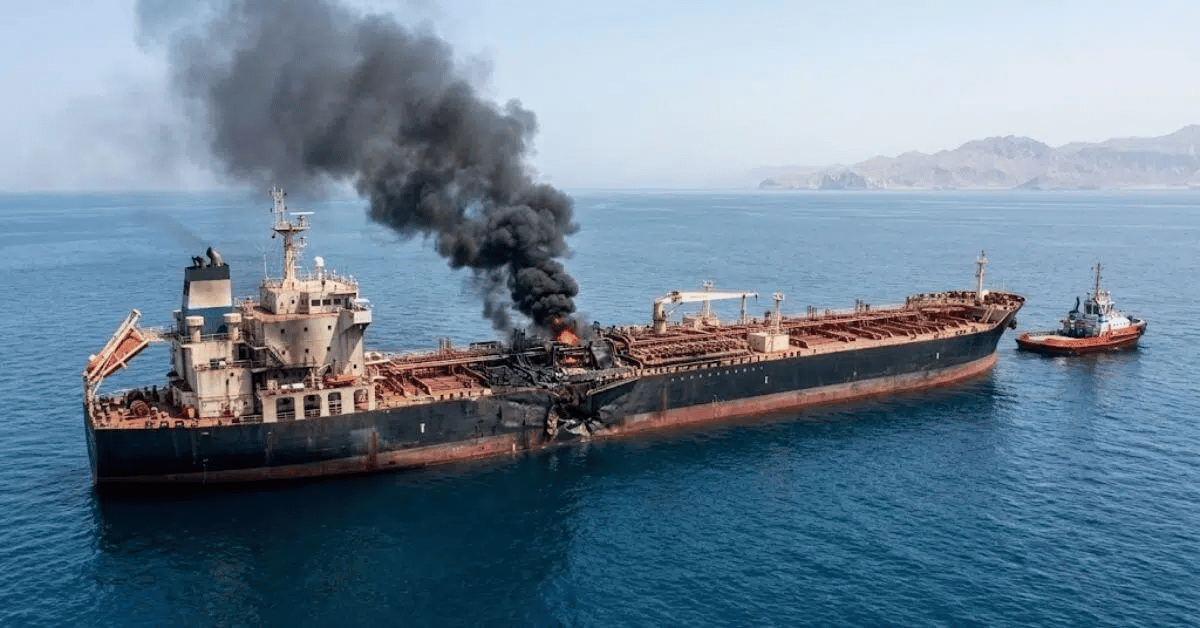
Maritime safety is not a bureaucratic abstraction; it is the difference between a seafarer returning home and a family receiving a casualty notification. The IMO Secretary-General's urgent call for enforcement in the Strait of Hormuz signals that the current erosion of rules has moved from a regulatory concern to a direct threat to human life and the integrity of the data we rely on to understand global shipping. When ships obscure their IMO numbers or sail under fraudulent registrations, they do not just evade accountability, they poison the ocean intelligence that underpins everything from supply-chain forecasting to climate modeling.
The situation is stark. The Secretary-General specifically cited substandard vessels, false flags, and ships transiting without complying with SOLAS provisions. This is not a theoretical gap in governance. As we reported in Projectile Strike on VLCC in Persian Gulf Injures Four Crew Members, the human cost is already being tallied in real injuries to real people. The integrated data ecosystem that tracks vessel identity and compliance is only as good as the enforcement behind it. A ship that deliberately masks its identity is a ship that cannot be held to account for its emissions, its safety record, or its contribution to real-time climate indicators. For researchers and policymakers who depend on empirical, peer-reviewed data, the breakdown in the Strait is not an abstract geopolitical story, it is a corruption of the dataset itself.
The IMO's call for flag States, port States, and coastal States to exercise their responsibilities is a direct appeal to the foundational principle of maritime governance: shared accountability. But the persistence of unsafe practices suggests that voluntary compliance has reached its limit. The Strait of Hormuz stability critical as India seeks safe passage for seafarers underscores how even nations with clear strategic interests find themselves negotiating for a baseline of safety that international law already guarantees. The gap between treaty text and on-water reality is widening, and the consequences are measurable: increased insurance costs, disrupted trade flows, and a measurable rise in risk for every seafarer transiting the chokepoint.
What makes this moment different from previous calls for compliance is the explicit link between maritime safety and the broader conflict dynamics. The Secretary-General urged political solutions to restore a single, internationally recognized navigation framework. That framework is not a luxury, it is the calibrated baseline that allows the global community to validate shipping patterns, track emissions, and ensure that the ocean data we use for climate projections is not contaminated by vessels operating outside the system. The specific question to watch is whether the IMO member states can translate this call into a coordinated enforcement mechanism, or whether the Strait of Hormuz becomes a case study in how data integrity degrades when the rules are only for those who choose to follow them.