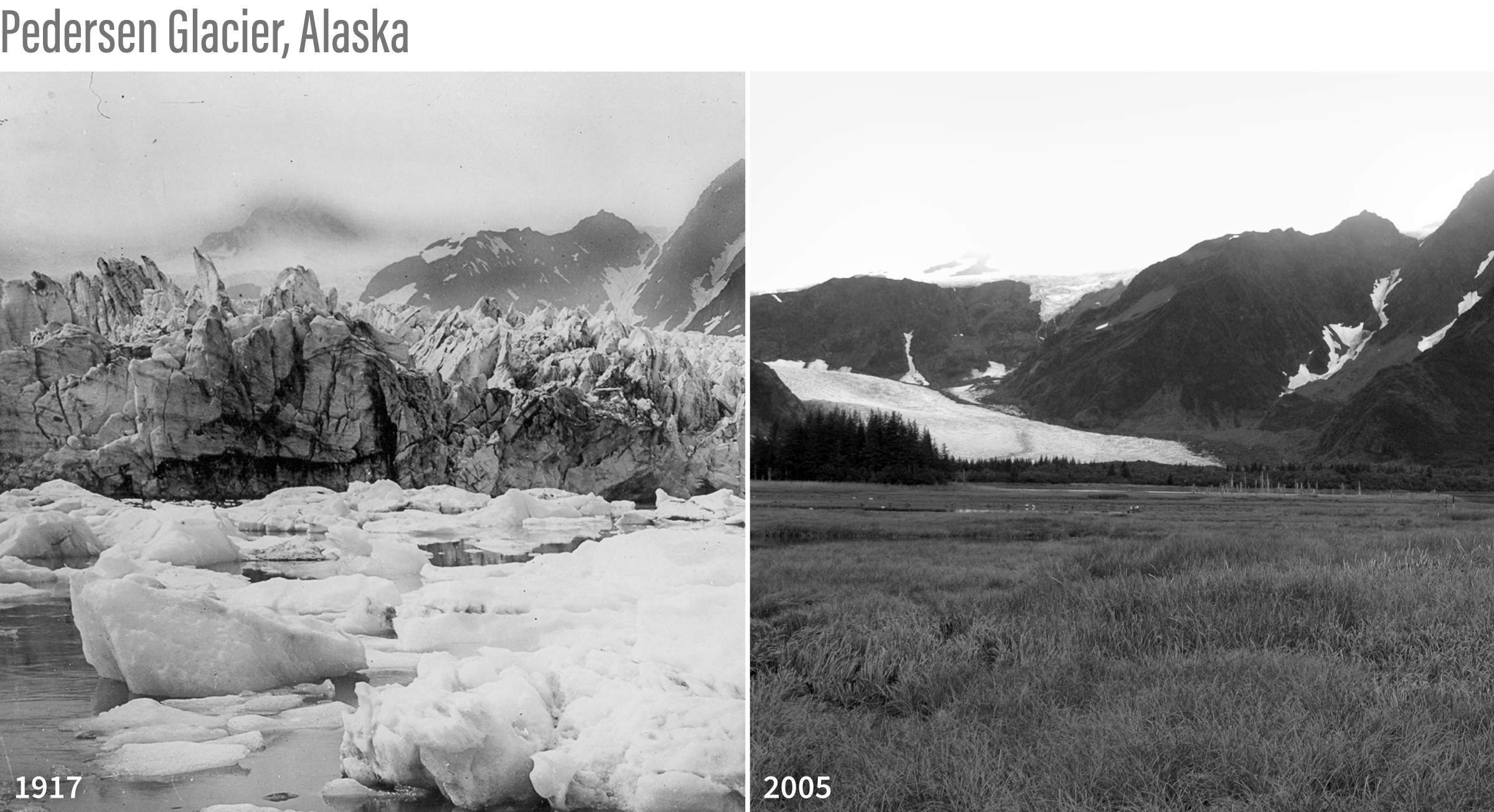
The numbers are unequivocal: the world's reference glaciers have lost the equivalent of a 98-foot slab of ice across their entire surface since 1970. This is not a prediction or a model, it is a measured, empirical reality recorded by the World Glacier Monitoring Service. For our readers who track ocean health and climate indicators, this data point should land with the weight of a sledgehammer. The cryosphere and the ocean are not separate systems; they are coupled. What happens on the glaciers directly determines sea-level rise, freshwater input, and nutrient cycling in coastal zones, which is why our coverage of Measuring ocean health begins with an integrated data ecosystem and Mapping the 2019 Flow of Plastic Waste into Our Ocean must be read alongside these glacier observations. An integrated data ecosystem that captures both ocean and ice dynamics is the only path to actionable ocean intelligence.
What demands our attention is the accelerating pace of loss. In the 1980s, these glaciers lost an average of 171 millimeters of water equivalent per year. By the 2010s, that rate had more than quintupled to 889 millimeters per year. The last three years have each exceeded the average annual loss of the 2010s, which was already the worst decade on record. In 2023 alone, glacier melt contributed 1.5 millimeters to sea-level rise, a single year accounting for six percent of total glacier mass loss since 1976. This is not a slow, linear decline; it is a rapidly steepening curve. For policymakers and coastal planners who rely on calibrated, peer-reviewed data, the implication is clear: the timelines for adaptation are shorter than previously assumed. The 27-meter cumulative loss is a rearview mirror, but the acceleration tells us what is coming.
The practical consequences extend beyond sea-level rise. Glacial meltwater sustains river systems through dry summers for millions of people, and its depletion threatens both water security and the ecosystems that depend on steady flows. The same warming that drives ice loss is also destabilizing glacial lakes, increasing the risk of outburst floods that can devastate communities downstream. Our related piece on Pinpointing the 1000 Rivers Driving Plastic to the Ocean reminds us that rivers are the arteries of the land-ocean connection; as glacial runoff patterns shift, so too will the transport of sediment, nutrients, and pollutants into the marine environment. An integrated view of these systems is not optional, it is the only way to grasp the scale of the transformation underway.
The specific detail to watch is the 2024/25 balance year. If it continues the pattern of the last three years, each exceeding 1.1 meters of water equivalent loss, the cumulative total will surpass 30 meters of water equivalent within two years. That is not an abstract number. It is the measurable, real-time signature of a planet out of balance, and it demands a response grounded in empirical observation, not alarmism.