citizen science
17 stories filed under citizen science on World Data Ocean. The newest of them: “A Shared Data Ecosystem to Deepen Global Ocean Understanding”, “Global Drifter Network Delivers Real-Time Ocean Data to Sharpen Forecasts and Coastal Safety”, and “Citizen Science Meets Machine Learning: Inside MBARI's Fathomverse”. Understanding drives protection. Every twelve hours, a network of thousands of drifting buoys reports ocean temperature, currents, and barometric pressure from the most remote waters on Earth. A Global Hub for Ocean Intelligence 4 World Data Ocean is a centralized digital platform where researchers, scientists, and ocean enthusiasts converge to… The list below is every citizen science story on World Data Ocean, newest first.
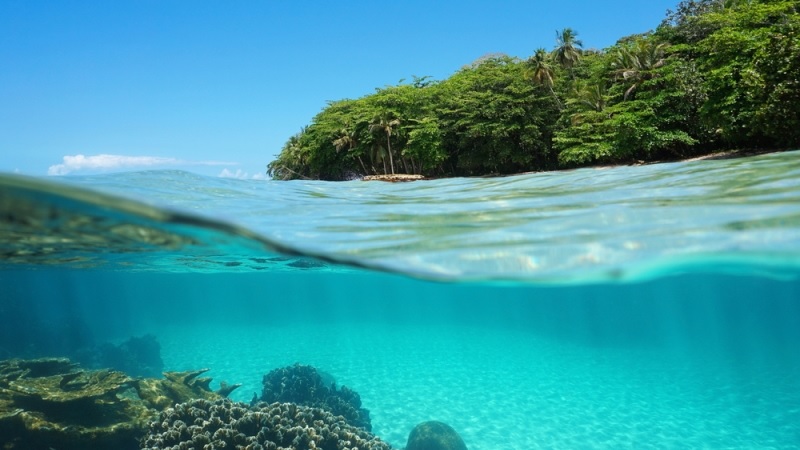
A Shared Data Ecosystem to Deepen Global Ocean Understanding
Understanding drives protection. On World Oceans Day, a new e-book makes the case for a shared data ecosystem, one that unites researchers, government agencies, students, and technology around a single goal: deeper ocean intelligence. This is not about isolated studies; it is about an integrated data ecosystem where calibrated, real-time observations become climate indicators we can act on. For those tracking the human and environmental pressures reshaping marine science, this collaborative framework is a practical step forward.
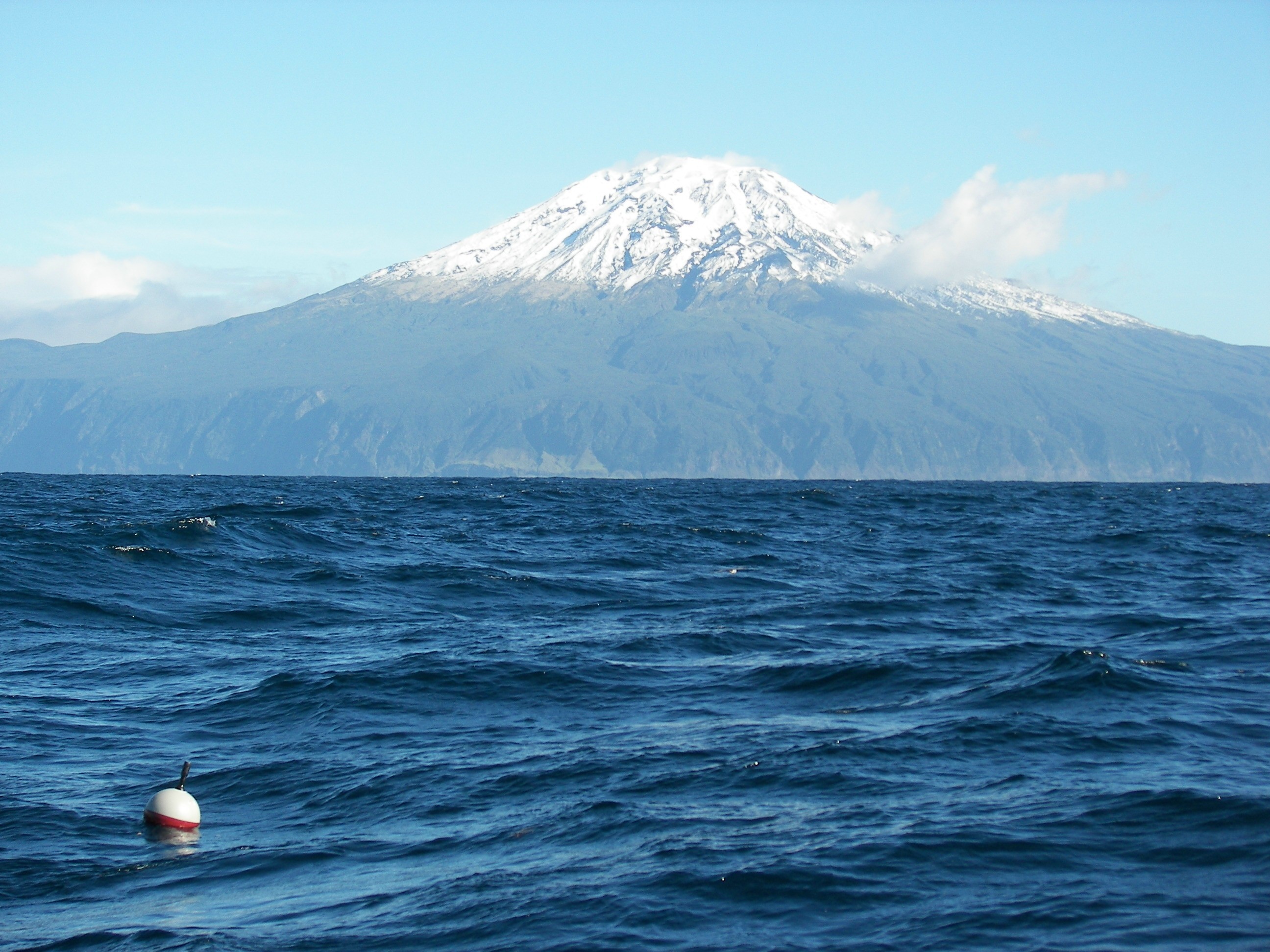
Global Drifter Network Delivers Real-Time Ocean Data to Sharpen Forecasts and Coastal Safety
Every twelve hours, a network of thousands of drifting buoys reports ocean temperature, currents, and barometric pressure from the most remote waters on Earth. NOAA's Global Drifter Program turns that distributed data into a single, calibrated view of the planet's climate system. These instruments verify weather models, sharpen satellite observations, and reveal inter-annual signals like ENSO. Understanding drives protection. For a deeper look at how shared ocean data standards support such systems, see our coverage of integrating fragmented bathymetric data.
Citizen Science Meets Machine Learning: Inside MBARI's Fathomverse
Understanding drives protection. MBARI's Fathomverse turns ocean exploration into a shared mission, letting anyone classify marine life from rover-captured imagery. The AI doesn't replace researchers; it accelerates their work, flagging species patterns that would take humans months to catalog. Your clicks calibrate algorithms, not displace jobs, they refine models that already guide conservation. It's measurable, peer-reviewed progress, not a threat. For those questioning the ethics, this is transparent, collaborative science.

Bridging Data Gaps: Integrating Citizen Science for Ocean Intelligence
The ocean remains critically under-observed, particularly in coastal zones where traditional monitoring is limited by cost and logistics. Marine citizen science offers a powerful complement, yet fragmented data flows have hindered its full integration into scientific and policy frameworks. The MCSDN workshop in Ostend, Belgium, convened 200 participants from over 30 countries to address this. Their four recommendations, from FAIR guidance to low-cost sensor deployment, signal a community ready to deliver measurable impact.

Tracking an Invasive Species: Sea Star Collection in Port Phillip Bay
A Saturday morning spent prying Northern Pacific Sea Stars from Port Phillip Bay's reef flats is a small, hands-on lesson in ecological consequence. This diver and his daughter, a soon-to-be marine biologist, were contributing to a grim tally: an estimated 165 million of these predators now call the bay home. Each female can release 20 million eggs, and the species has already devastated native shellfish beds since arriving via ballast water in the late 1980s.
Empowering Future Ocean Stewards: Citizen Science for Inland Marine Biology Clubs
The Texas Gulf is not the only place where ocean stewardship begins, and your club's location is no barrier to meaningful impact. Starting a Marine Biology Club without beach access is a common hurdle, but the data you can gather from inland is just as valid. Citizen science platforms are your direct line to real-world action, and your instinct to connect battery drives to ocean health is spot on.
Empowering Indian Fishers: Citizen Science Fuels Data-Driven Marine Forecasts
A 20-fold increase in data submissions between the first two years of the FISH App's deployment signals more than just growing adoption; it marks a practical step toward species-specific fishery forecasts. INCOIS has built a tool that turns satellite-derived advisories into actionable, high-frequency catch data, and the nearly one thousand installations show fishers are ready to participate. This is citizen science applied with rigor.
Citizen Science Sharpens Understanding of Mediterranean Marine Species.
Four hundred forty-one expert-validated records. That is what the Spot the Alien campaign captured across Maltese waters between 2022 and 2025, and the numbers tell a clear story: sustained public effort sharpens our read of marine change. The campaign logged 30 non-indigenous, range-expanding, and cryptogenic species, including the second Mediterranean sighting of the Indo-Pacific grouper. This study proves that rigorous validation turns volunteer observations into reliable ocean intelligence. Long-term engagement works.
Data-Driven Ocean Insights: Tracking Biodiversity with New Technologies
Machine learning, citizen science, and environmental DNA are no longer abstract tools; they are the backbone of a new era in marine observation. This research, presented at a June 2025 summer school, shows how these technologies, from computer vision to autonomous vehicles, are making biodiversity tracking more precise and more inclusive. It is a practical path toward understanding our oceans, not a theoretical one.
Mediterranean Velella Swarms: Warming Waters Reshape Distribution and Timing
Recent research highlights the critical role of citizen science in understanding ocean responses to climate change. A comprehensive, long-term study of *Velella velella*, a free-floating hydrozoan, in the Mediterranean Sea reveals a 32-day advance in bloom timing since 2009, linked to warming winter sea surface temperatures. Analyzing over 12,000 records—primarily gathered through citizen observations—researchers documented a west-to-east distribution pattern and established *V. velella* as a valuable indicator of surface-ocean variability.
AI-Powered Fish Identification Boosts Mediterranean Biodiversity Monitoring
Citizen science initiatives are vital for large-scale monitoring of marine biodiversity, particularly in the Mediterranean Sea, a region facing significant ecological challenges. To improve the reliability of species observations from non-expert contributors, this study introduces MEDFISH101, a dataset of approximately 70,000 validated images of 101 fish species. Utilizing advanced transfer learning techniques, we developed a deep learning model, DINOv2-G, achieving a Top-1 accuracy of 94.12% in species identification.
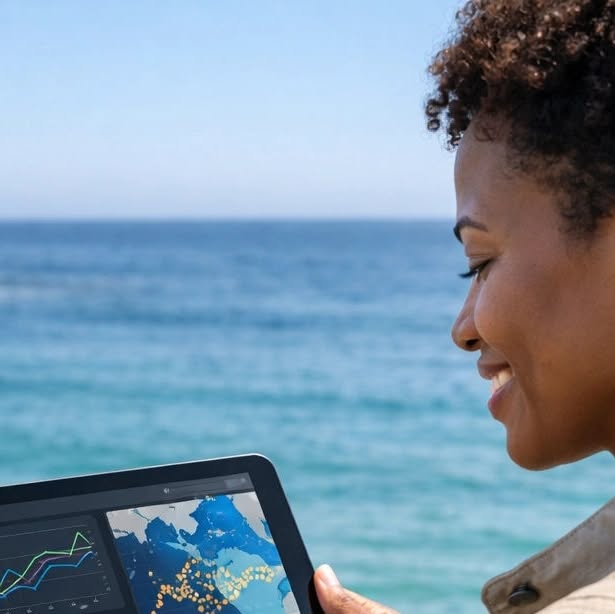
Citizen Science Data: Empowering Ocean Research Through Collaboration
High-quality ocean data is no longer confined to academic institutions. With the recent release of new guidelines for citizen science data sharing by the UN Ocean Decade, World Data Ocean is empowering communities to transform their enthusiasm into professional-grade scientific contributions. Our innovative tools facilitate the collection of valuable data that researchers and policymakers can utilize for informed decision-making. By tracking marine debris or monitoring local sea temperatures, your observations can drive meaningful change. Together, we can foster a healthier ocean for future generations.
Citizen Science Highlights Elasmobranch Conservation Needs in Mozambique’s Waters
This study evaluates two decades of citizen science contributions to elasmobranch records along the Mozambican coast, highlighting the role of platforms like iNaturalist in addressing knowledge gaps in the Western Indian Ocean. By analyzing 408 records from 2007 to 2025, we documented 44 species, revealing significant increases in data collection, particularly since 2019. While a high percentage of species are classified as threatened, spatial biases in data reflect inconsistencies in sampling across regions.
Mapping Tumon Bay: Tracking Reef Recovery After Typhoon Mawar
This study presents cm-scale marine habitat maps of Tumon Bay, Guam's coral reefs, utilizing NASA's airborne fluid lensing and the NeMO-Net platform to assess ecological changes before and after Typhoon Mawar. High-resolution imaging is essential for understanding coral ecosystem dynamics, yet monitoring at relevant spatial and temporal scales poses challenges.

Navigating REU Applications: Advice for International Marine Science Students
Securing a Research Experiences for Undergraduates (REU) opportunity as a non-US, non-EU citizen in Marine Biology, Oceanography, or Ecology can be challenging, especially given the competitive landscape. As you navigate your search, it’s crucial to identify programs that accept international applicants and offer stipends. Despite recent rejections, remember that persistence is key in scientific careers. Focus on enhancing your CV with your extensive volunteer work and local NGO involvement, which demonstrate your commitment and passion.
Citizen Science Dive: Contributing to Ocean Research in the Maldives
Greetings, fellow ocean enthusiasts! I’m a scuba diver planning a liveaboard vacation in the stunning Maldives this May. As a passionate advocate for citizen science, I’m eager to contribute to any ongoing research projects during my trip. While I may not be able to assist with sample gathering due to logistical constraints, I am more than willing to help with surveys or any other activities that could benefit researchers in the area.
Predicting Harmful Algal Blooms: Combining Citizen Science and AI.
Join us for the Ocean Data Factory Webinar, where we explore the innovative intersection of citizen science and artificial intelligence in predicting Harmful Algal Blooms (HABs). This session will highlight empirical approaches and integrated data ecosystems that empower communities to contribute to ocean health. By leveraging real-time data and collective knowledge, we aim to enhance our understanding of HAB dynamics and foster proactive stewardship of marine environments. Engage with experts and discover how collaborative efforts can drive impactful solutions for our oceans.