US Navy Aircraft Carrier Abraham Lincoln Passes Through Singapore Strait En Route To Thailand After More Than 250 Days At Sea
Our take
The recent transit of the USS Abraham Lincoln through the Singapore Strait, concluding a deployment exceeding 250 days and nearly seven months in the U.S. Central Command area of operations, underscores the sustained and complex demands placed on U.S. naval assets in a region of heightened geopolitical tension. This prolonged period at sea, following a pattern observed in recent years, highlights a strategic posture focused on maintaining a visible presence and projecting power across vital maritime chokepoints. The Lincoln's journey arrives amidst a backdrop of shifting regional dynamics, particularly concerning China’s growing naval capabilities; the emergence of China’s China’s 40,000-Ton Drone Carrier Enters Final Trials As GJ-21 Stealth Drone Reappears signals an accelerating trend towards unmanned systems integration within the People's Liberation Army Navy (PLAN), further complicating the strategic calculus. Simultaneously, the U.S. Navy is actively preparing for future deployments, as evidenced by U.S Navy Prepares Aircraft Carrier USS Theodore Roosevelt For Middle East Deployment To Relieve USS George Washington, demonstrating an ongoing effort to rotate and maintain operational readiness.
The Abraham Lincoln’s extended deployment is not merely a logistical feat; it reflects a deliberate strategy to reassure allies, deter potential adversaries, and safeguard the flow of global commerce through critical waterways. The Singapore Strait, in particular, is one of the world's busiest shipping lanes, handling a significant portion of global trade. The U.S. Navy’s presence there serves as a tangible commitment to maritime security and freedom of navigation, although such deployments inevitably occur within a complex web of diplomatic considerations and regional sensitivities. Iran’s recent rhetoric, urging nations to reject new U.S. sanctions amidst ongoing talks concerning the Strait of Hormuz, Iran Urges Nations To Reject New U.S Sanctions As Talks Focus On Reopening Strait Of Hormuz further underscores the volatile nature of the region and the potential for miscalculation or escalation. The Lincoln’s passage, therefore, must be understood as occurring within this intricate geopolitical landscape.
The sheer duration of the Lincoln’s deployment raises important questions about the sustainability of current operational tempos and the potential impact on crew readiness and maintenance schedules. While the U.S. Navy has demonstrated remarkable resilience and adaptability, the relentless pace of deployments, coupled with increasing technological complexity, presents a considerable challenge. Longitudinal data on crew performance and equipment reliability become increasingly vital for informed decision-making, allowing for calibrated adjustments to deployment patterns and maintenance protocols. The integrated data ecosystem that supports naval operations must be continually refined to provide real-time insights into these critical factors, ensuring that the fleet remains both capable and sustainable. Such a focus on empirical data allows for a more nuanced understanding of the true cost of maintaining a global naval presence.
Looking ahead, the increasing prevalence of unmanned systems and the evolving capabilities of potential adversaries necessitate a reassessment of traditional naval strategies. The integration of artificial intelligence and advanced sensor technologies into both manned and unmanned platforms promises to enhance situational awareness and operational effectiveness, but also introduces new vulnerabilities and ethical considerations. The question of how the U.S. Navy will adapt to this rapidly changing landscape, while maintaining its commitment to global maritime security, remains a critical one. What calibrated adjustments to fleet composition and operational doctrine will be required to ensure continued effectiveness in the face of increasingly sophisticated challenges?
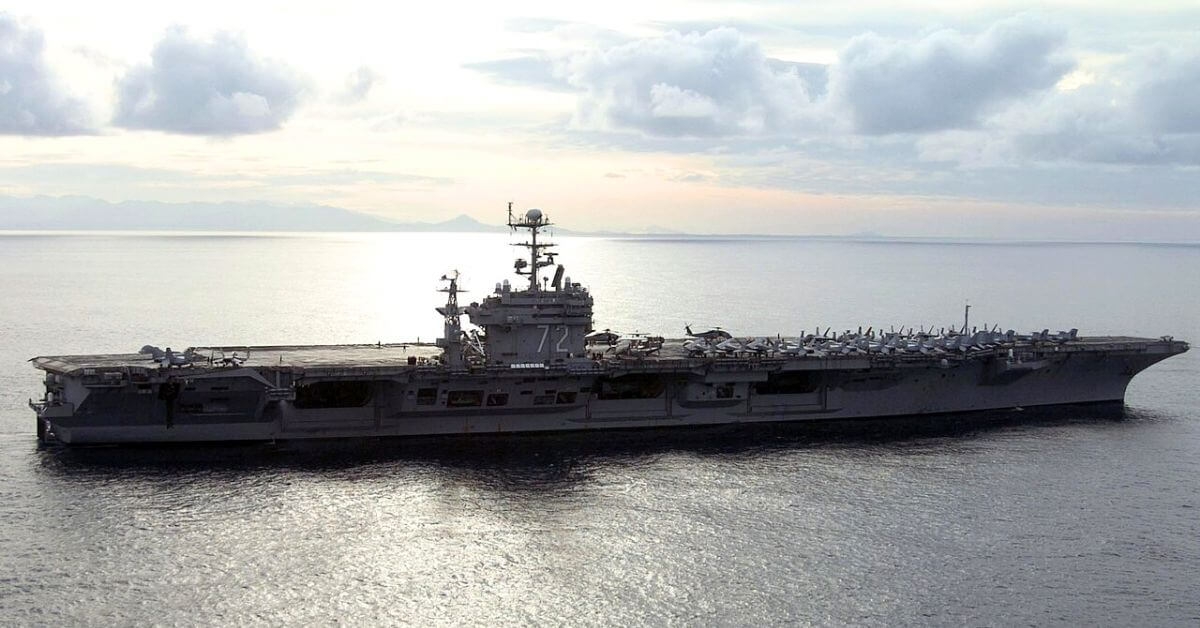
The U.S. aircraft carrier USS Abraham Lincoln (CVN-72) passed through the Singapore Strait on Aug. 29 on its way to Thailand for a planned port visit.
The carrier is expected to visit Laem Chabang Port in Chon Buri from Sept. 2 to 6. Thai officials said the visit is for the crew to rest and recover and for logistical support.
They said it is not a joint military exercise and denied reports that the carrier would stop to replenish ammunition.
The visit follows a long deployment in the Middle East. Lincoln spent almost seven months in the U.S. Central Command area and was at sea for more than 250 days without a break.
It has been operating in the U.S. Indo-Pacific Command area for about a week.
Carrier Seen Passing Singapore
Ship spotters reported seeing Lincoln pass through the Singapore Strait on Aug. 29.
Lincoln and its Japan-based escort, the guided-missile cruiser USS Robert Smalls (CG-62), were seen passing through the Strait of Malacca on Friday.
Photos showed aircraft on Lincoln’s flight deck as it passed through the strait.
The carrier’s crew, Carrier Air Wing 9 and some escort ships are expected to visit eastern Thailand. U.S. aircraft carriers have visited the deep-water Laem Chabang port before.
Long Deployment
Lincoln left San Diego on Nov. 21 with about 5,000 crew members.
Its mission was extended after the war with Iran began in February. During the deployment, the carrier supported U.S. military operations against Iran and launched thousands of aircraft for strikes.
The ship spent more than 250 days at sea without a break.
The long deployment has led to concerns from some family members. Reports have mentioned mental health problems among crew members and shortages of food and hygiene products.
U.S. Central Command said reports of increased suicidal thoughts among the crew were false. It also said no one had died aboard the ship.
On Aug. 3, a sailor fell overboard but was later recovered. The Navy is still investigating what happened.
Defense Secretary Pete Hegseth said reports about problems on the carrier had been misrepresented.
Jefferson Kelley, whose son Jackson is serving aboard Lincoln on his first deployment, told CBS Mornings that he would travel to the carrier if it meant bringing his son home.
Kelley said sailors should not have to stay deployed for so long. He also said older ships need a lot of maintenance.
Navy Facing Longer Deployments
The U.S. Navy is preparing for longer carrier deployments to support operations in the Middle East.
Since the Oct. 7, 2023 Hamas attack on southern Israel, U.S. carrier deployments have lasted an average of 8.5 months, according to the USNI News carrier deployment database.
Chief of Naval Operations Adm. Daryl Caudle and Master Chief Petty Officer of the Navy John Perryman said last week that the Theodore Roosevelt Carrier Strike Group and its families were preparing for a longer deployment.
Perryman said sailors are ready for difficult missions but need to know how long they will be away. He said the Roosevelt crew had been told to plan for eight months instead of seven.
George Washington Replaces Lincoln
The Japan-based USS George Washington (CVN-73) arrived in the U.S. Central Command area earlier this month to replace Lincoln.
It joined USS George H.W. Bush (CVN-77), which is operating in the Arabian Sea.
Lincoln spent almost seven months in the U.S. Central Command area without a declared port call before moving into the Indo-Pacific.
References: USNI, TOI
Read on the original site
Open the publisher's page for the full experience