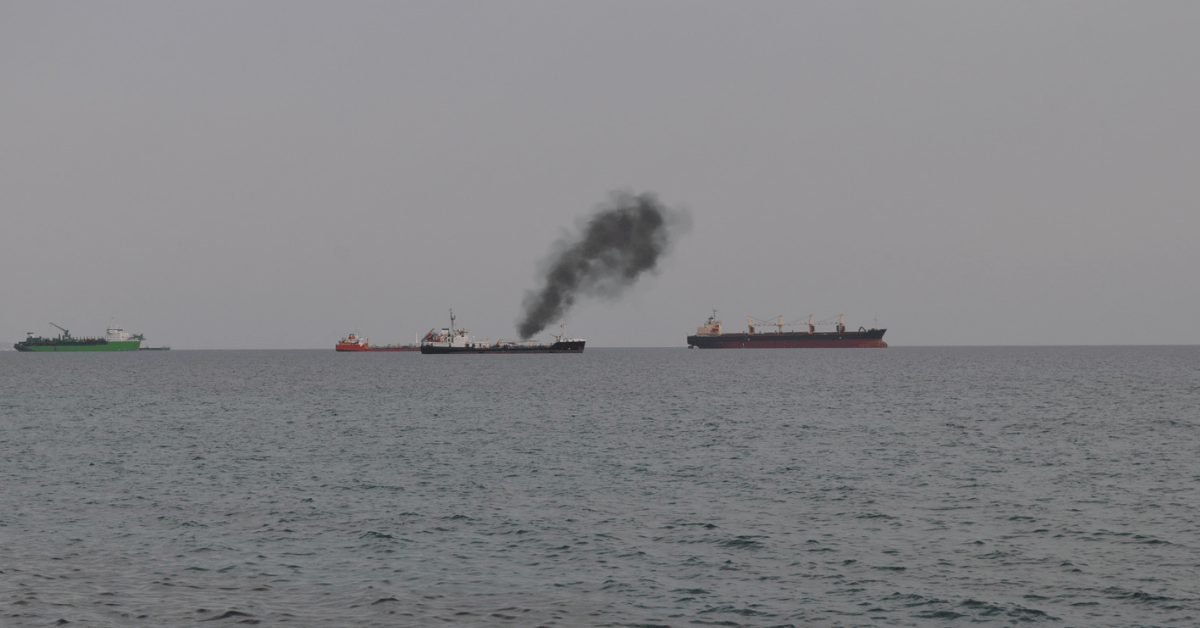
Understanding drives protection. The unconfirmed report of tanker fires in the Strait of Hormuz, attributed solely to Iran's Islamic Revolutionary Guard Corps, demands precisely that: understanding, not alarm. We must treat this as a data point requiring validation, not a confirmed event, especially when set against recent developments like the potential convergence of three US nuclear carriers in the region, as detailed in Three US Nuclear Carriers Could Converge in the Middle East by Late 2026. The absence of independent verification, combined with the IRGC's warning that ships cooperating with the U.S. military "would definitely hit mines," frames this as a calibrated escalation narrative rather than a verifiable maritime incident.
The practical implications for our readers, spanning researchers, analysts, and policymakers, are clear: this is an integrated data ecosystem failure. We have one source, a state military, claiming two tankers struck mines after disabling their navigation systems on an unauthorized route. Meanwhile, the U.S. Central Command confirms it disabled a separate vessel in the Gulf of Oman for ignoring a blockade, and a separate tragedy occurred just days prior with the MT Velos Sapphire explosion in the Persian Gulf, as reported in Tragedy in the Gulf: Filipino Seafarer Lost in Tanker Explosion. These are distinct events, but their proximity in time and geography creates a signal that must be parsed with empirical rigor. The IRGC's claim that the strait, recently declared mine-free by CENTCOM, now contains mines is a direct contradiction that cannot be resolved without peer-reviewed, open-source evidence.
What this means operationally is a crisis of measurement. Nearly 20% of global oil transits this route, and the only authoritative statements come from parties in active conflict. The Iraqi-U.S. alignment on an alternative Gulf oil route, noted in Iraq and US Align on Gulf Oil Route Near Omani Waters, suggests that some actors are already preparing for a degraded strait. For ocean intelligence, the core question is not whether the fires happened, but why the tankers disabled their transponders. That act, intentional or coerced, removes the vessel from the calibrated, real-time tracking systems that are the foundation of maritime safety. Without that data, every subsequent claim is unvalidated.
The concrete point to watch is the third vessel. Iran stated a third ship caught fire, but provided no details. In an integrated data ecosystem, an unaccounted vessel in a mined waterway is not a detail to ignore; it is a measurable anomaly. Until independent sources, satellite imagery, AIS data, or third-party maritime reports, confirm these events, the only responsible position is calibrated observation. The ocean does not lie, but the narratives around it can. We must demand the data before we accept the story.