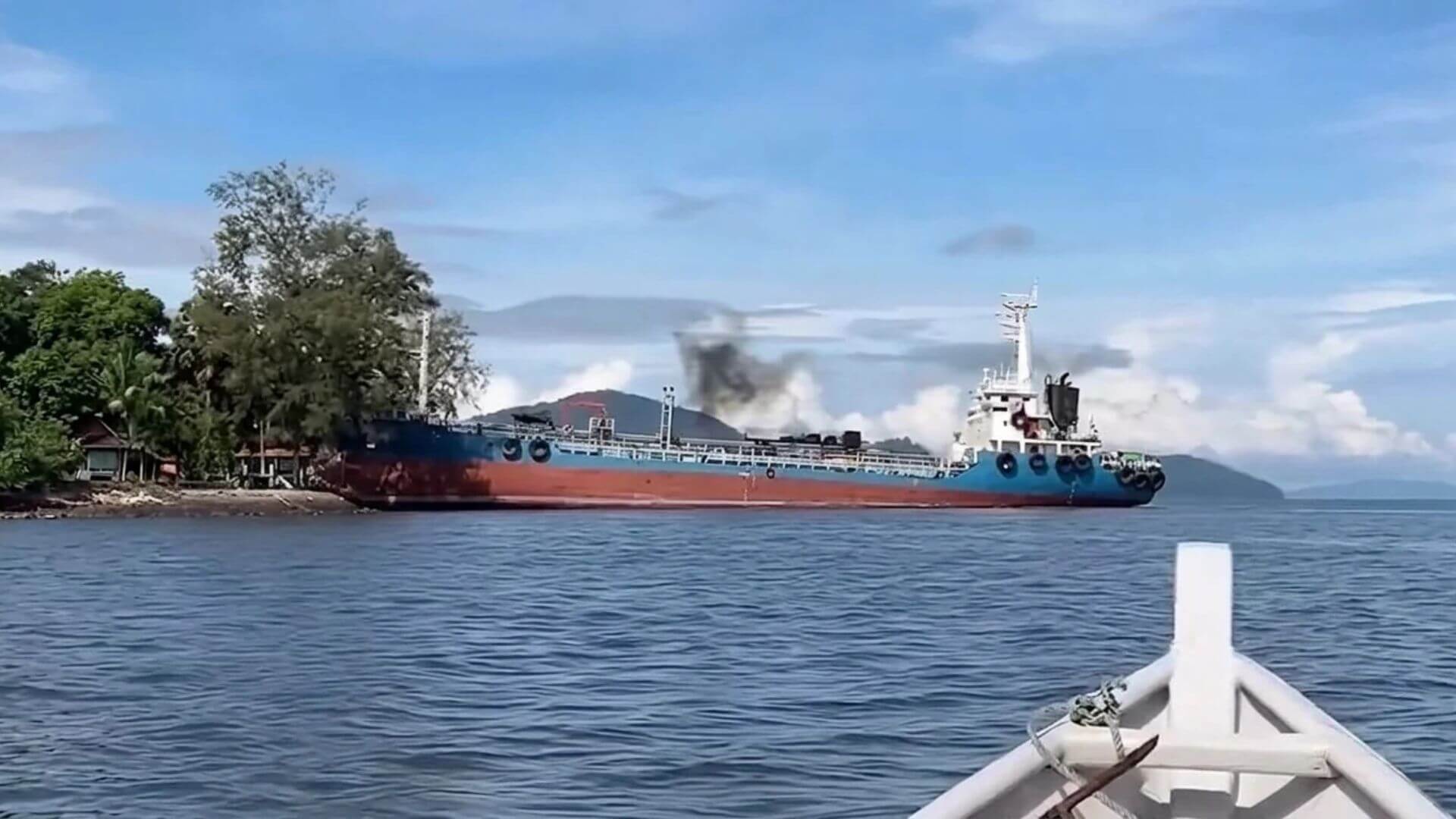
An unauthorised sea trial that ended with an oil tanker breaching a seawall in Perak is not an isolated mishap, it is a symptom of a regulatory gap that puts coastal infrastructure and marine safety at risk. When a vessel changes ownership, flags, and identity without proper oversight, the potential for disaster multiplies. This incident demands that the maritime industry and its regulators treat vessel provenance as seriously as they treat navigation.
The tanker, previously registered as Fuji and now flying under a Thai flag as Midas, departed for sea trials without permission on the night of November 15. Ten Thai crew members were aboard when the vessel struck the seawall at Taman Esplanade Marina Wing, damaging a section of sidewalk and public facilities. No injuries were reported, and the tanker was empty, so the immediate consequences were limited. But consider the contrast with the Steering Failure Preceded Tanker Collision with River Cruise Ship in New Orleans, where a mechanical failure led to a collision with a passenger vessel. In Perak, the cause is still under investigation, but the common thread is clear: when vessels operate outside established protocols, whether through faulty equipment or unauthorised movements, the margin for error shrinks to zero. Meanwhile, the Port of New Orleans Pursues Federal Liability Action After Mississippi River Collision shows that the legal and financial consequences of such failures can stretch for years. The Perak tanker's recent ownership change and reflagging raise immediate questions about whether the vessel's registration documents and operating permits were ever properly validated.
For researchers, policymakers, and ocean intelligence professionals, this event is a real-world test of how well integrated data ecosystems can track vessel movements and ownership chains. The Marine Department's investigation will examine those documents, but the fact that the vessel departed for sea trials without permission suggests that existing checks failed. A calibrated, real-time system that links vessel identity, ownership history, and operational permits could have flagged the discrepancy before the tanker left port. This is not theoretical, it is a practical requirement for preventing similar incidents. The takeaway is direct: the maritime industry must move toward an integrated data ecosystem where vessel provenance is as transparent as its position. Without it, unauthorised sea trials will continue to test seawalls instead of safety protocols.
The operation to tow the vessel offshore during high tide will depend on the tide itself, as the water remains shallow. That detail is worth watching. If the towing operation is delayed or complicated by the vessel's condition, it will underscore how quickly a single unauthorised action can cascade into a prolonged environmental and logistical problem. The question that remains open is whether the investigation will trace the ownership change back to its source, and whether that trace will lead to systemic reforms or just another report filed and forgotten.