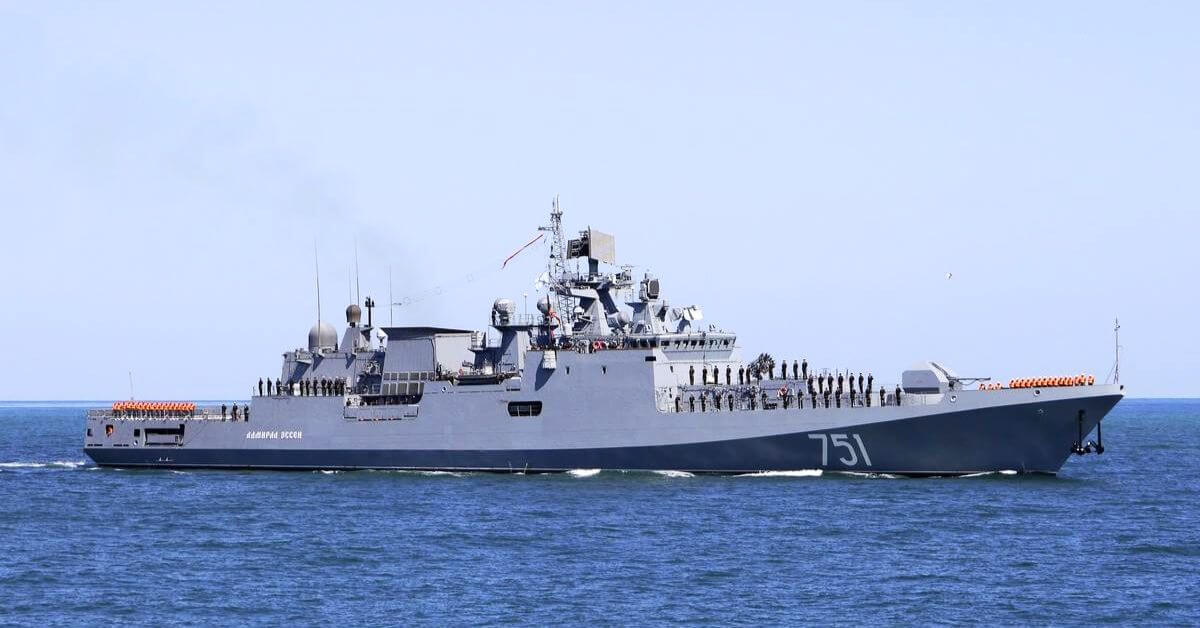
Ukraine's strike on the Russian frigate *Admiral Essen* in the port of Novorossiysk is not merely a tactical military development; it is a calibrated demonstration of how maritime assets have become direct targets in a conflict that increasingly defines the security of coastal waters. This operation, conducted against Russia's largest Black Sea port in Krasnodar Krai, confirms that no harbor is a sanctuary when naval forces are integrated into broader strategic campaigns. For our readers, researchers, policymakers, and maritime professionals, the takeaway is clear: the rules of engagement in the Black Sea have been rewritten, and the empirical data from this strike will inform naval doctrine and port security protocols for years.
The timing and location of this attack invite a necessary comparison with other maritime trends we have been tracking. While Ukraine's strike demonstrates the vulnerability of surface combatants in confined waters, we are also seeing Russia pursue long-term naval investments elsewhere. As reported in Russia Calibrates Export Revenue for Northern Sea Route Icebreaker Fleet, Moscow plans to collect over 200 billion roubles from exporters to fund new icebreakers for the Northern Sea Route. This juxtaposition is instructive: at the same moment a key warship is disabled in the Black Sea, Russia is banking on a parallel maritime future in the Arctic. It suggests a strategic calculation that accepts present losses in one theater while reinforcing capabilities in another. Meanwhile, Russian Maritime Activity Raises Concerns of Drone Operations in Mediterranean highlights how the CIA has warned European states about suspected plans to launch drones from commercial ships. These three stories, read together, paint a picture of maritime conflict that is no longer confined to traditional battle lines. The ocean is becoming a domain of asymmetric threats, where a frigate, a commercial vessel, or an icebreaker each carries strategic weight.
Our honest take is that this strike should force a recalibration of how we assess naval risk. The *Admiral Essen* was not caught in open water; it was hit in a heavily defended port. That fact alone should concern every navy and port authority. It validates a shift toward what we might call "integrated coastal vulnerability", the idea that modern sensors and precision munitions can penetrate layered defenses that were once considered adequate. For ocean intelligence professionals, this is a measurable data point: the distance between a naval asset and its home berth no longer guarantees its safety. The practical implication for our audience is that maritime security models must now account for threats originating not just from the sea, but from the littoral zone and the airspace above it.
We would tell any reader who asks about this event to watch one specific detail: the operational tempo of the Black Sea Fleet in the weeks following this strike. If Russia responds by dispersing its remaining surface combatants or by increasing its reliance on land-based missile systems, that will be a concrete indicator of how this attack has altered naval posture. The *Admiral Essen* is a missile carrier; its loss, or even its temporary incapacitation, directly affects Russia's ability to project power from the sea. The open question, and the one we will be tracking with our own calibrated observations, is whether this marks the beginning of a permanent degradation of Russian naval capability in the Black Sea or a temporary setback that will be absorbed into a larger strategic reset. The answer will be written not in press releases, but in the real-time data of future operations.