U.S Navy Charges 19-Year-Old Sailor After Apparent Suicide Attempt Aboard USS Abraham Lincoln
Our take

The recent incident involving a 19-year-old sailor aboard the USS Abraham Lincoln, culminating in a suicide attempt and subsequent charges, underscores a critical intersection of operational readiness, mental health, and the unique pressures faced by personnel within the U.S. Navy. The sailor’s family reports a mental health crisis preceding the event, highlighting the potential for undetected or inadequately addressed struggles within a demanding environment. This situation gains further significance when considered alongside recent reports detailing substantial operational losses and maintenance backlogs within the Navy. For instance, U.S. Navy Loses 15,000 Operational Days As Submarine Maintenance Delays Cost $3.4 Billion reveals a systemic strain that undoubtedly contributes to heightened stress levels among sailors. The rapid deployment schedules and rigorous demands inherent in naval service can exacerbate pre-existing mental health vulnerabilities, and this case serves as a stark reminder of the human cost of those demands. Further complicating the matter is the recent implementation of U.S. Navy Approves Rapid 3D-Printing Standards To Boost Submarine Fleet Readiness, which while aimed at improving fleet readiness, could inadvertently introduce new pressures and anxieties related to adapting to evolving technologies and workflows.
The decision to charge the sailor, even amidst what appears to be a mental health crisis, raises complex legal and ethical considerations. While accountability is essential, the circumstances suggest a need for a nuanced approach, prioritizing mental health support and de-escalation over immediate punitive measures. The Navy’s internal processes for handling such situations, and the availability of accessible mental health resources, will be under increased scrutiny. It’s imperative to assess whether the existing support systems are adequately equipped to identify, address, and prevent similar incidents. The Navy’s commitment to maintaining a battle-ready force must be balanced with a demonstrable commitment to the well-being of its personnel; otherwise, operational efficiency will inevitably be undermined by decreased morale and increased attrition. The reported overhaul of USS Boxer, U.S Navy’s USS Boxer Slated For Up To $180 Million Overhaul After Middle East Deployment, while focused on physical repairs, should also incorporate a comprehensive assessment of crew morale and mental health following extended deployments.
The broader implications extend beyond this single incident. It highlights a potential systemic issue within the military – the persistent challenge of addressing mental health needs within high-pressure, demanding operational environments. Data consistently indicates elevated rates of mental health concerns among service members, and the stigma associated with seeking help remains a significant barrier. Validated and measurable improvements in mental health support require a multi-faceted approach, including increased access to qualified professionals, proactive screening programs, and a cultural shift that prioritizes psychological well-being alongside physical fitness and technical proficiency. Longitudinal studies tracking the mental health outcomes of naval personnel across different deployments and roles are essential for calibrating effective intervention strategies. Empirical evidence suggests that integrated data ecosystems, capable of identifying at-risk individuals and tailoring support accordingly, could be instrumental in preventing future crises.
Ultimately, this event compels us to ask: how can the U.S. Navy, and the broader military establishment, create a culture where sailors feel empowered to seek help without fear of repercussions, and where mental health is viewed as a critical component of operational readiness? The incident with the sailor on the USS Abraham Lincoln isn't merely a tragic individual case; it's a climate indicator signaling the urgent need for a more holistic and human-centered approach to naval service, one that prioritizes the psychological resilience of its personnel as much as their technical capabilities.
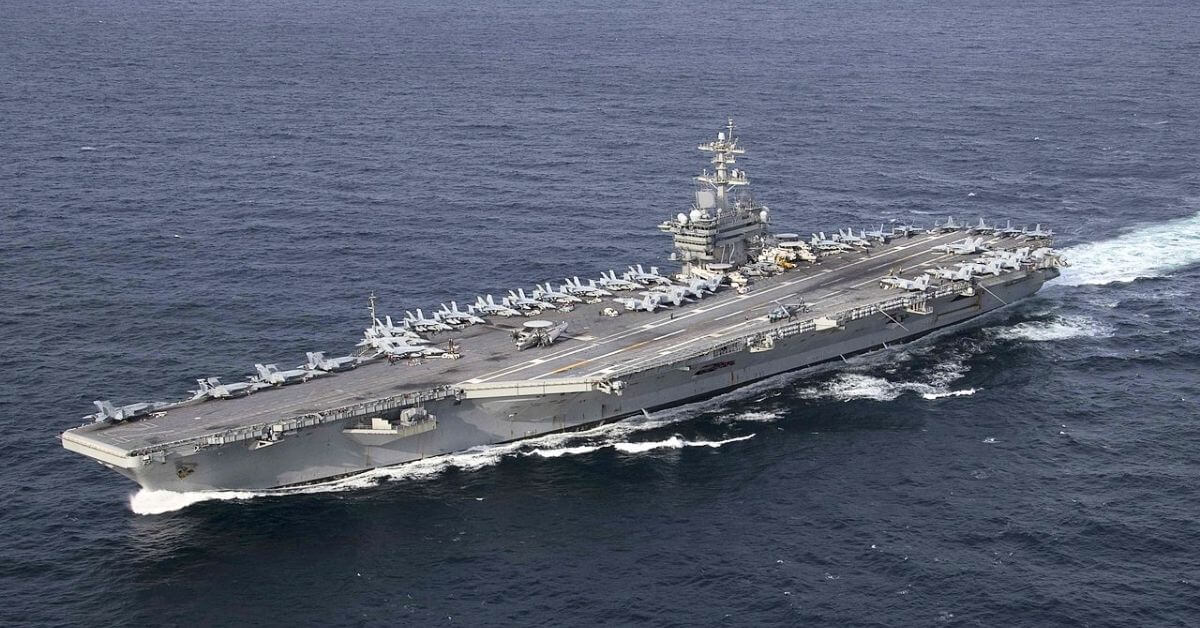
A 19-year-old U.S. Navy sailor who went overboard from the USS Abraham Lincoln during an apparent suicide attempt is facing disciplinary action.
The incident happened on Aug. 3 during what his family described as a mental health crisis. He was rescued, received medical treatment and returned to San Diego on Aug. 13, his wife said.
USS Abraham Lincoln has spent more than 250 days at sea. The carrier’s deployment was extended several times after it was sent to the Middle East during the war with Iran.
The sailor, who is married and has two children, is accused of faking an illness or hurting himself to avoid work or duty. He also faces a separate allegation that he failed to report to his assigned duty station during the mental health crisis.
His wife has questioned why the Navy is pursuing disciplinary action instead of focusing on his mental health. She told MS NOW that punishing people who need mental health care could add to their stress.
Sailor faces Navy disciplinary hearing
The sailor is expected to face a captain’s mast, a Navy disciplinary hearing where a commanding officer can decide the punishment without a formal court-martial.
The military documents accuse him of violating Article 83 of the Uniform Code of Military Justice, which covers malingering. They also accuse him of violating Article 86, which covers failing to report for duty.
The case is being handled through non-judicial punishment. This is an internal military process generally used for lower-level misconduct and does not involve a formal court-martial or criminal conviction.
The documents say he could lose up to half of his pay.
His wife said he had asked several times for paternity leave so he could meet his newborn daughter. She said the requests were denied.
The couple are both 19 and have two children. Their daughter was born in February while he was deployed.
His wife also said he had spoken with his chain of command and medical staff several times about his mental health before the incident. She said he felt his concerns were not taken seriously.
Thirteen days before he went overboard, he sent his wife a message saying that the ship was becoming difficult for him. He also told her he did not think he could go through another deployment and was unsure whether he could finish the current one.
His wife said Navy officials did not contact her until four days after the incident. She first learned about it from one of his friends aboard the ship.
Wife raises questions about medical care
After returning to San Diego on Aug. 13, the sailor spent five days at Naval Medical Center San Diego, also known as Balboa, his wife said.
She said doctors monitored his vital signs but that he did not meet with a psychiatrist or therapist during his stay.
After he was released, his wife said he was ordered to return to work. His first therapy appointment was on Aug. 26, almost two weeks after he returned to San Diego.
Rep. Sara Jacobs, a California Democrat on the House Armed Services Committee, said she was concerned about the situation involving sailors and Marines serving aboard ships such as the Lincoln.
The Department of Defense said 471 service members died by suicide in 2024, compared with 531 in 2023.
Lincoln deployment extends beyond 250 days
The USS Abraham Lincoln left San Diego on Nov. 21, 2025. Its deployment was extended several times after the carrier was sent to the Middle East during the war with Iran.
During the long deployment, sailors and their families reported problems aboard the ship, including food shortages, no hot water for long periods, broken toilets, laundry issues and mould in showers.
The Navy has rejected some of these reports. Secretary of War Pete Hegseth said accounts of severe conditions aboard the carrier were inaccurate. President Donald Trump has also dismissed concerns about the deployment’s length and conditions.
An Iranian attack destroyed a key supply hub in Bahrain, forcing supplies to be transported about 2,200 miles from Diego Garcia, according to the source material.
Navy sends mental health support
The Navy is sending more counsellors and social workers to the USS Abraham Lincoln.
The crew is also expected to get a rest-and-recovery stop in Thailand before the carrier eventually returns home.
The USS George Washington has been deployed from Japan to take over the Lincoln’s Middle East mission.
References: timesnownews, dailymail
Read on the original site
Open the publisher's page for the full experience