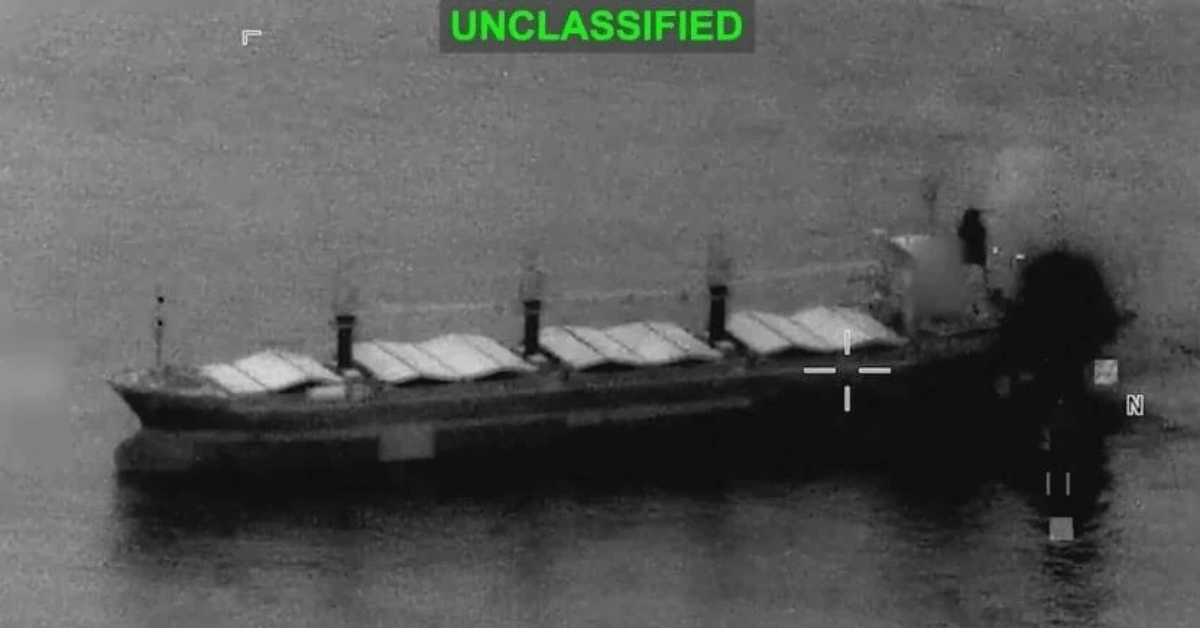
The precision strike on the M/V Huda in the Gulf of Oman is not a maritime incident; it is a calibrated signal in a widening campaign of economic interdiction. U.S. Central Command's decision to disable the St. Kitts-flagged cargo vessel after it ignored repeated warnings to respect the blockade against Iran represents a deliberate escalation in enforcement, and it demands that every operator, insurer, and policymaker tracking these waters recalibrate their risk calculus. As we have documented, this is not an isolated event, the Redirected Iranian naval tactics target Gulf shipping lanes with limpet mine strikes show a parallel shift in asymmetric response, while the Legal Standard in Question as Russian Owner Fights US Tanker Seizure underscores the legal turbulence that follows these interdictions.
The numbers from CENTCOM are empirically clear: since July, 147 vessels have complied and turned back; five have been disabled. That 96.7% compliance rate suggests the blockade's primary effect is deterrence, but the five disabled ships, including the M/V Huda and, in October, the Panama-flagged Ocean Molica, serve as physical evidence that the United States is willing to use force against civilian hulls. The tactic is consistent: precision munitions aimed at the stern, engine room, or rudder, designed to stop propulsion without sinking the vessel or, according to CENTCOM, harming the crew. This is not indiscriminate warfare; it is a calibrated, repeatable procedure. The formation of Task Force Iron Gate on the same day, tasked with cutting overland and Caspian Sea routes for weapons and sanctioned goods, signals that the U.S. views the blockade as one component of a broader, integrated strategy to isolate Iran's shadow networks.
What matters for our readers, whether you track shipping logistics, analyze geopolitical risk, or study maritime law, is the measurable shift in operational tempo. The blockade resumed on July 14, and within four months we have seen ten Iranian oil tankers destroyed and five merchant ships disabled. The UKMTO reports commercial vessel ablaze in Strait of Hormuz reminds us that the Strait remains a flashpoint where commercial traffic can become a casualty. The open question is whether the compliance rate holds as the blockade ages and as Iran adapts its naval tactics to target shipping lanes with limpet mines. If commercial operators begin to test the blockade's enforcement consistency, the ratio of turned-back vessels to disabled ones will be the empirical indicator to watch.