U.S Destroys Two Iranian Boats After Attempt To Seize Sea Drone Near Strait Of Hormuz
Our take
The recent incident in the Strait of Hormuz, where the U.S. Navy destroyed two Iranian boats attempting to seize a U.S. Saildrone, underscores a growing fragility in a strategically vital waterway. The escalating tensions highlight the increasing reliance on unmanned systems for maritime surveillance and the potential for miscalculation and conflict when these technologies intersect with geopolitical rivalries. This event follows closely on reports of disruptions to global trade due to the [Panama Canal To Cut Ship Transits Again Due to Severe Drought Linked To El Niño], demonstrating the interconnectedness of maritime security, climate impacts, and global economic stability. Furthermore, it echoes previous incidents, such as the U.S. rejection of Iran’s claim regarding the tanker El Gaia, where conflicting narratives and accusations of attacks further complicate the situation [U.S. Rejects Iran’s Claim That Indian-Crewed Tanker Hit Mine, Says Iran Attacked Vessel]. The use of a Saildrone, a relatively small and autonomous vessel, for intelligence gathering adds another layer of complexity, raising questions about vulnerability and the potential for escalation.
The deployment of unmanned surface vessels (USVs) like the Saildrone represents a significant shift in maritime operations. These platforms offer distinct advantages, including reduced risk to personnel, extended operational endurance, and the ability to collect data in environments too hazardous for manned vessels. However, their autonomous nature also introduces challenges. The attempted seizure of the Saildrone suggests a deliberate effort to disrupt U.S. intelligence gathering capabilities and potentially to acquire the technology itself. The Strait of Hormuz, a narrow chokepoint through which a significant portion of the world's oil passes, is already a flashpoint for regional tensions. This incident amplifies the risk of misinterpretation and accidental escalation, particularly as both the U.S. and Iran continue to invest in advanced maritime technologies, including unmanned systems. The USS Gerald R. Ford’s potential to power a naval base [World’s Largest Aircraft Carrier, USS Gerald R.Ford To Power US Navy’s Norfolk Base] speaks to the broader commitment to maintaining naval presence and capabilities in strategically important areas.
The incident's significance extends beyond the immediate geopolitical implications. It raises broader questions about the rules of engagement for unmanned systems at sea. As USVs become increasingly sophisticated and integrated into naval operations, there is a need for clearer international norms and protocols to govern their use and prevent unintended consequences. The lack of clear guidelines increases the likelihood of misinterpretations and escalatory responses, particularly in contested waters. The validated, empirical data collected by platforms like the Saildrone are invaluable for understanding oceanographic conditions and maritime activity; however, the protection of these assets becomes paramount in a volatile environment. Integrated data ecosystems and real-time climate indicators are increasingly crucial for informed decision-making, but the security of these systems must be prioritized to ensure their continued utility.
Looking ahead, the incident in the Strait of Hormuz serves as a stark reminder of the precariousness of maritime security in a region marked by persistent tensions. The proliferation of unmanned systems, coupled with evolving geopolitical dynamics, demands a renewed focus on de-escalation strategies and the establishment of clear operational guidelines. The question remains: how can the international community foster a framework that allows for the responsible use of these technologies while mitigating the risk of conflict and ensuring the continued flow of vital resources through critical waterways? The longitudinal data gathered by ocean intelligence platforms like Saildrones will be critical in understanding the broader environmental and security trends shaping this complex landscape.
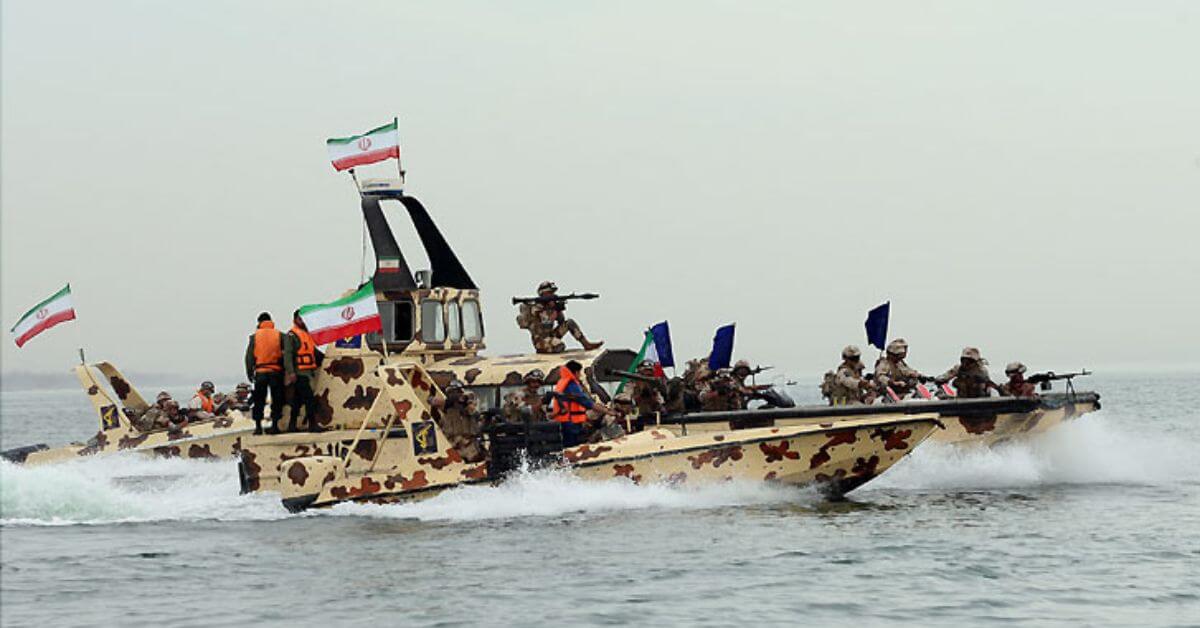
The US military destroyed two small Iranian boats after they tried to seize a US unmanned surface vessel near the Strait of Hormuz, US officials said.
The incident happened on Monday night, Sept. 14, in the Persian Gulf near Kargan, an Iranian port city close to Larak Island in Hormozgan province.
Iranian media said two fishing boats were attacked in the area and that several fishermen were missing.
A US official told Axios that members of Iran’s Islamic Revolutionary Guard Corps were using the boats to try to take control of the US Navy drone. The drone was used to monitor the area.
US Central Command confirmed the incident. Its spokesperson, Captain Tim Hawkins, said the Iranian boats failed to take the vessel and that the US drone remained under American control.
A US official told Axios that an American aerial drone fired two missiles at the boats after detecting the attempted seizure. Both boats were destroyed. The official said most of the people on board were killed in the explosions.
Meanwhile, Iran gave a different account of the attack.
Ahmad Nafisi, deputy governor for security affairs in Hormozgan province, blamed the US military for the strike. He said several fishermen were missing and that search-and-rescue teams were looking for them.
Iranian state media described the two boats as fishing boats.
US naval vessels are currently escorting commercial tankers through the Strait of Hormuz during daylight hours.
This is different from earlier arrangements, when commercial vessels passed through the strait at night.
US Says Drone Was A Saildrone
Hawkins said the US unmanned surface vessel was a Saildrone. The small craft is about 25 feet (8 metres) long and can operate on its own.
CENTCOM has used Saildrones in the region for several years to monitor maritime traffic.
The US military has said the technology used on the vessels is commercially available and does not contain sensitive technology.
Hawkins said all of CENTCOM’s surface drones remained fully accounted for.
The incident follows another dispute involving a US unmanned vessel near the Strait of Hormuz.
A week earlier, the Iranian navy said it had captured a US military underwater drone at the entrance to the strait.
Hawkins said that drone, an Anduril Dive-LD, had malfunctioned while surveying the waters in the area. As a result, the US military no longer had possession of it.
He said the drone was an older and defective model. It did not collect sensitive data and did not carry classified sonar or radar equipment.
US President Donald Trump said on Monday that he was open to talks with Iran. He had earlier said that reaching a formal agreement was premature.
Mohsen Rezaei, secretary of Iran’s Supreme National Security Council, rejected Trump’s comments on Tuesday.
Tehran has set conditions for ending the ongoing war and lifting the blockade across the Strait of Hormuz. It has demanded substantial war reparations and the complete removal of US sanctions.
References: aninews, TOI
Read on the original site
Open the publisher's page for the full experience