U.S. Destroys 5 Iranian Oil Tankers After IRGC Targets American Warship With Ballistic Missiles
Our take

The recent escalation in the Strait of Hormuz, culminating in the reported destruction of five Iranian oil tankers following an IRGC missile attack on a U.S. warship, represents a deeply concerning development with far-reaching implications for global energy markets and maritime security. This incident underscores the fragility of vital chokepoints in the global trade network, particularly as tensions in the region continue to simmer. The timing is particularly noteworthy, occurring shortly after Iran announced the testing of a new anti-ship missile over a U.S. Navy warship [Iran Says New Anti-Ship Missile Was Tested Over US Navy Warship As Strait Of Hormuz Tensions Rise] and amidst ongoing scrutiny of maritime traffic through the Strait. The deliberate targeting of commercial vessels, even if preceded by warnings to evacuate crews, raises serious questions about adherence to international maritime law and the potential for further destabilization. It's also relevant to consider the recent passage of a Qatar LNG tanker through the Strait [Qatar LNG Tanker Sails Through Strait Of Hormuz For First Time Since July], an event highlighting the continued importance of this waterway for energy transport, now further complicated by heightened risk.
The inoperability of these tankers, as reported by CENTCOM, will undoubtedly impact oil supply chains, potentially driving up prices and exacerbating inflationary pressures globally. While the immediate impact may be mitigated by existing reserves and alternative routes, the sustained disruption of this crucial artery could have cascading effects on economies worldwide. Beyond the immediate economic consequences, the incident highlights the growing risk of miscalculation and unintended escalation in a region already characterized by complex geopolitical rivalries. The increasing presence of advanced naval capabilities, as evidenced by concerns regarding Russian submarines threatening NATO’s northern flank [Silent Russian Submarines Threaten NATO’s Northern Flank, Former Commander Warns], further complicates the security landscape and increases the probability of accidental conflict. The deliberate disabling of commercial vessels, regardless of provocation, sets a dangerous precedent and risks triggering a wider conflict involving multiple actors.
The response by U.S. forces, while framed as a defensive measure, is likely to be viewed by Iran and its regional allies as an act of aggression, potentially fueling a cycle of retaliation. The empirical data surrounding these events—missile trajectories, vessel locations, and communications logs—will be crucial for independent verification and analysis to ascertain the full sequence of events and assign responsibility accurately. The validated information, when available, will be critical for policymakers and maritime insurers assessing the evolving risks. The incident underscores the need for enhanced maritime domain awareness and improved communication channels to de-escalate tensions and prevent future confrontations. A calibrated approach, prioritizing diplomatic solutions and utilizing real-time data to monitor potential threats, is paramount to ensuring the stability of the region and safeguarding global trade routes. Integrated data ecosystems, capable of providing a comprehensive and constantly updated picture of maritime activity, are becoming increasingly essential tools for risk mitigation.
Looking ahead, the question becomes whether this escalation will lead to a sustained period of heightened conflict or whether cooler heads will prevail. The integrated nature of the global economy and the interconnectedness of energy markets create a powerful disincentive for large-scale military confrontation. However, the persistent tensions and the proliferation of advanced weaponry demand a renewed commitment to dialogue and de-escalation. It’s critical to monitor the longitudinal effects of these actions on regional stability and to assess whether existing international frameworks are adequate to address the evolving challenges to maritime security in the Persian Gulf. The impact on climate indicators, specifically related to energy transport and potential disruptions to emissions reduction efforts, also warrants careful observation.
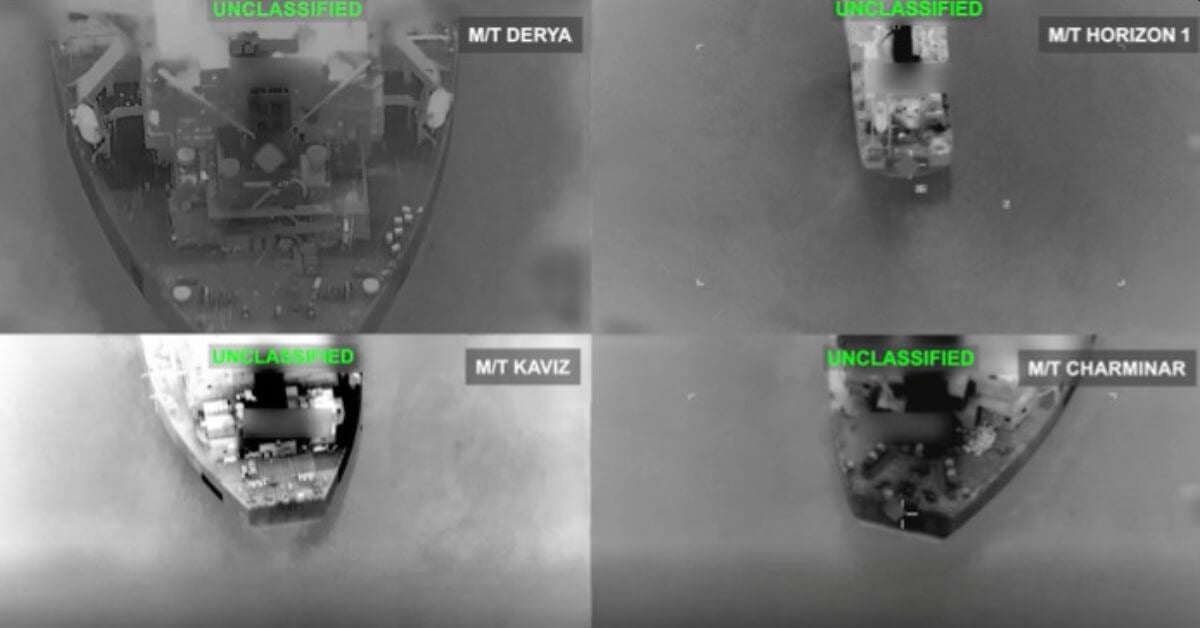
The US Central Command forces have destroyed five Iranian oil tankers on Tuesday (Sept 8, 2026).
The attack comes after Iran targeted a US Navy warship in two separate attacks over two days.
The American warship avoided both missile attacks and remained on patrol in regional waters. CENTCOM said no U.S. personnel were injured.
The four targeted vessels were M/T Charminar, M/T Kaviz, M/T Horizon 1, and M/T Riesco.
Before the strikes, U.S. forces instructed the crews to leave the tankers, CENTCOM said. The vessels were left inoperable after being struck.
The operation followed similar U.S. action on Sept. 5, when CENTCOM forces destroyed three Iranian oil tankers after the IRGC attempted to attack a U.S. aircraft carrier and a guided-missile destroyer.
CENTCOM said none of the IRGC’s attempts to strike U.S. Navy warships had succeeded.
According to the U.S. military, the five tankers were linked to a multibillion-dollar network that provides funding for the IRGC and its regional proxies. CENTCOM also said Iran was unable to defend the vessels.
CENTCOM forces destroyed five Iranian crude oil carriers, Sept. 8, after the Islamic Revolutionary Guard Corps (IRGC) targeted a U.S. Navy warship with ballistic missiles twice over the past two days. The U.S. warship successfully evaded the attempted Iranian attacks and… pic.twitter.com/Gi8a2tloN1
— U.S. Central Command (@CENTCOM) September 8, 2026
After the tanker strikes, Iran fired ballistic missiles at Jordan and told tanker crews near ports and piers in Kuwait and Bahrain to leave their ships, Iranian state television reported.
The Armed Forces of Jordan said air defences shot down 18 of the 20 missiles fired towards the country. Two others landed in areas with no population.
No casualties were reported. Jordanian authorities said specialist teams were working at the sites where the missiles landed to secure missile fragments and other debris.
Ali Abdollahi, the chief of staff of Iran’s armed forces had previously said Tehran would target U.S. military facilities across the region if Iranian tankers came under attack.
Oil prices rose following the strikes near Kharg Island, an important Iranian crude-export hub. Brent crude moved close to $100 a barrel, while West Texas Intermediate traded near $95.
Reference: US Centcom
Read on the original site
Open the publisher's page for the full experience