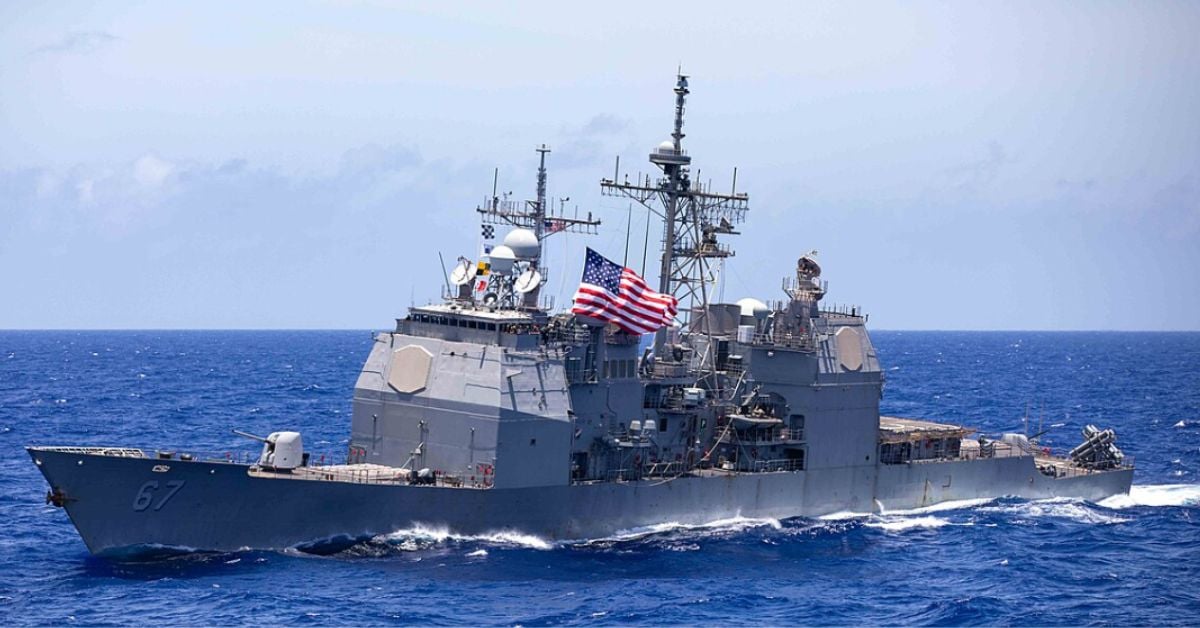
The retirement of three U.S. Navy warships after a combined 107 years of service is not merely a ceremonial milestone, it is a tangible signal that the operational landscape of maritime security is shifting beneath our feet. When vessels like USS Germantown, USS Lake Erie, and USS Shiloh are decommissioned, we lose more than steel and machinery; we lose decades of calibrated, real-world empirical data on how naval power adapts to conflict, crisis, and climate. For those of us tracking ocean intelligence and global security patterns, these decommissionings demand attention.
USS Germantown's 40-year career is a case study in integrated mission versatility. It pioneered the first Landing Craft Air Cushion amphibious operation, served in Operation Desert Shield, Operation Enduring Freedom, and Operation Iraqi Freedom, and also responded to the 2011 Japan earthquake and tsunami. That mix of combat and humanitarian roles is not accidental, it reflects a vessel designed for measured, longitudinal service across domains. Meanwhile, USS Lake Erie spent 33 years testing the Aegis Ballistic Missile Defense System, a system that now underpins much of our global missile defense architecture. And USS Shiloh, forward-deployed to Yokosuka, Japan, for 17 years, was among the first to fire Tomahawk missiles during Operation Desert Strike and Operation Iraqi Freedom. These are not just ships; they are platforms that validated technologies and tactics now considered standard. The Four decades of validated service: USS Germantown completes its integrated mission article captures that legacy directly. At the same time, Projectiles Strike Two Tankers Near Strait of Hormuz, UKMTO Reports reminds us that the strategic chokepoints these ships once patrolled remain volatile. And US Naval Deployments Continue as Middle East Operations Extend to Eighth Month underscores that the demand for forward presence has not diminished even as the fleet contracts.
Our take is clear: the retirement of these vessels creates a capability gap that must be measured, not dismissed. The Navy also decommissioned the submarine USS Alexandria, the littoral combat ship USS Fort Worth, three replenishment oilers, and two roll-on/roll-off vessels this year. That is a significant drawdown of logistical and combat capacity in a period when the Strait of Hormuz remains a flashpoint and the Indo-Pacific demands sustained presence. The question for policymakers and analysts is not whether these ships served well, they did, but what replaces the specific, validated functions they performed. Aegis testing, amphibious lift, and forward-deployed missile platforms are not easily replicated by newer, smaller vessels. The concrete takeaway here is that every decommissioning removes a node from the integrated data ecosystem of naval operations. The loss of USS Lake Erie, in particular, means losing a platform that spent three decades generating peer-reviewed performance data on ballistic missile defense, data that cannot be instantly regenerated. As we track climate indicators and security trends from orbit to ocean floor, we must also track what we are retiring. The next crisis may call for a ship that is no longer in the water.