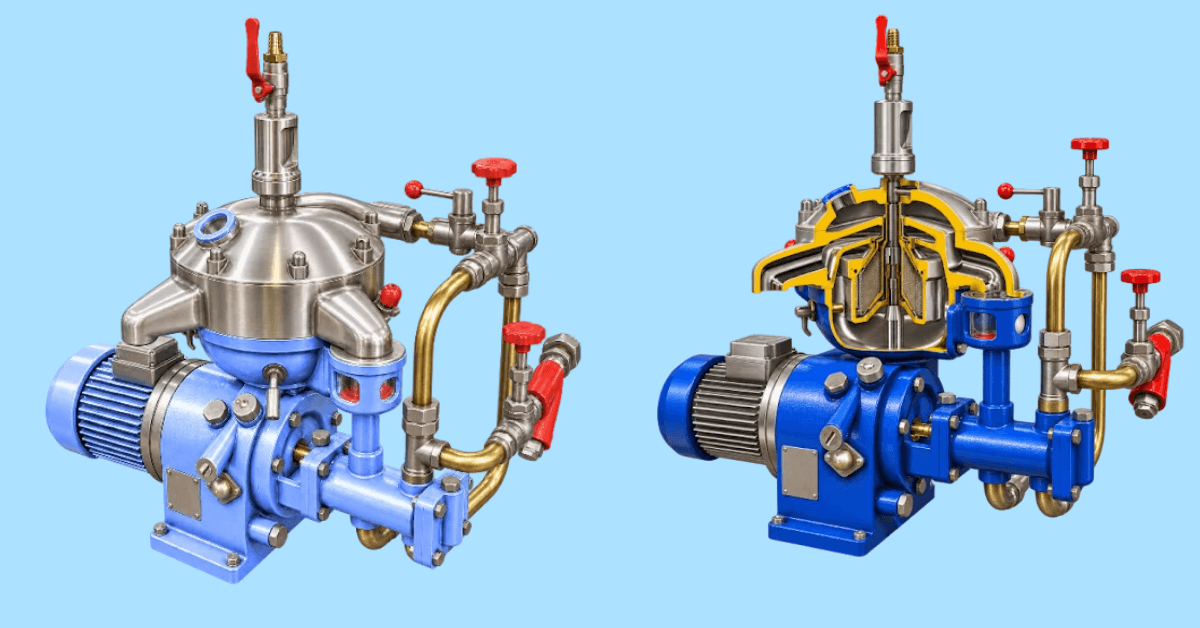
Theory has always preceded practice in marine engineering, but the gap between them has often been wider than it needs to be. A learner who studies centrifugal separation in a classroom may still struggle to identify a disc stack or gravity disc when standing in front of a running fuel purifier. That gap is not a failure of the learner, it is a failure of the learning sequence. The approach demonstrated by saVRee's fuel purifier course, watch, explore, read, test, offers a replicable model for closing that distance before a trainee sets foot in an engine room. This matters because the maritime industry cannot afford to treat practical knowledge as something that only begins on board, especially when incidents like a fire reported on an unidentified vessel near Al-Faw Port remind us that operational readiness starts with how well crews understand their machinery.
The sequence works because it respects how people actually learn. A video introduces the purifier's purpose and operating principle, giving the learner a conceptual framework before they confront terminology like bowl, disc stack, and gravity disc. An interactive 3D model then lets them rotate, zoom, and virtually disassemble the equipment, answering spatial questions that diagrams leave open. The handbook reinforces the technical detail at the learner's own pace, and the quiz identifies gaps before they become problems at sea. Each step builds on the previous one, and none of them substitutes for hands-on instruction. What they do is ensure that when a learner finally encounters a real purifier, they are not encountering it cold. They arrive with a mental map of the machine's layout and a vocabulary for discussing it. That preparation is not a luxury, it is a safety measure. Consider the two vessels grounded near Istanbul after drone damage and severe weather: unexpected events demand that engineers diagnose and respond quickly, and quick response depends on familiarity that should have been built before the emergency.
Our view is that this kind of blended learning should become a baseline expectation in marine engineering education, not an optional supplement. The industry already understands the value of preparation in other domains, KAGUYA’s 200 clean fuel transfers with zero incidents did not happen by luck; they happened because procedures and training were aligned before the first operation. The same logic applies to individual machinery training. The saVRee course does not replace the need for vessel-specific instruction or supervised practical experience, and it does not claim to. It simply ensures that the time spent on board is spent refining skills rather than learning basic component identification. The concrete takeaway for training providers and fleet operators is this: a learner who has watched, explored, read, and tested before boarding will be a learner who can ask better questions, follow procedures more closely, and recognize anomalies sooner. The question is not whether this approach works, the evidence is clear, but how quickly the industry will adopt it across the full range of shipboard systems.