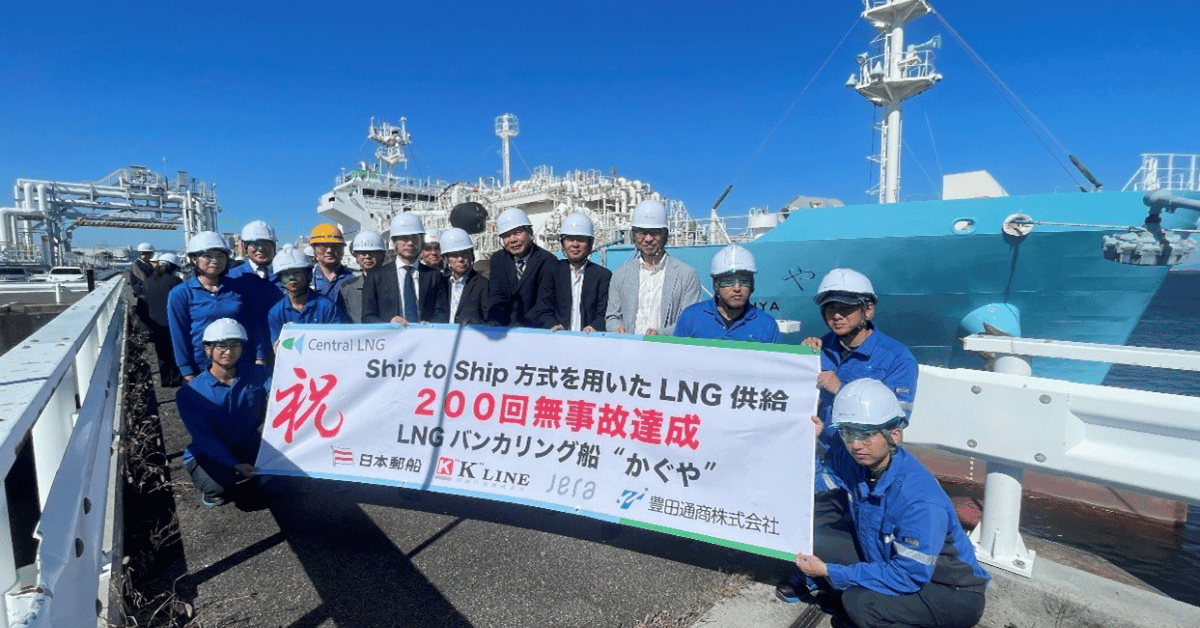
Two hundred ship-to-ship LNG fuel transfers. Zero accidents. That is the record KAGUYA has compiled since October 2020, and it deserves more than a quiet line in a shipping trade digest. The vessel's milestone is a practical demonstration that LNG bunkering can be scaled safely, and it gives the maritime industry a calibrated benchmark for what routine operations look like. The broader context is sobering: as we learn more about the scale of plastic accumulation in seafloor sediments and the rivers that feed it, the pressure to decarbonize shipping only intensifies. KAGUYA's record does not solve that problem, but it proves the operational groundwork is already being laid.
The vessel, owned by Central LNG Shipping and operated by Central LNG Marine Fuel, supplied the car carrier SWEET PEA LEADER at Mikawa Port on September 30, 2026. That it was the first LNG bunkering vessel to start operations in Japan makes the streak more meaningful. First movers often absorb the risks that later entrants avoid. KAGUYA has logged its 200th transfer without a single incident, which is not luck. It is the product of standardized procedures, crew discipline, and a system designed to fail safely. For shipowners considering LNG as a marine fuel, this is the empirical evidence they need: the infrastructure can handle repeated, real-world use.
This matters beyond Japan's Chubu region. LNG is a transitional fuel, not a terminal one, but the transition has to be managed with the same rigor as the destination. The data from KAGUYA's operations will inform how ports, regulators, and operators design bunkering networks elsewhere. It also sets a baseline for safety that alternative fuels will eventually be measured against. Ammonia and methanol bunkering will not earn public trust through press releases; they will earn it through documented, repeatable performance. KAGUYA's record is a template for that accountability.
The practical takeaway is direct: zero incidents over 200 transfers is not a footnote, it is a specification. Any port planning LNG bunkering infrastructure should study KAGUYA's operating history before drafting its own safety protocols. The next milestone to watch is not the 300th transfer, but whether this record holds as the vessel serves a wider mix of ship types and traffic volumes. If it does, the case for LNG as a reliable marine fuel strengthens considerably. If it does not, the industry will learn exactly where the limits are. Either way, the data will be measurable, and that is exactly the kind of transparency maritime decarbonization needs.