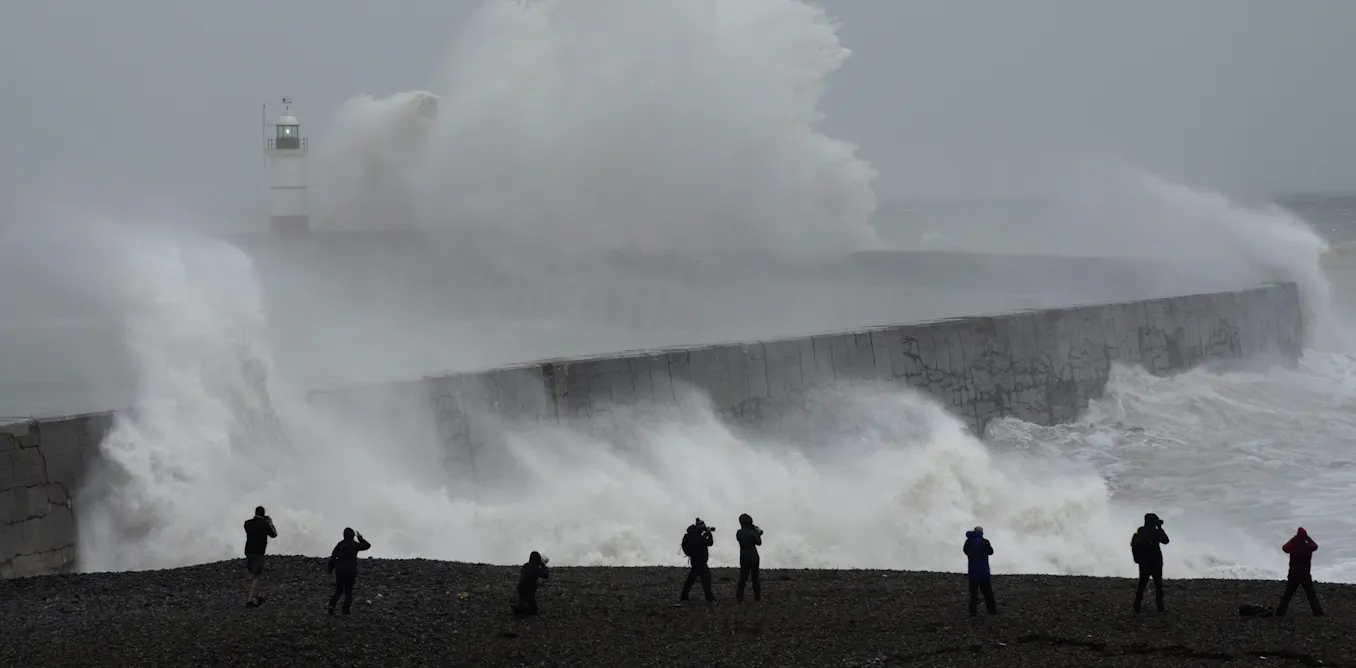
Earth is sending us a signal, and it is arriving through its own seismic pulse. New analysis of global seismic records reveals that ocean waves are measurably gaining strength as the planet warms, translating the diffuse energy of a changing climate into a direct, physical vibration in the crust. This is not a projection or a model run, it is an empirical, real-time reading of the ocean's growing power, and it demands that we treat ocean monitoring as the scientific infrastructure it has become. The finding collapses the distance between climate indicators and observable geophysics, giving us a calibrated metric for something we have long struggled to measure directly: the intensification of the marine system itself.
This development arrives at a precarious moment. As seismic data begins to show us the ocean's pulse in sharper relief, the systems that collect the foundational data needed to validate these signals face existential cuts. A Proposed US monitoring cuts risk global loss of calibrated ocean intelligence that would leave the world effectively flying blind. The irony is stark: just as we learn to read a new language of ocean change, we risk dismantling the instruments that give that language meaning. The seismic wave signal is powerful precisely because it is integrated, it captures the aggregate effect of warming across entire ocean basins. But without sustained, peer-reviewed measurement networks, we cannot separate signal from noise. We cannot track whether this year's stronger pulse is an anomaly or the new baseline.
What this means for researchers, policymakers, and ocean practitioners is a practical recalibration. The conventional approach of treating ocean monitoring as a discrete, siloed activity no longer holds. Ocean data expands from measured depths to validated insights precisely because we now understand that physical, chemical, and biological observations must be woven into an integrated data ecosystem. The seismic record is a powerful new thread in that weave, but it cannot stand alone. It needs calibration against buoys, satellites, and Argo floats to become actionable intelligence. And that intelligence is desperately needed: El Niño and La Niña no longer define cool and warm years, as "cool" years now routinely surpass the "warm" years of just a few decades ago. The ocean's pulse is accelerating, and the old climatic landmarks no longer anchor our understanding.
The specific takeaway here is direct: the seismic wave measurement gives us a new, longitudinal tool to track ocean energy gain, but only if we maintain the observing systems that ground it in reality. The open question is whether our institutional commitment to ocean intelligence will match the urgency of the signal the ocean itself is now broadcasting. Watch whether funding agencies treat this seismic method as a curiosity or as an operational capability, that decision will tell us more about our readiness than any single data point.