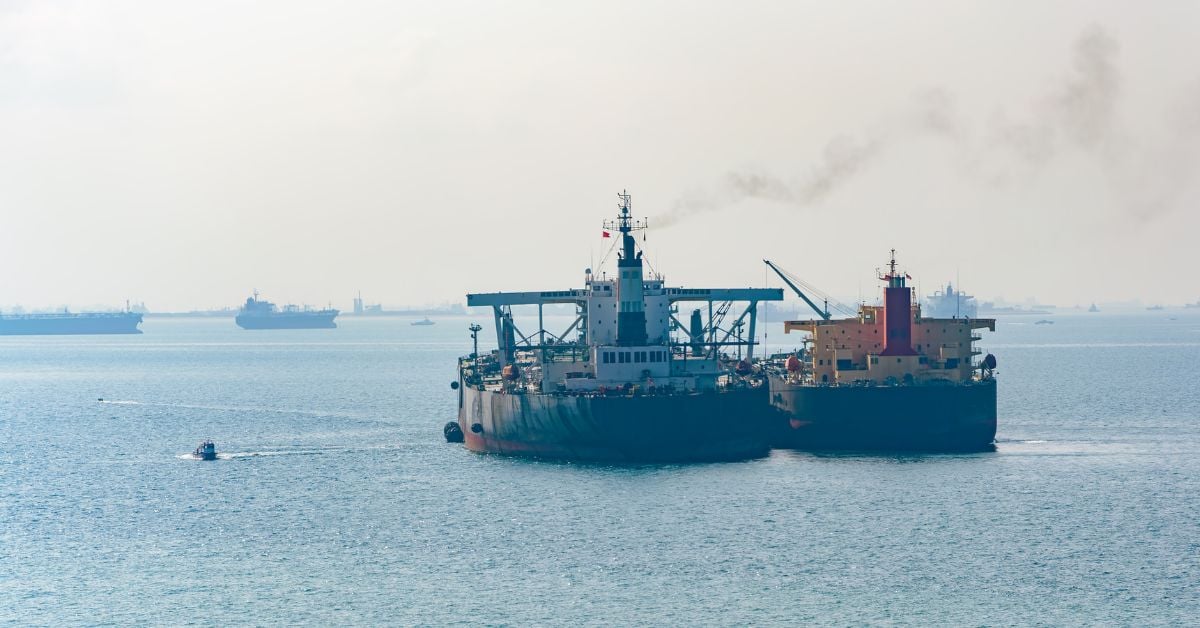
The rerouting of ship-to-ship transfers from the congested waters off Fujairah and Sohar to India's western maritime corridor is not a temporary workaround, it is a structural shift in how Gulf oil reaches Asia. This development signals that the Strait of Hormuz, long considered the chokepoint for global crude flows, is being functionally bypassed by a new, distributed transfer network stretching toward the Gulf of Kutch. For our readers, researchers, policymakers, and maritime analysts, the practical implication is clear: the risk calculus for tanker operations, insurance underwriting, and regional energy security has fundamentally changed.
The numbers are telling. In September alone, ship-to-ship transfers off India's Gulf of Kutch reached 82, moving 680,000 barrels per day, with refined products accounting for 65% of that volume. These are not marginal spillover operations; they represent a deliberate strategic pivot by Gulf producers, Adnoc, Aramco, Iraq, and Qatar, to retain their Asian customer base without requiring buyers to send tankers into the Strait of Hormuz. The logic is defensive but forward-looking. As US Forces Neutralize Iranian-Affiliated Vessel in Gulf of Oman demonstrates, the security environment in the Arabian Sea remains volatile. A recent attack on a tanker off Fujairah has already accelerated the dispersal of these transfer zones. The question is not whether this corridor will persist, but how quickly it will scale and what operational limits it will encounter.
This development also underscores the growing need for verified maritime data. When tankers loiter for days at sea, transferring crude onto very large crude carriers (VLCCs) in open waters rather than at designated port terminals, the traditional tracking of vessel movements becomes less reliable. The entire process, from loading in the Gulf to final delivery, now takes more than ten days, introducing new variables for weather, mechanical failure, and geopolitical interference. As we noted in Strait of Hormuz Posture Raises Stakes for Maritime Data Verification, the ability to empirically validate vessel positions, cargo transfers, and flag-state compliance is no longer a niche concern; it is a requirement for any stakeholder managing risk in this corridor. The dispersion of transfer zones makes integrated, real-time ocean intelligence indispensable.
The takeaway is specific and actionable: this corridor will not reduce overall tanker demand, it will increase it. Longer transit distances to transfer points mean more vessels are needed to maintain the same volume of delivered crude. India, China, and South Korea together absorbed 70% of the crude moved via these STS transfers. For India, the Gulf of Kutch is transitioning from a regional hub for refined products into a de facto gateway for crude destined across Asia. The open question is whether the infrastructure along India's west coast, port facilities, bunkering, and emergency response, can keep pace with this operational reality. Watch the next quarterly STS figures off Gujarat. They will tell us whether this is a tactical adjustment or the new baseline for Gulf-Asia energy flows.