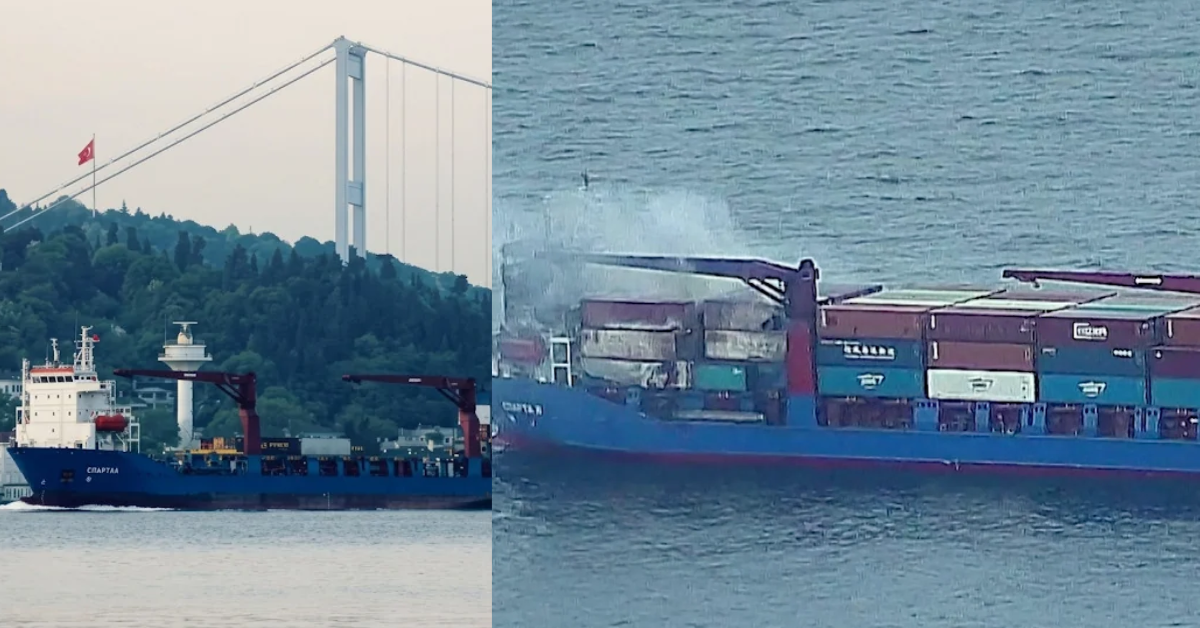
The attack on the sanctioned Russian cargo vessel *Sparta II* in the Gulf of Finland is not an isolated incident; it is a clear escalation of maritime conflict into a region that has long considered itself insulated from direct warfare. This is a practical shift in the operating environment for every vessel in the Baltic, and it demands a recalibration of how we assess risk at sea. As we noted in our coverage of the Sea drone strike capsizes Russian Navy corvette in Benghazi and the Geopolitical Tensions Surface in Baltic as Drone Strike Targets Russian Corvette earlier this month, the technology enabling these strikes is proliferating faster than the frameworks designed to contain them.
What makes the *Sparta II* event distinct is the direct involvement of a NATO member state in the immediate aftermath. Finnish authorities located the drifting ship 50 kilometers west of Suursaari island, coordinated firefighting, and oversaw its tow out of the Finnish economic zone, all while a Russian helicopter reportedly violated Finnish airspace. The situation was stabilized without environmental damage, according to Finnish Interior Minister Mari Rantanen, but the underlying reality is that a commercial vessel, sanctioned by the U.S. since 2022 and by Ukraine this year, became a legitimate military target in waters patrolled by NATO. This is not a hypothetical exercise in hybrid warfare; it is a real-time test of alliance response protocols.
The practical consequence for our readers, whether you are a policy analyst, a shipping risk manager, or a researcher tracking maritime security, is that the Baltic Sea has entered a new phase of vulnerability. The *Sparta II* was struck by two drones, lost steering, and drifted across a national maritime boundary while on fire. A Ukrainian drone strike had already hit the Russian corvette *Naro-Fominsk* in the same gulf on November 11. Meanwhile, the Rescue in the Black Sea: Drone Strike Capsizes Cargo Vessel Off Bulgaria on November 16 demonstrated that uncrewed systems are now capable of capsizing bulk carriers in open water. The pattern is consistent: drones are enabling asymmetric naval strikes with a precision and reach that outpaces traditional naval deterrence.
Finland's Border Guard has opened an investigation, and NATO has been informed. The open question is what data will be shared and how quickly. For the ocean intelligence community, this incident provides a rare empirical case study in drone-strike forensics: the ship's drift path, the thermal signature of its containers after two days, the absence of a fuel leak, and the timeline of international coordination. These are measurable, real-time data points that can inform future risk models. The takeaway is stark: the maritime domain is no longer a separate theater of war. It is a continuous surface where sanctions enforcement, military targeting, and environmental protection collide. The *Sparta II* was towed east, but the questions it leaves behind are heading straight for every port in the Baltic.