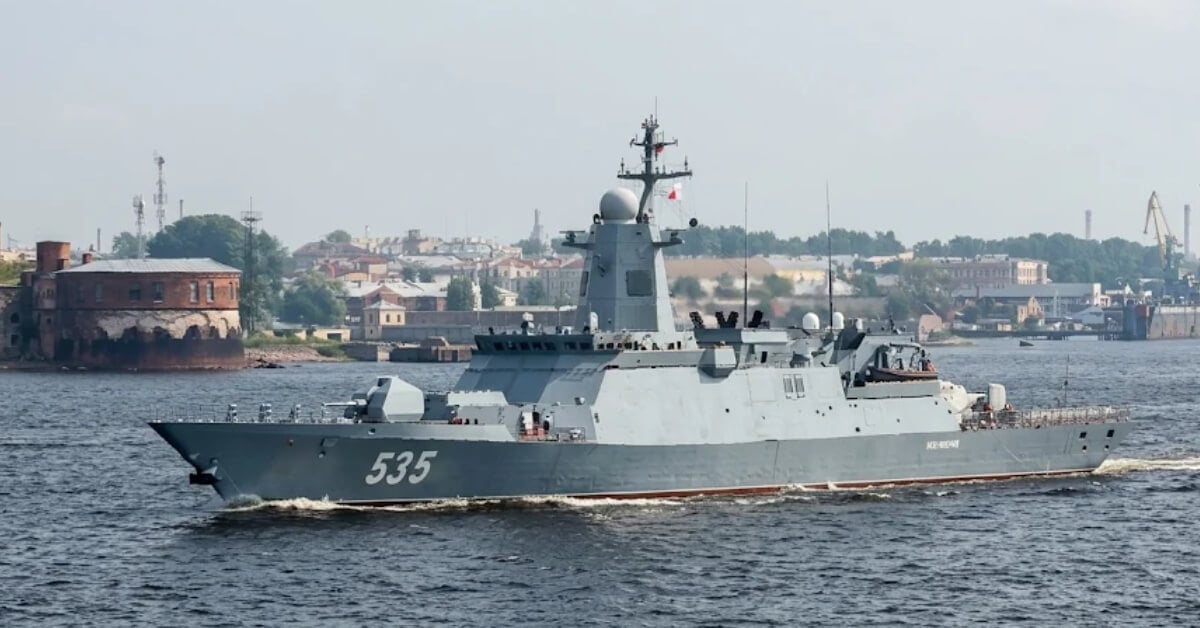
A capsized Russian Navy corvette in Benghazi is not merely a battlefield update, it is a calibrated signal that maritime warfare has entered a new empirical phase where uncrewed systems can project decisive force across sovereign ports and international shipping lanes. The strike on the *Merkury*, followed by attacks on two cargo vessels in separate seas within 48 hours, demonstrates that sea drones are no longer experimental tools but integrated, validated instruments of strategic pressure. For our readers, researchers, policymakers, and maritime professionals, this pattern demands a clear-eyed reassessment of what "security at sea" now means in practice.
The *Merkury* was not under combat patrol; it was docked for fuel and supplies under bilateral agreements between Russia and Libya. That a warship can be capsized at berth, with injuries reported and no deaths confirmed, raises immediate questions about the vulnerability of naval assets in ostensibly non-hostile ports. The eastern Libyan government's call for a joint investigation with Russia, and its assertion that Libya is not a party to the war, underscores a broader reality: sea drones erase the distinction between combatant and civilian waters. This is not alarmist rhetoric, it is a measurable consequence of technology that operates outside traditional rules of engagement. Compare this to the recent Lawsuit Filed After Tanker Collision Injures Cruise Passengers in New Orleans, where a conventional maritime accident led to legal liability and passenger harm. In Benghazi, the collision was deliberate, the weapon autonomous, and the legal framework for accountability still undefined.
Ukrainian President Zelenskyy's official claim of responsibility for the *Sparta II* strike, and the coordinated use of seven naval drones against that vessel, reveals a doctrine of calibrated escalation. The attack on the Russian cargo ship in the Gulf of Finland, which drifted into Finnish waters with a smouldering fire, forced three nations, Finland, Russia, and Estonia, to coordinate an emergency response. That is a concrete, real-time operational consequence: a state's maritime emergency protocols were activated not by weather or mechanical failure, but by a drone strike that crossed international boundaries. Meanwhile, the Seaman's Manslaughter Charge Sets Legal Precedent in Houston Ship Collision shows how traditional maritime law is struggling to assign responsibility for accidents. Sea drones add a layer of intentional, remote action that existing legal and operational frameworks are not built to handle.
The practical takeaway for our audience is this: the ocean is now a domain where a single drone, deployed from an undisclosed location, can disable a warship, disrupt global supply chains, and trigger multinational emergency responses. The *Merkury* capsized at its berth is a fixed data point in a longitudinal dataset that tracks the erosion of safe harbor. The next question is not whether such strikes will continue, but how port states and naval forces will integrate countermeasures into their standard operating procedures, and whether the international community will produce a calibrated, empirical response before the next vessel sinks.