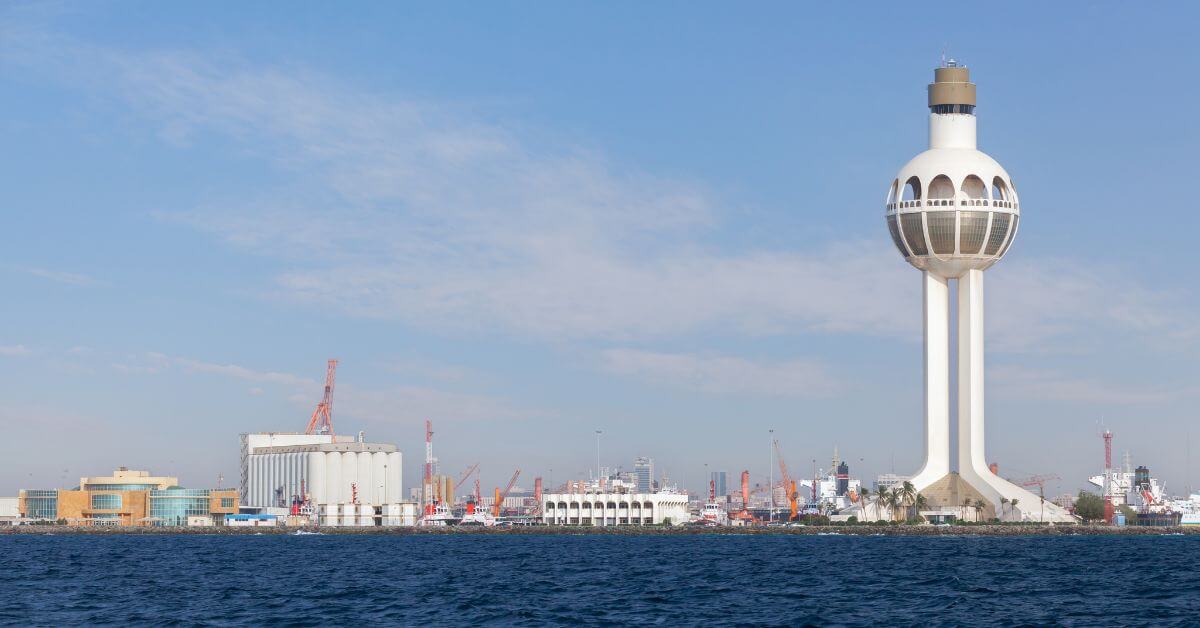
The closure of the Strait of Hormuz has made Saudi Arabia's Red Sea ports indispensable, and the Houthi threat to strike Jeddah and Yanbu is a calculated bid to sever that lifeline. This is not a rhetorical escalation; it is a direct assault on the kingdom's economic and humanitarian supply chain, and it demands that every maritime stakeholder in the region recalibrate their risk assessments immediately.
The warning from Houthi military spokesperson Yahya Saree on November 25 is unambiguous: if the Saudi-led coalition strikes Hodeidah, Saudi Red Sea ports will be attacked. The coalition followed through on that threat, hitting operational capabilities at Hodeidah, and the Houthis have already demonstrated their reach. A drone strike on Riyadh's tallest tower injured at least 11 people earlier this week. The pattern is clear, and it echoes a recent incident involving the cargo vessel *Golden Joy*, where Egyptian Crew Maneuver and Armed Guard Fire Repel Three Speedboat Attacks off Yemen. That crew's quick thinking averted disaster, but the underlying trend of escalating maritime threats in these waters is accelerating. The Houthis have already imposed a ban on all shipping to Saudi ports since July, warning that vessels breaking it could be hit with missiles and drones. Now they are ordering port workers to evacuate and shipping firms to pull out. For commercial operators, the calculus has shifted from heightened vigilance to active denial of access.
What makes Hodeidah the flashpoint is its dual role as a military target and a humanitarian lifeline. The port is the chief entry point for food and essential goods into Houthi-held northern Yemen, a country that depends almost entirely on imports. Striking Hodeidah degrades the Houthi war machine, but it also throttles the flow of aid to a population already enduring one of the world's worst humanitarian crises. This is the cruel paradox that defines the conflict: every tactical gain for the coalition risks deepening a strategic disaster for civilians. The coalition's claim that it destroyed targets in Saada and Amran suggests it is widening the campaign, and the Houthi response, pushing toward the Bab el-Mandeb Strait since September, has already turned that chokepoint into a battleground. The comparison to the Sanctioned Cargo Vessel Sparta II Towed from Finnish Waters After Drone Strike is instructive: in both cases, a single vessel becomes a pawn in a larger geopolitical game, but here the stakes are multiplied across an entire port complex and the millions who depend on it.
The practical takeaway for our readers is stark: shipping insurance premiums for Red Sea transits will spike, and port operators in Jeddah and Yanbu must prepare for the credible possibility of missile and drone interdiction. The Houthis have the capability, the intent, and now a stated operational trigger. The coalition's vow of a firm response to the Riyadh strike suggests the cycle of escalation is far from over. The question that remains unanswered is how the international community will reconcile the need to protect commercial shipping with the imperative to keep Hodeidah open for humanitarian imports, because striking the port does not only hurt the Houthis. It starves the people of Yemen.