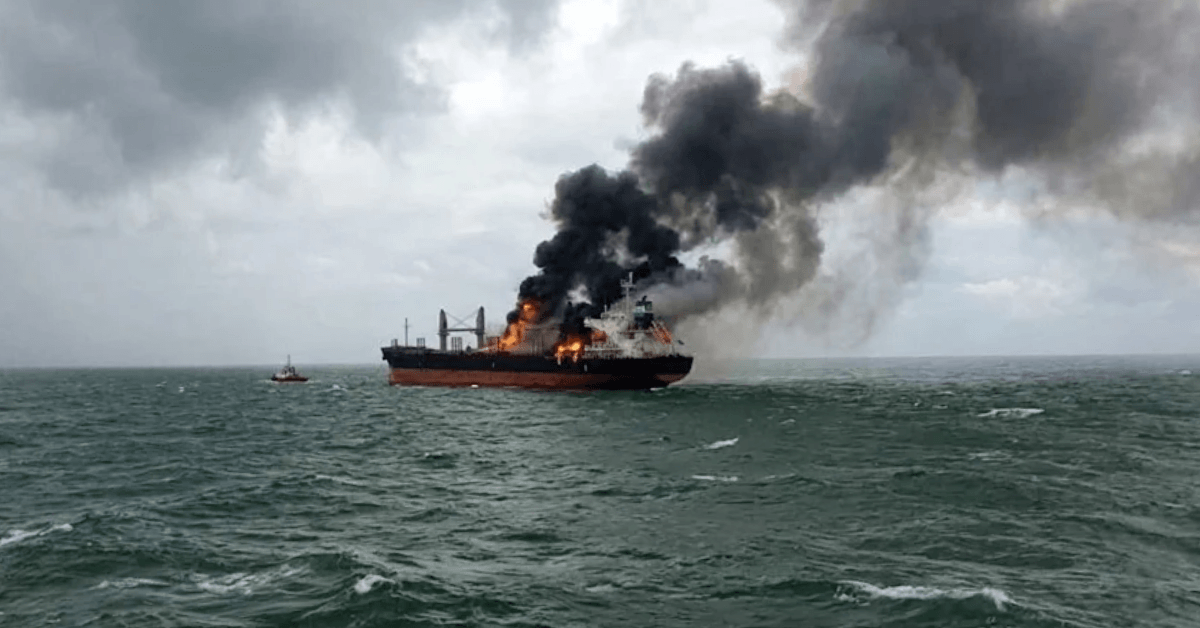
The crew of the *Golden Joy* did what too many maritime professionals are now forced to do: they improvised, they acted, and they survived. That a 19,799-ton cargo ship with 21 Egyptian sailors on board repelled three speedboat attacks off Yemen by changing course, increasing speed, and relying on armed guards to fire warning shots is not just a story of quick thinking, it is a stark indicator of how routine maritime security threats have become in waters that were already under immense pressure from climate and conflict. This incident, which took place on November 17 but was only confirmed by Egypt's Ministry of Transport on November 22, is part of a broader pattern that directly affects the safety of shipping lanes, the cost of global trade, and the health of the ocean ecosystems that our readers study and protect.
The *Golden Joy*'s evasion is a tactical success, but it highlights a strategic failure. The waters off Somalia are now one of four active danger zones identified by the UN, alongside the Strait of Hormuz, the Red Sea, and the Black Sea. That last region, the Black Sea, has already seen over 300 vessel attacks, leading to a 63% loss of grain corridor shipments, as our reporting on the Black Sea grain corridor loses 63% of shipments amid 300 vessel attacks documented. The parallel is uncomfortable but necessary: the same combination of armed guards, course changes, and speed that worked for the *Golden Joy* is not a scalable solution for the thousands of ships transiting these chokepoints. When every voyage requires a security plan and armed personnel, the cost of shipping rises, and the margin for error in environmental monitoring or scientific research shrinks. Our readers, whether researchers tracking climate indicators or policymakers shaping maritime law, must understand that these security threats directly compete with the resources available for ocean stewardship.
What makes this incident worth examining closely is the human element. Captain Ali Suleiman and his 20 Egyptian crew members are not naval special forces; they are merchant mariners who relied on training, discipline, and the presence of armed guards. Egypt's Ministry of Transport praised their courage, and rightly so. But the deeper question for our audience is whether the international community can continue to rely on individual crew heroics and ad hoc armed security to protect vessels in zones where the UN itself has flagged active danger. The Law of the Sea as a shield for the Gulf's fragile marine life is already strained by pollution and overfishing; adding persistent piracy threats to that equation makes it harder to enforce environmental protections when ships are focused on survival. The *Golden Joy*'s attackers turned back after warning shots, but the next attempt may not be so easily deterred, especially as sea drone technology, responsible for the capsizing of a Russian Navy corvette in Benghazi, as covered in our Sea drone strike capsizes Russian Navy corvette in Benghazi report, becomes more accessible to non-state actors.
The concrete point to watch is the response of the International Maritime Organization and regional security coalitions. The *Golden Joy* was San Marino-flagged, crewed by Egyptians, and attacked off Yemen, a jurisdictional tangle that makes coordinated protection difficult. If piracy in these waters continues to rise, the burden will fall on crews like Captain Suleiman's to adapt, and on the ocean data community to integrate security variables into models of shipping traffic, emissions, and marine habitat disturbance. The next time a speedboat approaches a cargo ship, the outcome may depend less on warning shots and more on whether the international system has learned anything from this near miss.