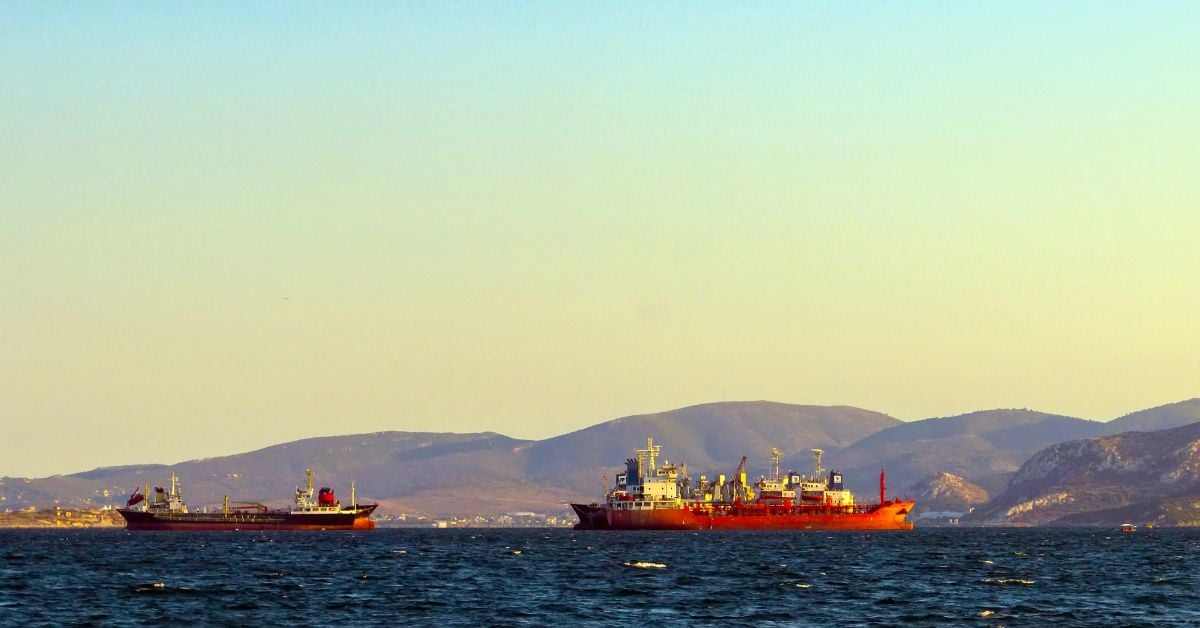
The image accompanying the Houthi report shows a patrol boat cutting through a flat, grey sea, a reminder that the most consequential battles in maritime security are often decided in waters that look calm from the surface. The news that U.S. Embassy personnel met Houthi representatives in Muscat, days after the group seized a stretch of Yemen's Red Sea coast, is not a concession to militancy. It is a recognition of geography and physics. You do not negotiate away a strait; you negotiate for the right to keep using it.
This is where the story connects to the broader commercial picture our readers track daily. The Gulf of Oman STS Transfers Max Out Amid Rising Saudi Oil Exports shows a chokepoint working at full capacity, with ship-to-ship transfers acting as a pressure valve for export schedules. That valve now sits inside a security perimeter that just changed hands. Similarly, the Puntland Forces Intercept Hijacked, US-Sanctioned Oil Tanker After 48 Hours proved that even sanctioned tonnage requires a functioning security response. Put those two events next to Muscat, and the pattern is not about politics. It is about the operational gap between what insurers will underwrite and what the ocean will allow.
Our take is straightforward: dialogue in Muscat is the most reliable instrument available for keeping the Red Sea a commercial corridor rather than a war zone. The Houthis now control coastline they did not have a week ago. That is a fact with immediate consequences for draft limits, anchorage availability, and the risk calculus of every master transiting Bab el-Mandeb. The United States engaging directly is not an endorsement; it is a deconfliction measure. We would tell any reader asking what this means that the practical effect is in the fine print of war risk premiums and the updated routing guidance from OCIMF. Watch those documents, not the statements.
The open question is whether the Houthis see a seat at the table as a strategic asset or a delaying tactic. The group has historically used negotiation windows to consolidate territorial gains, and the Eighty Nations Urge Reopening of Vital Strait of Hormuz Shipping Lane highlights how quickly diplomatic pressure builds when a strait is closed. But Hormuz is a narrow, deep channel; the Red Sea coast is a wide, shallow approach. The specific detail to watch is whether the Houthis permit survey operations and navigational aids to resume along the captured stretch. That single metric will tell you more than any communiqué whether Muscat produced a realignment or a pause.