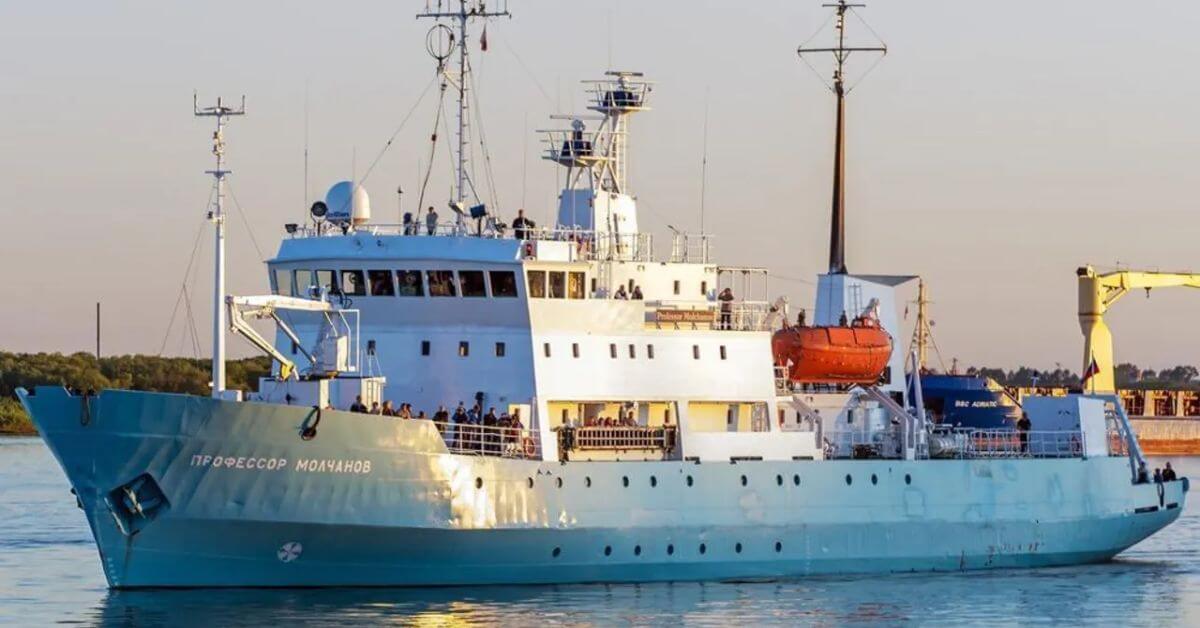
The seizure of a Russian vessel off the Norwegian coast, tied to commercial expedition cruises in Svalbard, is not a simple maritime dispute. It is a calibrated enforcement of international arbitration, executed with the kind of precision that defines modern ocean governance. Norway acted on a Ukrainian firm's request to enforce a $4.22 billion arbitral award, and the message is unambiguous: legal rulings carry weight, even in the high north. For our readers, this is not about headlines; it is about how the rule of law is being tested and upheld in waters where commercial activity and geopolitical tension increasingly overlap.
This action sits alongside a pattern of Russian maritime recalibration that our publication has tracked closely. The Kremlin's plans to collect more than 200 billion roubles from exporters for new icebreakers and the suspected drone operations from commercial ships in the Mediterranean are not isolated incidents. They are components of a broader strategy to project power through civilian assets. Norway's move, therefore, is less about punishing one vessel and more about drawing a line that says: commercial flags do not grant immunity from judicial process. The Vostok project’s Arctic oil exports further illustrate how economic ventures are leveraged as instruments of statecraft, and Norway's enforcement is a direct counterpoint to that logic.
What should a reader take from this? Practical implications matter more than speculative geopolitics. If you are a shipping operator, an insurer, or a logistics planner, this ruling signals that arbitral awards are not paper tigers. Vessels owned by states or state-linked entities can be seized when they enter jurisdictions willing to act. The vessel in question is a commercial cruise ship, not a naval auxiliary, which makes the point sharper: no category of Russian maritime activity is beyond reach. For policymakers, this sets a precedent for how other nations might handle similar awards, particularly in the Baltic or Barents seas. The takeaway is concrete: enforceability is a function of political will, and Norway just demonstrated that will.
We would tell a reader who asks about this: watch the operational consequences. The vessel's detention disrupts scheduled cruises to Svalbard, but the larger issue is the chilling effect on Russian commercial maritime operations in European waters. The question is not whether Norway overstepped, but whether other states will follow suit when presented with enforceable judgments. The specific detail to monitor is how Moscow responds diplomatically, not just rhetorically. If Russia recalibrates its Northern Sea Route revenue plans in response, as the icebreaker funding suggests it might, then this seizure becomes a bargaining chip in a larger exchange. For now, the ocean remains a domain where legal precedent and physical presence converge, and Norway has made clear which side it stands on.