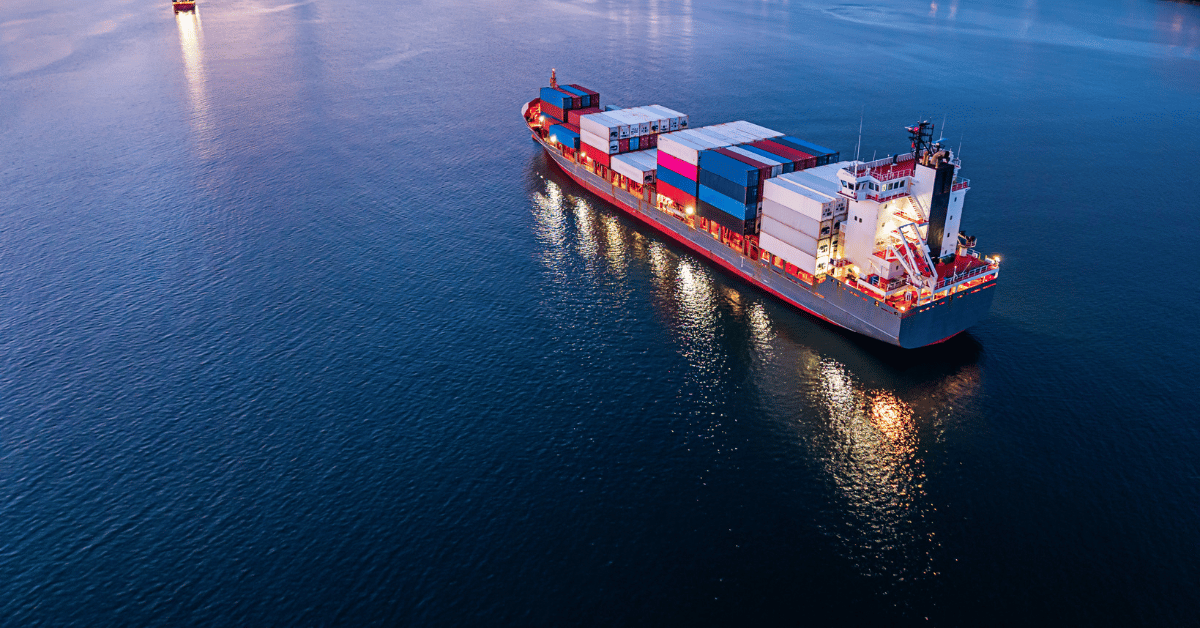
The Northern Sea Route logged 14,000 TEUs in eight pre-winter transits this season, and that number matters less than the pattern it confirms: Arctic shipping is becoming a scheduled, measurable commercial operation, not a series of experiments. Sea Legend Shipping completed all eight planned departures for 2026, running weekly sailings between China and Europe from July through September. The cargo, energy equipment, power batteries, and new energy vehicles bound for over 20 countries, is exactly the kind of high-value, time-sensitive freight that justifies the route's 18-to-20-day transit time, roughly half the Suez Canal journey. But the season remains strictly bounded: the last two ships left on 27 September, earlier than scheduled, because ice forecasts expanded. This is not a year-round alternative, and treating it as one would misread the data.
The practical implication for our readers, researchers, policymakers, and industry analysts, is that Arctic maritime logistics now demand integrated observation systems, not just seasonal planning. The decision to cut departures short in September was driven by ice forecasts, which themselves depend on the kind of empirical, real-time climate indicators that our publication has tracked closely. The rapid changes in Arctic sea ice extent and thickness, detailed in Refining sea ice models to capture fractal features reshapes estimates of Arctic marine production, directly determine the operational window for vessels like those in Sea Legend's fleet. Without calibrated, peer-reviewed models that capture the fractal nature of ice cover, a shipping company cannot reliably schedule a four-month season, let alone the eight-month window some analysts have speculated about. Meanwhile, the cargo itself, power batteries and new energy vehicles, connects to the resource-efficiency dynamics examined in Measuring Coastal China's Resource Efficiency with Integrated Frontier Models. Moving these goods through Arctic waters reduces fuel consumption per container compared to the Suez route, but the trade-off is a compressed, ice-dependent calendar that constrains total throughput.
Sea Legend intends to resume next summer and build toward a four-month season with more voyages. That ambition is credible, but it hinges on something the company does not control: the pace of ice loss. The 2026 season saw 15,700 TEUs of scheduled capacity across eight voyages, with the largest ship, Istanbul Bridge, carrying 4,890 TEUs. Extending that to a four-month window would require either more ice-strengthened vessels or a longer period of open water, and likely both. The specific consequence to watch is whether the 2027 season begins earlier than August or ends later than September. If it does, that will reflect a measurable change in the Arctic's physical reality, not just a logistics decision. If it does not, the route remains a niche corridor for premium cargo, not a structural shift in global trade. Either outcome is data worth having.