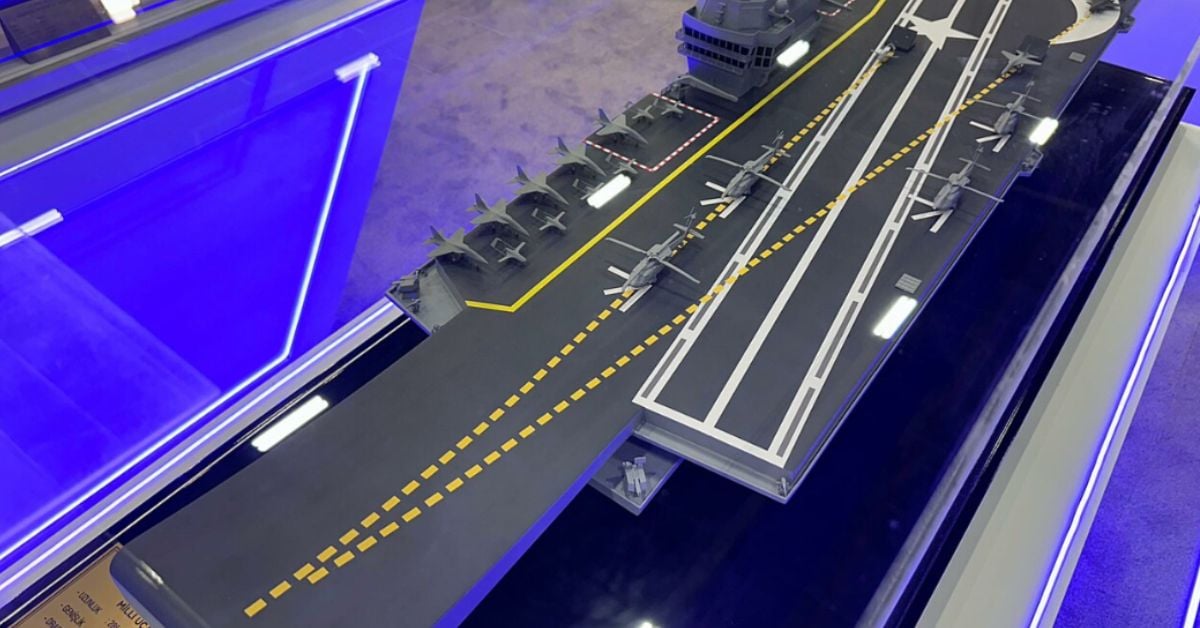
Türkiye's MUGEM carrier program is a bold claim of naval innovation, but it also reads as a solution in search of a proven operational problem. The ambition to integrate unmanned aerial, surface, and underwater systems into a single 60,000-ton platform is technically novel, yet defense analysts rightly urge caution: launching and recovering small unmanned surface vessels (USVs) and unmanned underwater vehicles (UUVs) from a high-speed carrier introduces tactical vulnerabilities that traditional navies have deliberately avoided. For our readers, whether in policy, research, or naval operations, the practical question is whether this integrated unmanned carrier concept will force a rethink of carrier doctrine or simply validate why the United States Navy is launching the largest infrastructure project in its history to cement maritime presence in the Pacific, where established carrier air wings already handle multi-domain threats without the added risk of slow-speed USV operations.
The MUGEM's design choices reinforce this skepticism. At 285 meters long and displacing 60,000 tonnes, the carrier will rely on a short takeoff but arrested recovery (STOBAR) system with a 12-degree ski jump, meaning no catapults and no ability to launch fully loaded heavy fighters. Its air wing will draw from existing Turkish drone designs like the Kızılelma combat drone and the Bayraktar TB3, alongside a naval variant of the Hürjet trainer. This is a credible unmanned aviation capability, but it does not replicate the multi-role strike, electronic attack, and anti-submarine warfare (ASW) coverage that the People’s Liberation Army Navy has achieved with the deployment of its largest warship, the Type 003, which uses electromagnetic catapults for higher launch energy and heavier payloads. The MUGEM will also operate in a group with destroyers, submarines, and frigates, exactly the formation that typically delegates USV and UUV operations to escorts. The real test is whether the carrier's integrated unmanned control systems can coordinate these assets under combat tempo without exposing the mother ship to the very threats it is meant to counter.
One specific consequence to watch is the program's timeline and the maturity of its unmanned systems. Commissioning is expected by 2032, but the service plans to construct three distinct unmanned aircraft types, none of which have been operationally validated for carrier-based launch and recovery at sea. The Bayraktar TB3, for example, is a fixed-wing drone designed for short-runway operations, but recovering it on a moving deck in high sea states is a nontrivial engineering challenge. Meanwhile, India has validated naval air power with Rafale Marine trials aboard INS Vikrant, demonstrating that manned fighter integration remains the benchmark for credible carrier aviation in the near term. For Türkiye, the MUGEM's success will hinge not on the number of drones it can carry, but on whether its integrated data ecosystem can deliver real-time, validated threat assessments across aerial, surface, and underwater domains faster than a traditional carrier strike group. That is the measurable metric, not the claim of being first.