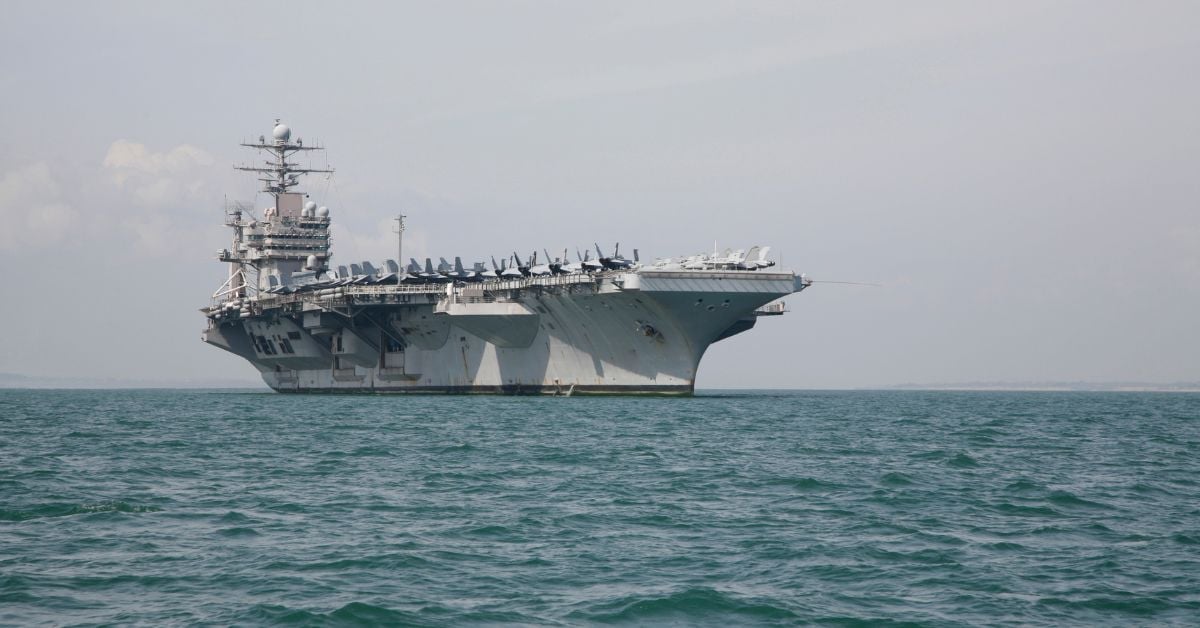
China's third aircraft carrier, the *Fujian*, is now ready for flight operations with its three electromagnetic catapults, and the implications for naval power in the Pacific are immediate and measurable. This is not merely a ship joining a fleet; it is a clear signal that the People's Liberation Army Navy has solved a critical engineering problem that constrained its previous two carriers. The *Fujian* represents a generational leap from the ski-jump ramps of the *Liaoning* and *Shandong*, which forced aircraft to launch with reduced fuel and weapon loads. By adopting a catapult-assisted takeoff but arrested recovery (CATOBAR) configuration, China can now launch heavily armed aircraft, including the KJ-600 for over-the-horizon radar and battle management, from a deck that sits between the U.S. Navy's *Nimitz* and *Gerald R. Ford* classes in size. For our readers tracking the balance of naval capability, the practical takeaway is this: the *Fujian* gives China the ability to project combat air power with the same sortie generation potential as a U.S. carrier, albeit with a non-nuclear propulsion system that limits its unrefueled range to roughly 10,000 nautical miles.
The technical achievement here is the Medium-Voltage Direct Current (MVDC) power system that makes the electromagnetic catapults work without nuclear reactors. American carriers like the USS *Gerald R. Ford* use nuclear steam to drive their Electromagnetic Aircraft Launch System (EMALS), but China's engineers built a system that stores and distributes high-voltage energy bursts from diesel generators and steam turbines. This is a validated, integrated solution to a problem that has stymied other navies attempting CATOBAR operations without nuclear power. The *Fujian* can recharge and fire its catapults without exhausting its boilers, which means sustained launch cycles are possible. This is not a paper capability; it is a calibrated, operational system now on a 316-meter warship. For comparison, the U.S. Navy recently launched the largest infrastructure project in its history to sustain its carrier presence in the Pacific, as we covered in Dry Dock for 1,210-Foot Carriers Anchors Navy's Largest Pacific Build. That effort is about maintaining a fleet that has operated nuclear CATOBAR carriers for decades. China's path has been different: from a half-completed Soviet hull to the ski-jump *Liaoning*, then the *Shandong*, and now to a domestically designed electromagnetic system. The *Fujian* closes a gap that once seemed wide.
What this means for the operational environment is a new variable in carrier group deployments. The *Liaoning* group already deployed toward the southern Philippines during recent Pacific exercises, as reported in Carrier Group Liaoning Deploys Toward Southern Philippines Amid Pacific Exercises. Those operations demonstrated China's willingness to project power beyond its immediate waters, but the *Liaoning*'s ski-jump limited the endurance of its aircraft. The *Fujian* changes that calculus. Its ability to launch fully armed, longer-endurance aircraft means its carrier air wing can maintain combat air patrols for extended periods and deliver strike payloads that were previously impossible from a Chinese deck. The open question is how quickly China can integrate the *Fujian* with its existing carrier group structures and whether the Navy will prioritize a third carrier group or replace one of the ski-jump ships. India's validation of naval air power with Rafale Marine trials aboard INS *Vikrant*, detailed in India validates naval air power with Rafale Marine trials aboard INS Vikrant, shows that other regional navies are also expanding their carrier capabilities. The *Fujian* is not the end of a story; it is the beginning of a new phase in which three navies in the Indo-Pacific operate catapult-capable carriers. The specific detail to watch is how the *Fujian*'s MVDC system performs under sustained high-tempo operations during its first extended deployment. That empirical data will tell us whether China has matched the reliability of steam or nuclear systems, or whether it has introduced a new vulnerability.