Ukraine's naval drone strike on a Russian corvette in Libya's Benghazi port redefines the geography of modern maritime conflict, and we should treat it as a direct warning to every coastal state that assumes war zones remain tidy, distant, and predictable. This is no longer a war contained to the Black Sea. The Merkury was hit while refueling in a port hundreds of miles from the nearest Ukrainian coastline, and Kyiv has now publicly asserted that Russian warships and military-carrying cargo vessels are valid targets anywhere, under Article 51 of the UN Charter. That legal argument, whether or not it holds universally, has already been tested in practice. The implications for global maritime security are immediate and measurable.
What makes this strike different from earlier Ukrainian attacks on Russian vessels in the Mediterranean is the location: a sovereign port in a fractured state. Libya's Government of National Unity in Tripoli condemned the operation, while the eastern-based Libyan National Army confirmed two of its personnel died and promised retaliation. The attack also raises the question of how a third-party port becomes a legitimate battlespace. The Russian corvette had docked to refuel and resupply while escorting cargo ships carrying military supplies. Ukraine argues that makes it a valid target under self-defence. But the strike killed Libyan personnel, not Russian ones, and the LNA has signaled it will respond. This is the kind of escalation that turns a bilateral war into a regional security crisis, exactly what we have seen in the Red Sea, where port strikes and evacuation orders have reshaped shipping routes and insurance premiums. Our coverage of Coalition Strikes Hodeidah Port Following Civilian Evacuation Order and Red Sea port security threatened as coalition strikes Hodeidah shows how quickly a single port attack can cascade into broader threats to commercial shipping and civilian infrastructure. The Benghazi strike follows the same pattern, but with an added layer: the port was not controlled by either belligerent.
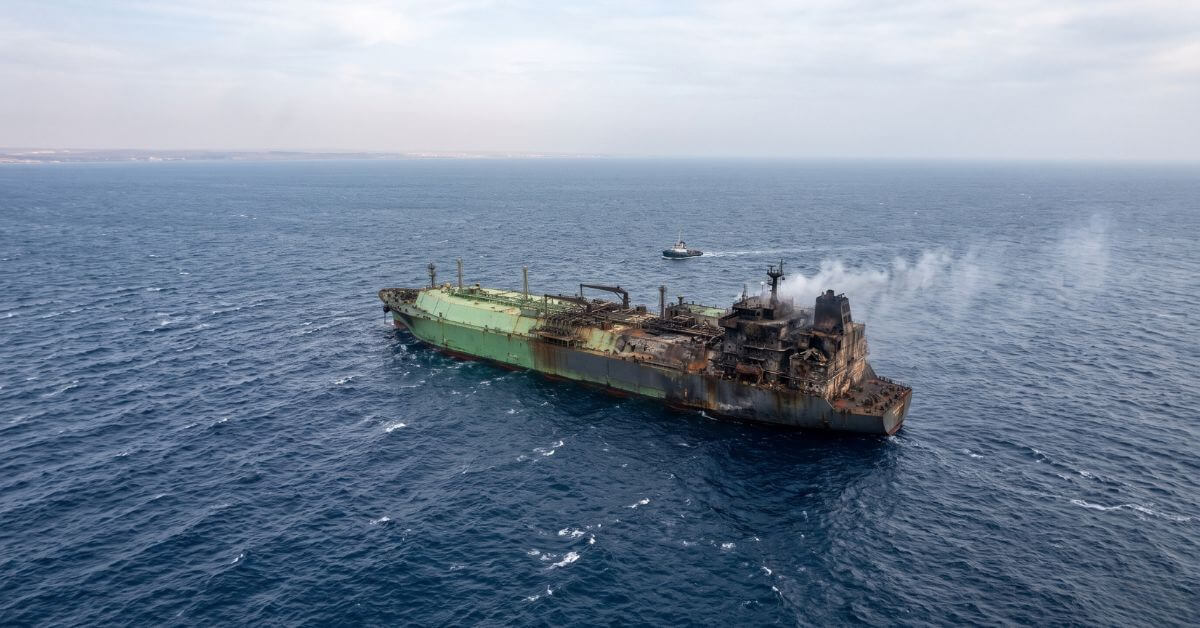
For our readers, researchers, policymakers, and maritime operators, the concrete takeaway is that the definition of a "maritime threat zone" has expanded beyond coastal waters and chokepoints to include any port where a belligerent vessel can dock. This is not theoretical. Ukrainian sea drones have now struck Russian vessels in the Baltic, the Black Sea, and the Mediterranean. The March attack on the LNG carrier Arctic Metagaz left it drifting off Libya. The November strike on the cargo ship Sparta II in the Gulf of Finland required a tow back to St. Petersburg. Each of these incidents erodes the assumption that international ports provide safe harbor. The Black Sea grain corridor has already lost 63 percent of its shipments amid more than 300 vessel attacks, as we reported in Black Sea grain corridor loses 63% of shipments amid 300 vessel attacks. That corridor's collapse was driven by proximity to active combat. The Benghazi strike proves that proximity is no longer the limiting factor.
The open question that demands attention is whether other states will retaliate against Ukraine for operations launched from or through their territory. Eastern Libyan authorities have asked the UN to investigate reports that Ukrainian military experts are operating in western Libya. If those reports are validated, the conflict risks drawing in not just Libya's divided factions but also the regional powers that back them. The next naval drone strike in a neutral port may not be met with a diplomatic statement, it may be met with a return strike. That is the detail to watch: not the legal justification, but the response.