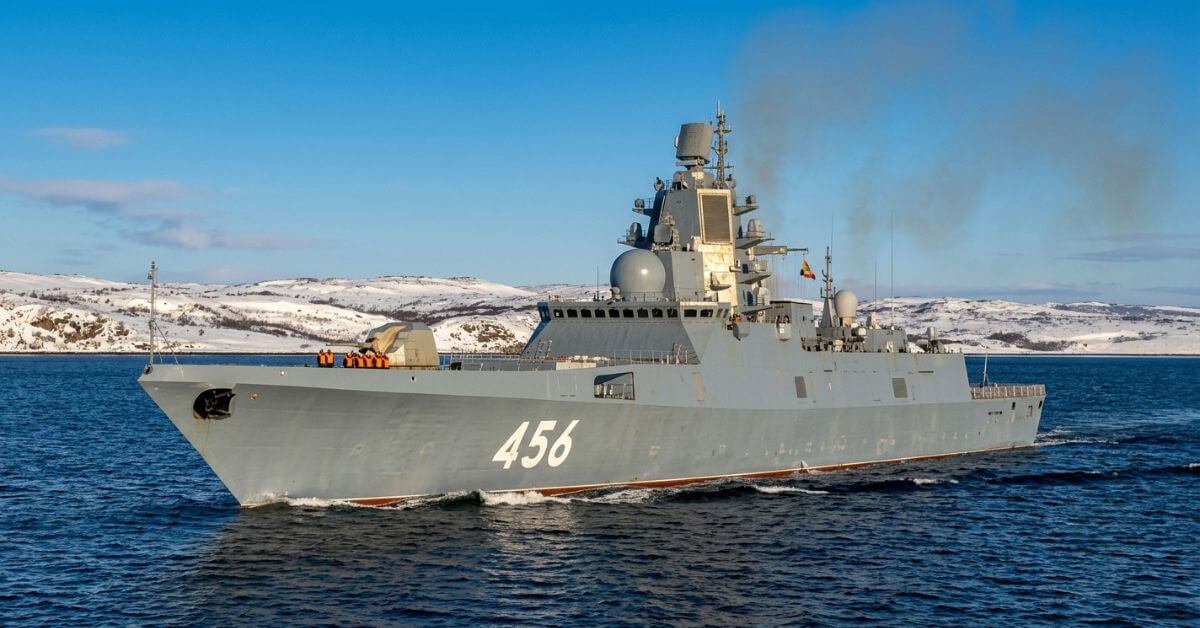
The sinking of a Russian corvette in Benghazi has done more than remove a warship from the water, it has forced a military convoy to reverse course in the Mediterranean, revealing a new vulnerability in how Russia projects naval power. This is not a minor tactical setback; it is a strategic signal that the calculus of maritime warfare has shifted, with implications that extend far beyond the Black Sea.
When Ukrainian sea drones struck the *Merkury* at its mooring on November 22, the three Russian-flagged cargo ships being escorted by the frigate *Golovko* paused their journey near the Strait of Sicily. The convoy, carrying military vehicles from Kaliningrad, had been heading toward Libya. Now its destination is uncertain. This incident follows a pattern we have tracked closely: Grain corridor integrity compromised as strikes hit two vessels near Odesa demonstrated how drone strikes can disrupt commercial shipping even within a protected corridor. What we are seeing now is that same asymmetric capability applied at range, 2,000 kilometers from the Ukrainian battlefield, forcing a frigate-escorted convoy to abandon its mission. The vessels, operated by sanctioned Russian firms Sovfracht and MG-Flot, have stopped transmitting their positions on tracking platforms since November 12. The *Lady R*, one of the ships in the convoy, had previously drawn US sanctions in 2023 for loading weapons at a South African naval base. Black Sea shipping risks threaten global ocean intelligence and developing nations highlighted how such disruptions hurt developing countries most; this Mediterranean pause extends that risk to a new theater.
Our take is straightforward: the loss of the *Merkury* has exposed a critical weakness in Russia's ability to sustain its logistics chain across the Mediterranean and into Africa. The fact that a single drone strike on a corvette in port could halt an entire convoy illustrates how fragile these supply lines have become. The vehicles on board were likely destined for Russia's Africa Corps, operating in West Africa, or for the Libyan National Army led by Khalifa Haftar. Ukraine's Foreign Minister Andrii Sybiha made clear that Kyiv does not plan to extend its war to Libya or any other nation, but the operational reality is that Ukrainian forces can now strike Russian naval assets wherever they are vulnerable. This changes the risk calculus for every Russian-flagged vessel operating in the Mediterranean. The *Golovko* may be a frigate, but it cannot protect a convoy if the threat comes from an unmanned surface vessel attacking at anchor. The practical consequence for readers, whether you are tracking global shipping patterns, monitoring sanctions enforcement, or assessing security risks in the North African littoral, is that the Mediterranean is no longer a safe rear area for Russian military logistics. The next question is whether the *Maia 1*, *Lady R*, and *Lady D* will attempt to complete their journey, or whether this pause becomes a permanent rerouting that forces Moscow to find new methods of resupply. Tanker capsizes off Ibiza with 7,000 tonnes of diesel as monitoring begins reminds us that the Mediterranean is already a high-risk environment for maritime operations. The difference now is that the risk is no longer just environmental, it is tactical, deliberate, and expanding.