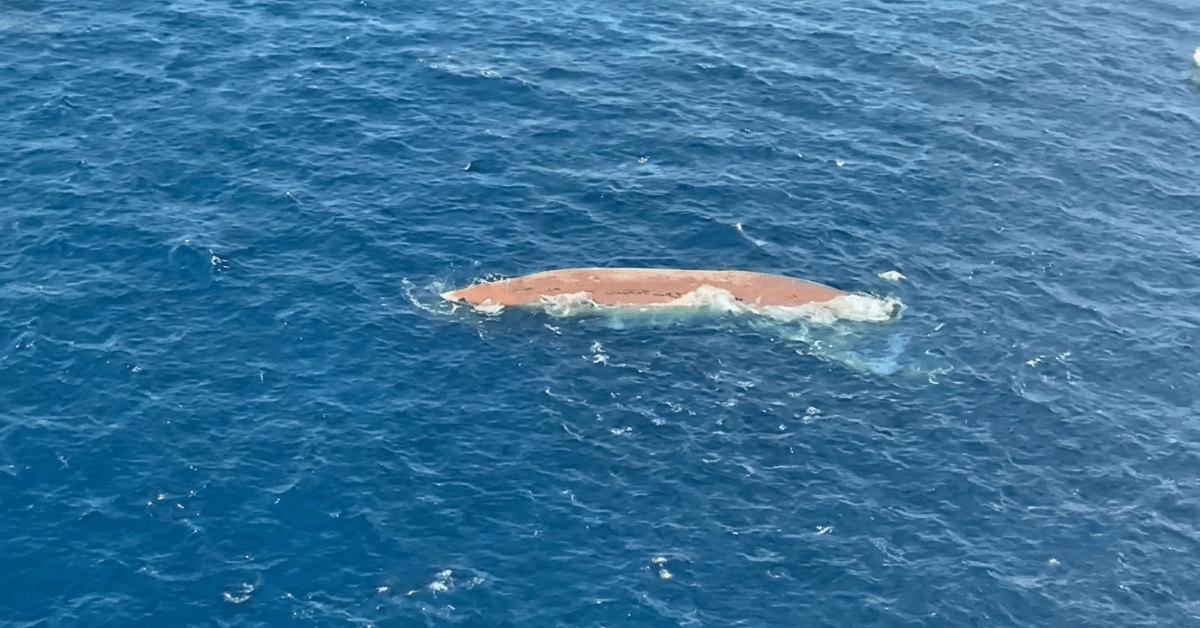
A tanker carrying up to 7,000 tonnes of diesel is now floating upside-down off Ibiza, and the fact that we are not yet dealing with a major spill is a matter of luck, not preparedness. The *Med Emre* capsized on the night of November 25, leaving one seafarer dead and six others injured, while Spanish authorities scrambled to activate a level 2 maritime pollution contingency plan, just one step below the highest alert. For an audience that follows Genetic data reveals extinction risk rising in the deep ocean's hidden refuge and Atlantic Asphalt remains under judicial arrest as liability cap seeks validation, this incident is a stark reminder that the ocean's most fragile ecosystems, like Ibiza's UNESCO-listed Posidonia seagrass meadows, remain one regulatory failure away from devastation.
The diesel has not yet breached the tanker's double hull in a significant way, and the thin film that appeared on the surface has already dissipated. That is good news, but it is not a strategy. Diesel evaporates faster than crude oil, but it remains acutely toxic to marine life while it lingers. The seagrass meadows of the Balearic Sea, which store carbon and provide nursery habitat for dozens of species, cannot withstand a sustained pulse of hydrocarbons. The double-hull design mandated after disasters like the *Prestige* spill in 2002 likely prevented a catastrophic release here, but the vessel is still partially submerged and inverted, and its cargo remains a threat until it is fully removed or secured. The fact that Spain's merchant marine authority escalated to level 2 within hours shows that the institutional memory of the *Prestige* disaster is still sharp, but institutional memory is not the same as real-time ocean intelligence.
This is where our readers' expertise becomes directly relevant. We track the integration of real-time monitoring, empirical data, and climate indicators because these tools are what separate a contained incident from an uncontrolled crisis. In this case, authorities are relying on aircraft overflights and a pollution response vessel to inspect the area. That is a reactive posture. A proactive system, one that uses calibrated sensors, autonomous platforms, or satellite-based detection, could have measured the slick's composition and trajectory within minutes, not hours. The difference between a level 2 alert and a level 1 may well be the difference between having validated data on hand and waiting for a visual inspection. The *Med Emre* was built in 2019 with modern safety features, yet its capsizing still produced a gap in situational awareness that only luck has filled so far.
The concrete takeaway is this: the maritime industry has spent decades engineering harder hulls, but it has not yet invested equally in building a transparent, integrated data ecosystem around those hulls. We do not know what caused the *Med Emre* to list to 90 degrees and capsize. That information may emerge from the investigation, but it should not take an accident for us to demand it. Every tanker transiting UNESCO-protected waters should be feeding real-time stability, cargo, and position data into a shared monitoring framework, not as a regulatory aspiration, but as an operational baseline. The next vessel to capsize may not have a double hull. The next slick may not evaporate. We should watch the Balearic Sea response closely: how quickly the remaining diesel is removed, whether the seagrass beds show measurable damage in the coming weeks, and whether the investigation yields a clear, empirical cause. Those answers will tell us if we learned anything from the *Prestige*, or if we are simply waiting for the next alarm.