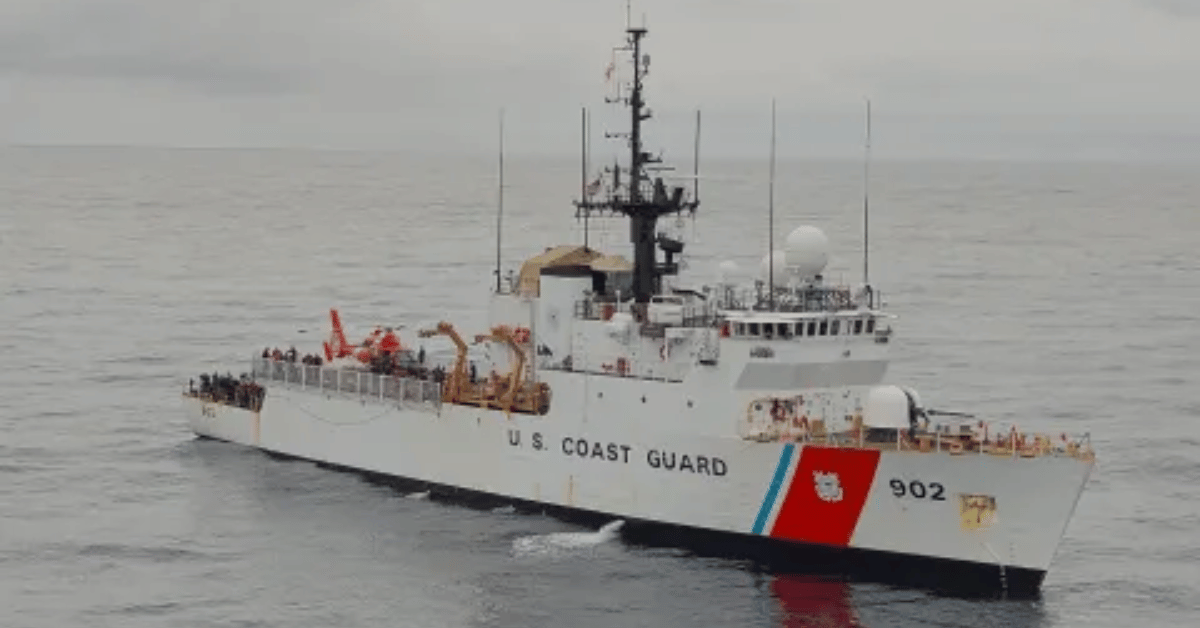
The U.S. Coast Guard's recent interdiction of more than 25,000 pounds of cocaine in under a week is not just a law enforcement statistic. It is a measurable data point in the larger equation of ocean security, one that connects directly to the infrastructure and validation work our readers track. When a cutter like the Tampa returns with that weight of contraband, it is easy to focus on the immediate win. But the operational reality is that these interdictions rely on a chain of validated, real-time intelligence and coordinated assets. This is why we read about Alaska’s Base Kodiak to Gain Enhanced Arctic Capabilities with New Pier with a specific lens: a $315 million mooring and fuel pier is not merely construction. It is the physical backbone that keeps patrol assets fueled, maintained, and on station, which is precisely what makes a six-day, three-vessel takedown possible in the first place.
The connection between drug interdiction and broader maritime governance is often understated. Seizing cocaine at sea is, at its core, an exercise in persistent domain awareness. It requires integrating radar, human intelligence, and cooperative patrols into a single operational picture. The same integrated data ecosystem that tracks a go-fast vessel can, in principle, monitor illegal fishing, monitor emissions, or observe climate indicators. That is the quiet takeaway here: the infrastructure for ocean intelligence is being built daily, one patrol at a time. We see a parallel in the work being done on Validating Onboard Emissions Data: A Trial for LNG Shipping. That trial, comparing direct emissions measurements against calibrated sensors, is not a separate concern. It is the same empirical discipline applied to a different threat. If we can trust the data on a ship's emissions, and we can trust the coordinates that lead to a drug bust, then we are building a maritime domain where decisions are driven by verified facts, not guesswork.
This is where our take turns pointed. The Coast Guard's success is commendable, but it should not lull us into treating interdictions as an endpoint. Every pound of cocaine seized is a symptom of a deeper challenge: the ocean is being used as a highway for illicit economies, and our response must be as dynamic as the traffic. The recent news out of Indonesia, where the nation launched its first aircraft carrier, Indonesia Launches First Aircraft Carrier, Signaling Naval Expansion, reminds us that naval capability is expanding across the globe. That is not inherently alarming, but it does mean that the U.S. Coast Guard cannot operate in isolation. Interdictions like this one are only sustainable if they are backed by forward-deployed infrastructure, interoperable allies, and a commitment to sharing validated intelligence across borders.
What would we tell a reader who asks what this means in practical terms? We would say this: watch the logistics, not just the headlines. The $315 million pier in Kodiak and the emissions validation trials are not side notes. They are the calibrated instruments that make future interdictions more likely and future ocean governance more honest. The specific takeaway to quote: "A drug bust at sea is only as good as the data pipeline that supports it, and that pipeline is getting stronger with every validated sensor and every new mooring." The open question we are left with is not whether we can keep seizing cocaine. It is whether we are investing in the integrated ocean intelligence ecosystem fast enough to stay ahead of the traffic. That is the number we will be watching.