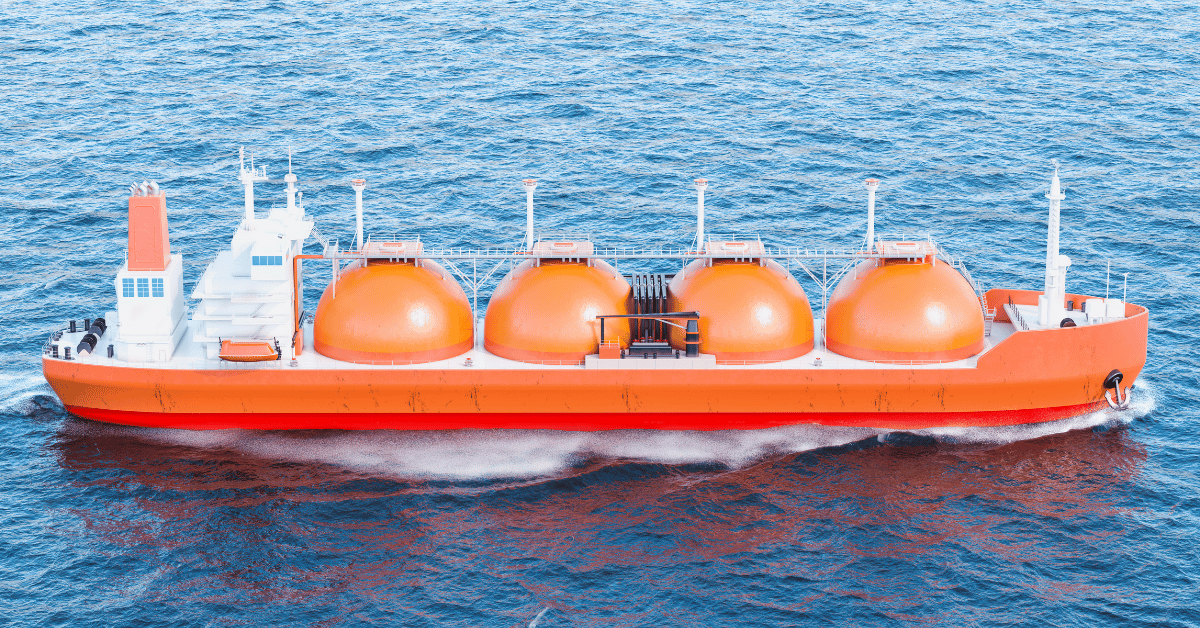
The maritime industry has long operated on a paradox: we demand precise emissions data from ships, yet we rarely verify the instruments producing that data against a trusted baseline. The new trial announced by Lloyd's Register, Seapeak, Kongsberg Maritime, and Tunable directly confronts this gap. By equipping a new LNG carrier with continuous emissions monitoring systems (CEMS) and comparing direct CO₂ measurements against established, peer-reviewed datasets, the project moves beyond assumption and toward empirical validation. This is not a marketing exercise. It is a necessary calibration of trust.
For our readers, this trial matters because it addresses a practical weakness in the current system. Most emissions reporting relies on fuel consumption calculations or periodic spot checks. Those methods have limits. A continuous, onboard measurement can capture real-world variability, but only if the sensor itself is accurate. This trial is designed to prove that accuracy in the field, not just in a lab. It connects to a broader theme we have covered, such as the operational realities of Alaska’s Base Kodiak to Gain Enhanced Arctic Capabilities with New Pier, where infrastructure investments are similarly tied to long-term strategic readiness. Here, the investment is in data integrity, which is equally foundational.
The choice of LNG as the test case is not incidental. LNG is often positioned as a transitional marine fuel, and its climate credentials hinge on methane slip and complete combustion. If the CEMS can reliably measure CO₂ across a range of engine loads and sea states, it gives operators a clearer picture of where the real emissions are, not just where they should be. This is the kind of integrated data ecosystem that should underpin future regulations. We would tell a reader who asks about this: watch how the trial handles the gap between measured and calculated figures. That delta will reveal the true uncertainty in current reporting, and it will likely influence how regulators treat onboard monitoring in the future.
The practical takeaway from this trial is direct: validated onboard sensors could become the new standard for emissions reporting, giving charterers and regulators a more reliable basis for decisions. This is not about trusting the technology blindly. It is about verifying the tools we already rely on. As we have seen with Maritime Interdictions Yield 25,000 Pounds of Cocaine, Supporting Ocean Security, operational success depends on verifiable action, not just stated intent. The same logic applies here. One specific detail to watch: whether the trial publishes its calibration data against the established benchmarks, and whether the margin of error shrinks enough to make CEMS a credible default for fleets worldwide. That will be the measure of whether this trial moves from a one-ship experiment to a replicable standard.