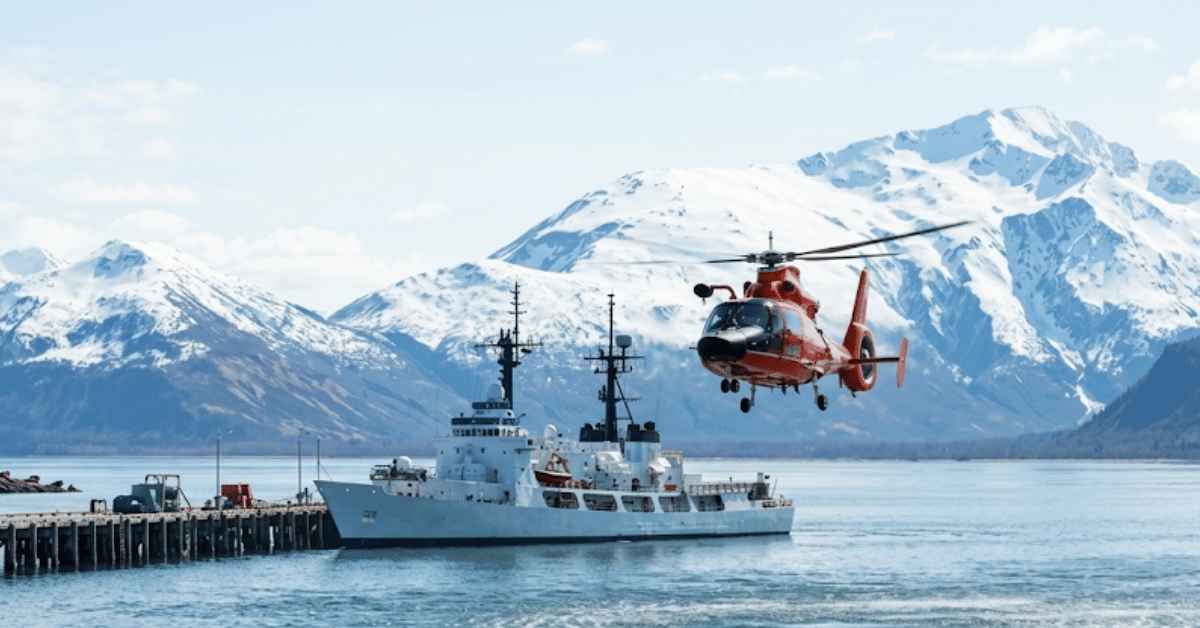
The U.S. Coast Guard's decision to invest $315 million in a new cutter mooring and fuel pier at Base Kodiak is a statement about the next decade of Arctic operations. This is not merely an infrastructure upgrade; it is a calibrated acknowledgment that the United States is now a persistent Arctic actor, not a periodic visitor. The investment signals a shift from reactive patrols to a sustained, year-round posture in a region where the margin for error is measured in nautical miles and response time. For our readers, this is the difference between a policy paper and a physical capability that anchors itself in the water.
We see this move not in isolation but as part of a broader global recalibration. Russia's recent efforts to fund icebreakers for the Northern Sea Route through export revenues, as reported in Russia Calibrates Export Revenue for Northern Sea Route Icebreaker Fleet, and the operational launch of the Vostok project's Arctic oil exports detailed in Vostok Project Launches Arctic Oil Exports Amid Geopolitical Shifts, demonstrate that the Arctic is no longer a peripheral concern. It is a theatre of economic and strategic competition. Base Kodiak's new pier is the U.S. counterweight to those developments. It provides a forward-deployed refueling and maintenance point that extends the operational reach of our cutters, reducing their transit time to the Bering Strait and beyond. This is the kind of practical, measurable advantage that matters when you are monitoring climate indicators and enforcing maritime law in a region that is opening up faster than the rules can be written.
The strategic implication for our readers, particularly those in the maritime and research communities, is that logistics are the new front line. The era of occasional scientific voyages and symbolic flag-waving is over. What we are witnessing is the construction of an integrated data ecosystem, where a pier in Kodiak is a node in a network that spans from orbit to ocean floor. The Coast Guard is not just building a pier; it is building the physical backbone for a persistent ocean intelligence capability. This is why we would push back on any notion that this is a simple "bricks and mortar" story. It is a direct response to the reality that the Arctic's ice is retreating, and with it, the line between national security and environmental stewardship is blurring.
The concrete point to watch is the execution timeline and the integration of this facility with existing cutter schedules. A pier is only as valuable as the vessels it can service on time. If this investment reduces the time our cutters spend in transit and increases their time on station, then it is a force multiplier. If it does not, it is a costly berth. We would tell a reader asking about this to track the operational tempo reports from Base Kodiak over the next 24 months. The takeaway here is clear: the United States is finally building the hardware to match its rhetoric, and the Arctic will be safer for it because of this measured, tangible commitment.