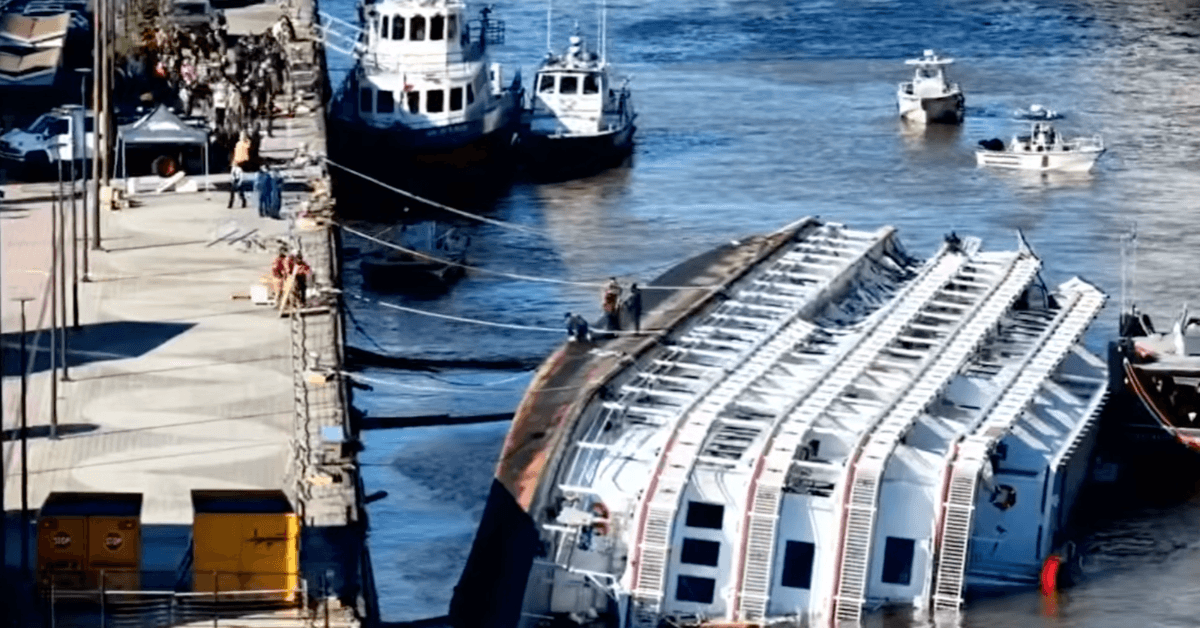
The Mississippi River collision that capsized the *American Heritage* and sent 32 people to hospitals on November 13 was not a random accident, it was a foreseeable systems failure. A tanker that suffered a loss of steering struck a docked riverboat full of disembarking passengers, and the fact that no one died is, as New Orleans Mayor Helena Moreno called it, a "miracle on the Mississippi." We cannot rely on miracles. This incident, coming just one day after a cargo vessel collision on the Delaware River disables bridge crossing, signals a pattern in which basic navigational safeguards are failing at critical moments. For our readers, researchers, policymakers, and maritime professionals, the practical question is not who to blame but what measurable, empirical gaps in vessel control and waterway management allowed this to happen.
The facts are stark. The Marshall Islands-flagged tanker *Atlantic Asphalt* had a local river pilot on board and had just passed under the Crescent City Connection bridge when it veered toward the riverfront. The Coast Guard sector commander stated the tanker appeared to have suffered "some type of loss of steering." That is not a diagnosis; it is an admission that we lack calibrated, real-time data on what went wrong. Meanwhile, the decommissioning of USS Enterprise begins in Mobile Bay safety zone reminds us that even the most complex vessels require meticulous oversight during transitions. A tanker navigating a congested urban river should not be a guessing game. The National Transportation Safety Board and Coast Guard are investigating, and Louisiana Governor Jeff Landry has promised changes. But without integrated data ecosystems that track steering integrity, propulsion status, and pilot communications in real time, we will continue to react to disasters rather than prevent them.
What this means for our readers is that the gap between ocean intelligence and operational reality remains dangerously wide. We have peer-reviewed research on vessel maneuvering, longitudinal studies on waterway congestion, and validated climate indicators that predict more volatile river conditions. Yet none of that empirical knowledge prevented a docked riverboat from being struck while passengers were still walking off. The *American Heritage*, built in 2015 and renamed in 2022, is now mostly underwater. The 87 people who got off before it capsized were lucky. The 30 passengers and two police officers hospitalized were injured. The volunteer boat crews and firefighters who extended ladders from the dock performed heroically, but heroism is not a substitute for systemic reliability. The Coast Guard extends medical support to crew near Vieques shows they can respond effectively when emergencies happen; we need them to be equally effective at preventing emergencies from happening in the first place.
One specific detail to watch: the tanker's steering failure occurred after it passed under the Crescent City Connection bridge, a fixed infrastructure point where current and traffic patterns are well documented. Investigators should be able to reconstruct exactly what changed in those moments. If the answer is a mechanical failure that could have been caught by a mandatory pre-transit inspection, then the takeaway is clear: we need enforceable, real-time monitoring of steering systems on every commercial vessel entering constrained waterways. That is a concrete, measurable step. The *American Heritage* capsized in minutes. The next vessel may not have a miracle waiting.