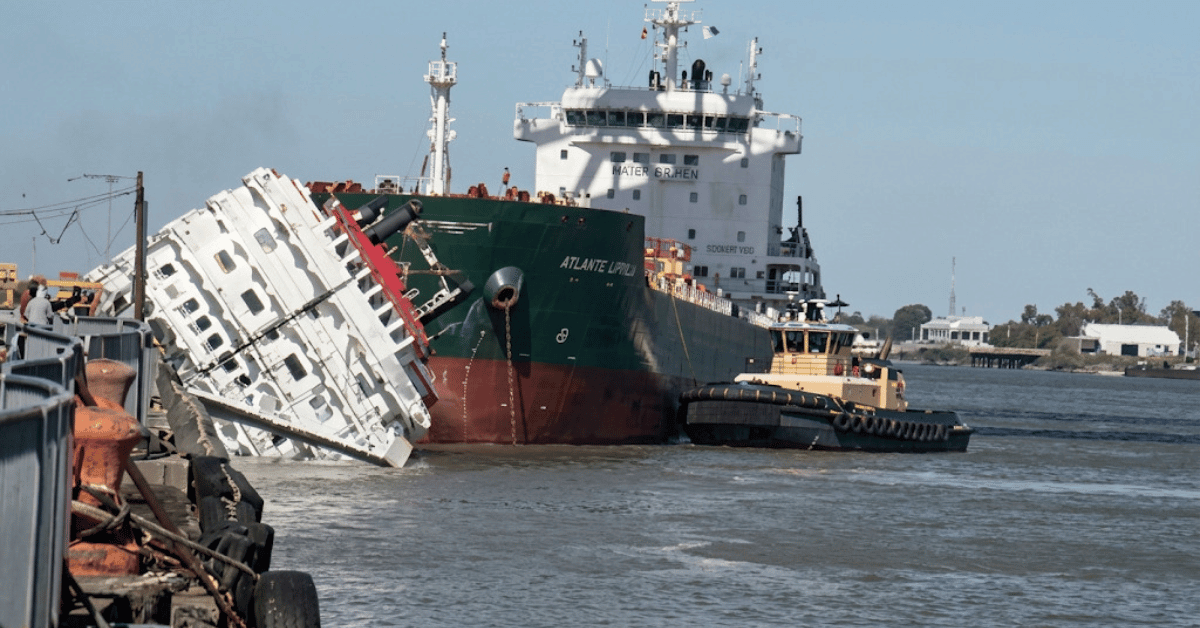
Captain Leonard Stewart's decision to stay on the bridge of the *American Heritage* as it capsized, injured and refusing medical treatment until every passenger and crew member was accounted for, is not merely a story of individual heroism, it is a case study in what operational discipline looks like under catastrophic pressure. This is the kind of real-world data point that our integrated data ecosystem should be calibrated to capture, because it tells us something measurable about human factors in maritime safety that no simulation can replicate. The Port of New Orleans Pursues Federal Liability Action After Mississippi River Collision will rightly examine the tanker *Atlantic Asphalt*'s stuck rudder and the chain of mechanical failures, but the captain's actions on the *American Heritage* force a parallel question: how do we validate that crew training prepares individuals to make split-second, life-preserving choices when systems fail?
The empirical evidence from this incident is stark. According to New Orleans Mayor Helena Moreno, Stewart remained on the bridge while the vessel rolled over, kept the ship alongside the dock as long as possible, and refused evacuation until he had located every person aboard. The cruise line credited him and his crew for the quick evacuation that got more than 80 people off before the overturn, and roughly 100 ended up in the Mississippi River, yet everyone survived. This is not a story about a perfect outcome; eight people remained hospitalized the following day, two in serious condition. But it is a story about a leader who treated his post as a calibrated instrument of last resort, not a place to abandon. For our readers, researchers, policymakers, maritime operators, the takeaway is concrete: emergency protocols are only as strong as the people executing them, and Stewart's behavior validates that longitudinal investment in crew discipline pays off in the minutes that matter most.
This collision also underscores the fragility of the riverine infrastructure that our climate indicators track as increasingly volatile. The *Atlantic Asphalt*, a 520-foot asphalt carrier under Marshall Islands flag, struck a docked passenger vessel because its rudder jammed two minutes before impact, a mechanical failure that cascaded into a capsizing, a $1 million lawsuit against the ship's owner and manager, and a partial river closure with a 500-foot safety zone that could take weeks to resolve. The Mississippi River collision grounds American Heritage, 32 hospitalized after tanker strike shows how quickly a routine docking turns into a multi-jurisdictional response involving the Coast Guard, local police, and federal investigators. The NTSB's preliminary finding of a stuck rudder is a peer-reviewed-style fact that demands scrutiny: was this a maintenance failure, a design flaw, or a systemic gap in inspection protocols?
What remains to be watched is how the salvage operation proceeds, and whether the legal actions against Nave Shipping SA and Thome Ship Management yield enforceable standards for vessel control systems. The captain's refusal to leave his ship until every passenger was safe is the human anchor in this story, but the mechanical failure that caused the collision is the variable we can still measure and correct.