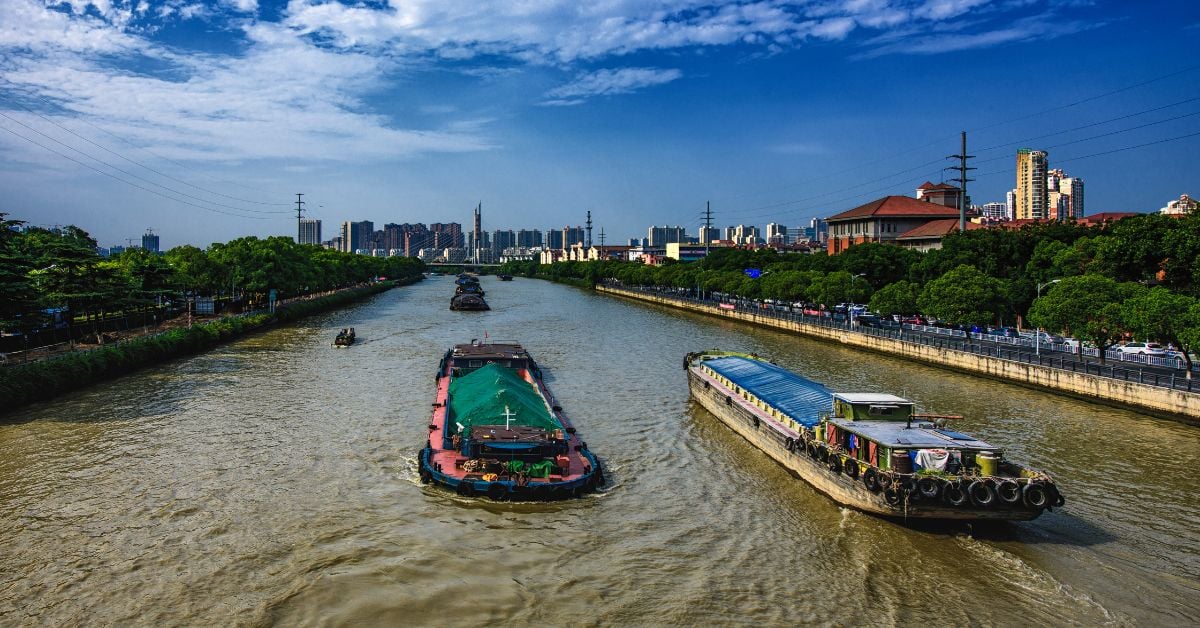
The Pinglu canal is not a small adjustment to regional logistics. It is a re-engineering of how China's interior connects to global markets, and the numbers justify the attention. Designed for ships up to five thousand tonnes, the waterway is projected to save over 5 billion yuan in annual shipping costs. That is not a marginal efficiency gain. It is a structural shift that will change which routes make economic sense for exporters and importers across the region.
This development lands in a moment when Record Port Activity Reflects Rising Chinese Exports Amid Trade Uncertainty is already testing the capacity of coastal gateways. The canal does not compete with those ports; it relieves them. By moving goods directly from inland provinces to Southeast Asian trade lanes, it shortens the distance between production floors and end markets. For a factory in Guangxi or Yunnan, the calculus changes immediately. Rail and truck options remain, but waterborne freight at this scale introduces a cost curve that road and rail cannot match. The practical question for logistics planners is no longer whether to consider the canal, but how quickly to rebalance their modal mix around it.
The timing also matters in a broader geopolitical context. As Integrated Subsea Infrastructure Shifts to Enhance Indian Ocean Connectivity shows, infrastructure decisions are increasingly read as strategic statements. This canal is part of the same pattern, though its effects are more immediate and measurable. It is not about cables or data routing. It is about physical goods moving in real time, and the cost savings are verifiable. At the same time, the pressure on existing maritime chokepoints is not letting up. Gulf of Oman STS Transfers Max Out Amid Rising Saudi Oil Exports reminds us that capacity constraints are not hypothetical. When ship-to-ship transfers hit their ceiling, the system finds another pressure point. The Pinglu canal offers one answer to that pressure, but it also raises a question: what happens when the next constraint appears?
Our take is straightforward. This canal is a validation of integrated waterway planning, but it is also a signal to ports, shippers, and policymakers across Asia that inland connectivity is no longer a secondary consideration. It is a primary lever for competitiveness. For our readers, the actionable insight is this: track the operating schedules and draft limits of the Pinglu canal as they come online. The first movers who integrate this route into their supply chain models will have a measurable cost advantage. The ones who wait will be playing catch-up on a route that is already reshaping the map. The detail to watch is the actual toll structure and whether it stays aligned with the projected savings, because that will determine whether the canal becomes a genuine alternative or just another headline.