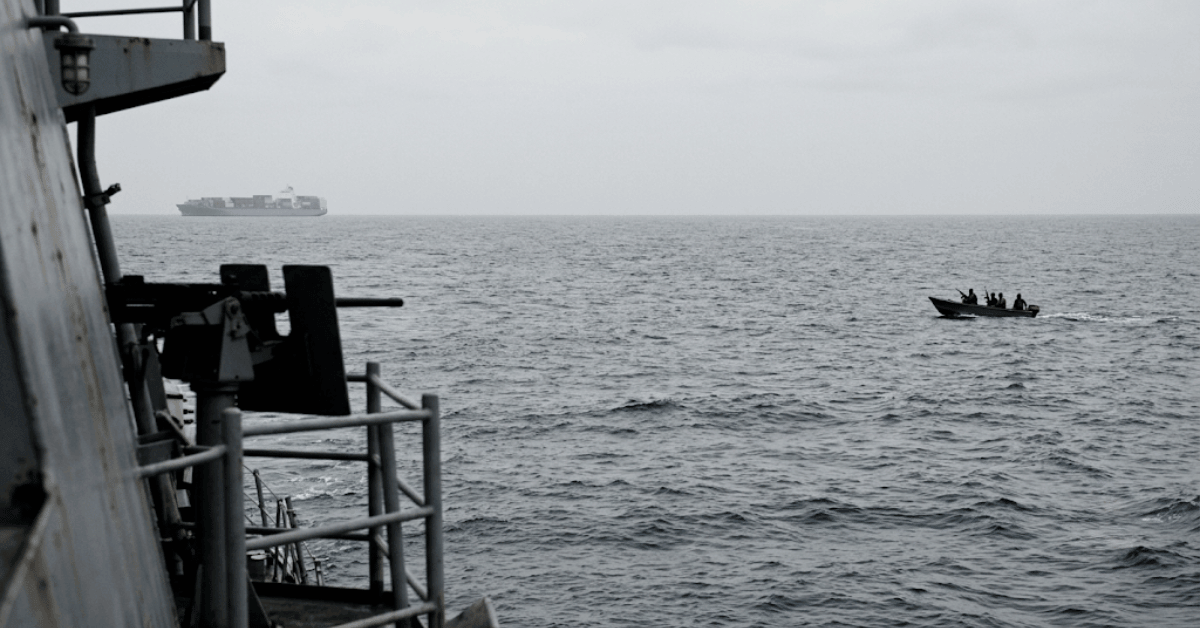
The decision by Ethiopia, Yemen, Djibouti, and Somalia to strengthen maritime cooperation is not a headline about a new treaty; it is an acknowledgment that the Red Sea's security architecture has been outpaced by its threats. Piracy, trafficking, and regional tensions are not abstract concerns. They are operational realities that have already tested the capacity of coastal states, as seen in the recent interception of a hijacked, US-sanctioned oil tanker by Puntland forces after a 48-hour operation. That incident was a reminder that response times and shared protocols matter as much as patrol vessels. When nations choose to integrate their ocean intelligence efforts, they are effectively choosing to make the sea a more predictable environment for lawful commerce and a more hostile one for those who operate outside it.
This move should be read alongside the broader pressures shaping the region's waterways. The Gulf of Oman STS Transfers Max Out Amid Rising Saudi Oil Exports shows a system running at capacity, where every delay or diversion has compounding effects on global energy flows. Meanwhile, Phased Negotiations Aim to Ease Restrictions on Strait of Hormuz suggest that diplomatic channels remain open even as military posturing continues. What connects these stories is the simple fact that ocean intelligence is not just about surveillance; it is about predicting friction points before they become disruptions. A tanker idling because of a security alert in the Red Sea is not just a regional problem. It is a data point in a global system that thrives on predictability.
For our readers, the practical takeaway is that integrated maritime security is moving from a policy aspiration to a measurable capability. The value here is not in the declaration itself but in what it enables: shared awareness of vessel movements, suspicious activity patterns, and the ability to calibrate responses in real time. We would tell anyone watching this space to focus less on the rhetoric of cooperation and more on the mechanisms being built to support it. Are they standardizing reporting formats? Are they conducting joint exercises that stress-test their communication? Are they integrating data from commercial and military sources? The difference between a press release and a functioning data ecosystem will be visible in the next incident that requires a coordinated response, not the one that has already passed.
The question that remains open is whether this cooperation can outpace the very tensions that inspired it. Ethiopia, Yemen, Djibouti, and Somalia do not share a uniform threat assessment, and their bilateral relationships carry their own weight. But the alternative to deeper integration is the status quo, where information stays siloed and every suspicious approach is a guessing game. The specific thing to watch is whether these nations move beyond intelligence sharing toward joint operational planning, because that is where the real friction will surface. If they can calibrate their overlapping interests into a coherent picture, the Red Sea becomes a case study in what happens when ocean intelligence is treated as a shared asset rather than a national secret. If they cannot, the next hijacking will not be a test of their resolve; it will be a measure of how much they learned from the last one.