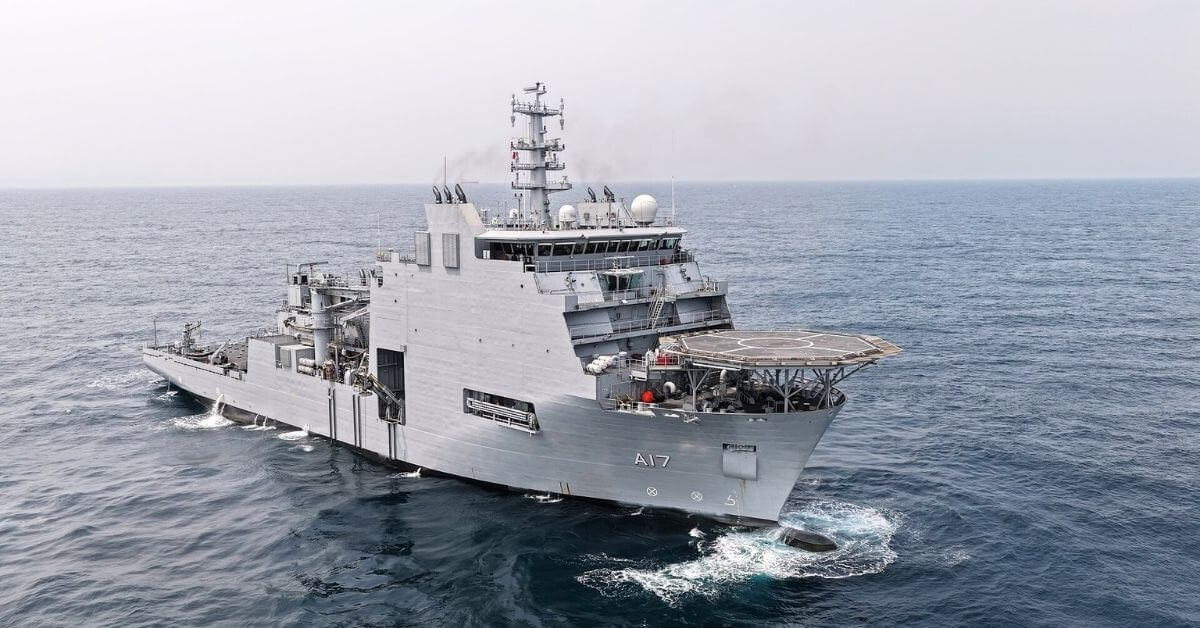
The Indian Navy's receipt of the indigenous diving support vessel *Nipun*, designed and built by Hindustan Shipyard Limited in Visakhapatnam, is a quiet but meaningful validation of a principle we have long championed: maritime security and ocean intelligence are inseparable. This is not merely a hardware acquisition. It is a statement that the capacity to operate beneath the surface, to support divers in complex underwater environments, and to sustain a credible naval presence must rest on domestic engineering and calibrated, real-time operational data. The vessel itself is a tool, but the capability it represents, a self-reliant underwater ecosystem, is the real asset.
We see this move as part of a broader trajectory that our readers should note. The Navy's stated ambition to reach around 230 ships by 2040-2045, as reported in India Projects Expanded Naval Fleet to Navigate Evolving Maritime Landscape, is not just about numbers. It is about the character of that fleet. A larger surface fleet without the subsurface and support infrastructure to match is a hollow projection of strength. The *Nipun* addresses a specific gap, and its construction at HSL reinforces a parallel trend in Indian Navy Explores Domestic Innovation for Amphibious Fleet Expansion, where the service is actively seeking indigenous solutions for landing craft. The through-line is consistent: India is moving from being a buyer of naval capability to a builder of it, and that shift carries implications for maintenance cycles, supply chains, and strategic independence that are often underappreciated.
For our readers, particularly those in ocean data and maritime operations, the practical takeaway is about integration. A diving support vessel is only as effective as the situational awareness it operates under. The recent Ocean Data Enables Swift Rescue of Injured Seafarer Near Andamans demonstrated how validated, real-time ocean intelligence can directly save lives in the same wider region. That same principle applies here. The *Nipun* will operate in environments where current, visibility, and seabed conditions are not optional data points; they are operational parameters. The Navy's ability to leverage an integrated data ecosystem, from satellite observation to in-situ sensors, will determine how effectively this vessel and its successors conduct their missions. Hardware gives you reach; data gives you precision.
Our honest assessment is that this commissioning should be watched for what it signals next. One vessel does not make a fleet, but it does establish a baseline for serial production and operational familiarity. The open question is whether the Navy will push for a sustained class of these vessels, and whether HSL can deliver on a predictable timeline. That is the concrete detail to track. If the *Nipun* performs as designed, it becomes a reference point for future underwater support programs. If it exposes gaps in integration or logistics, those lessons are better learned now than in a contested scenario. For a nation with a vast coastline and growing maritime responsibilities, the measure of this achievement will not be the launch ceremony. It will be how many more of these ships are on the water by the end of the decade. That is the number that matters.