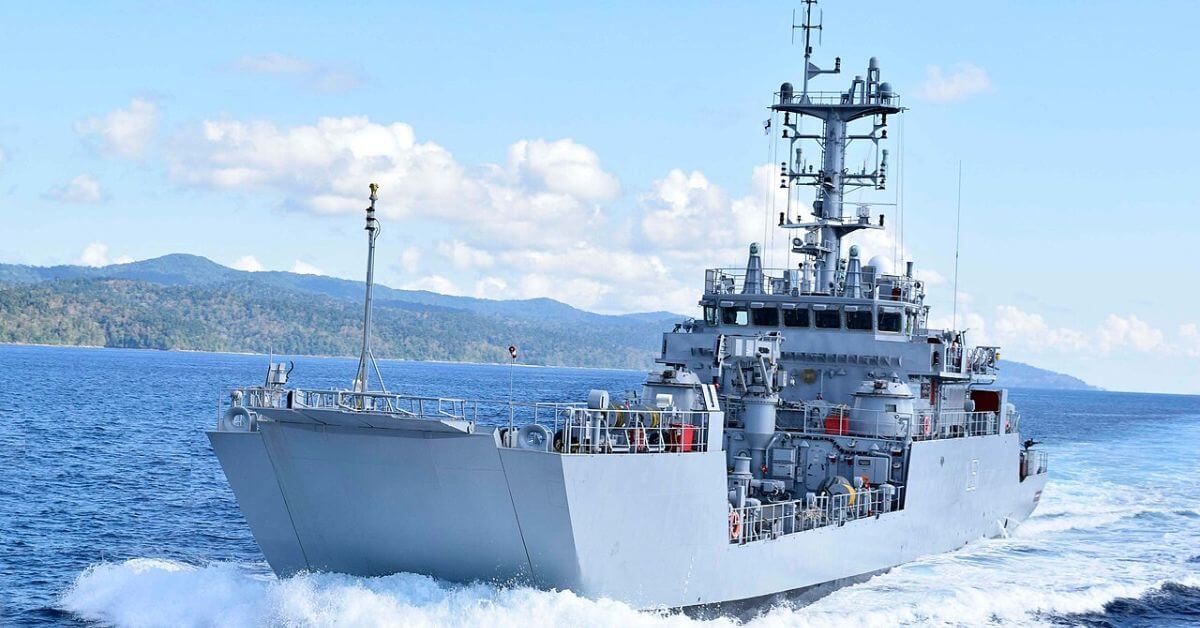
The Indian Navy's Request for Information for six new Landing Craft Utility (LCU) Mk V vessels is a quiet but telling signal. It is not the loudest headline in naval affairs, but it speaks directly to how India intends to operate in the coming decades. The RFI's focus on domestic shipyards is the real story here. This is not merely a procurement exercise; it is a statement about industrial capacity and strategic self-reliance. The Navy is looking to build a fleet that can move quickly, land where needed, and sustain operations without waiting on external supply chains. That matters.
We see this move as part of a broader pattern. The service's projection of roughly 230 ships by 2040-2045, as covered in our related piece on India Projects Expanded Naval Fleet to Navigate Evolving Maritime Landscape, reinforces the point. A larger fleet without reliable, homegrown logistics is a hollow ambition. The LCU Mk Vs are not just hulls; they are the connective tissue for amphibious operations across the Andaman and Nicobar archipelago and beyond. When we look at the recent rescue of an injured seafarer near the Andamans, enabled by ocean data, the operational value of having responsive, locally built vessels becomes concrete. That rescue was a reminder that maritime readiness is often measured in minutes and nautical miles, not just tonnage.
Our take is straightforward: this RFI should be read as a bet on integration. The Navy is not just buying ships; it is cultivating an industrial ecosystem. But the question we would put to our readers is whether Indian shipyards can deliver on schedule and to specification. The LCU Mk V program is a test case. If domestic yards can meet the Navy's calibrated performance and reliability standards, the service gains a model for future acquisitions. If not, the gap between stated ambitions and operational reality will widen. We are not looking at a dramatic shift, but rather a measured step in a longer journey. The LCU Mk V is less about a single platform and more about validating a method.
What should you watch for? The specific capabilities demanded in the final tender, particularly around propulsion redundancy, payload capacity, and sea-keeping in rough weather. These details will tell you whether the Navy is prioritizing simple, robust designs or pushing for more complex systems that may be harder to sustain. For those tracking maritime developments, this is a practical indicator of how seriously India takes its role in the Indian Ocean region. We would tell any reader who asks: do not mistake a routine RFI for a minor update. This is the first concrete test of whether the domestic shipbuilding ecosystem is truly ready for the strategic burden it is being handed. The next twelve months will reveal whether that readiness is real.