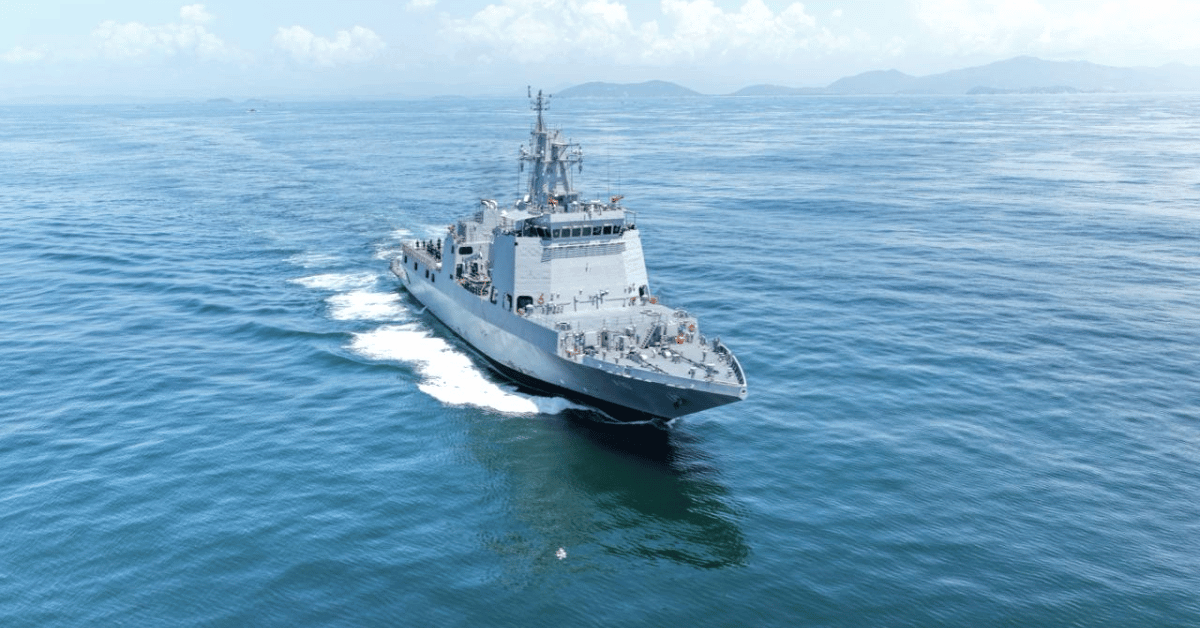
The commissioning of *Samarthak* at Karwar on 16 October 2026 is a concrete step toward maritime self-reliance, and we see it as a validation of a longer arc: the Indian Navy is no longer just buying platforms, it is building a utility class designed for the realities of the Indo-Pacific. This is not a ceremonial milestone. It is an operational statement about how India intends to patrol, respond, and project presence without depending on foreign supply chains.
What matters practically is the ship's versatility. *Samarthak* is not a single-mission vessel. It is a maritime surveillance platform, a mothership for unmanned systems, a hospital conversion, and a salvage and HADR asset, all in one hull. That breadth matters for a navy that must cover vast distances with finite resources. The integrated combat suite, built with indigenous sensors and weapons, means the crew is training on systems they will actually use in conflict, not adapt to later. For the region, this is a signal that India's defence industrial base can produce credible, multi-role capability, not just showpieces. The crest, featuring the Indian elephant emerging from the waves, is apt: strength, intelligence, agility, but also the weight of responsibility that comes with operating in contested waters.
We would place this alongside the broader story of India's naval modernisation. INS Vikrant model docks in Thiruvananthapuram as tribute to indigenous naval capability is a reminder that the aircraft carrier programme captured public imagination, but *Samarthak* represents the quieter, no less critical workhorse role. Carriers project power; utility ships sustain operations. The contrast is useful: one is a symbol, the other is a solution. And while Black Sea cargo vessel lost in attack leaves 11 seafarers missing shows how quickly commercial shipping becomes a casualty in conflict zones, a ship like *Samarthak*, designed for low-intensity maritime operations and salvage, is precisely the kind of asset that reduces the gap between detection and response. Even the recovery of relics from the Century-Old Relics From Britannic Wreckage Offer New Ocean Insights underscores how maritime operations are never only about war; they are about understanding, recovering, and preserving what the sea holds.
Our take is straightforward: *Samarthak* is the kind of ship that makes strategy practical. It does not win headlines the way a carrier does, but it will be present when the situation demands presence without escalation. The motto, "विजयार्थम् एकनिष्ठता", Victory is Our Sole Aim, is ambitious, but the design is realistic. The open question is how quickly the remaining three vessels in this class follow, and whether the Indian Navy will use them to standardise a pattern of forward deployment that other regional navies begin to match. Watch for the first joint exercise where *Samarthak* operates as a mothership for autonomous systems. That will tell us whether this is a platform for today or a template for the next decade.