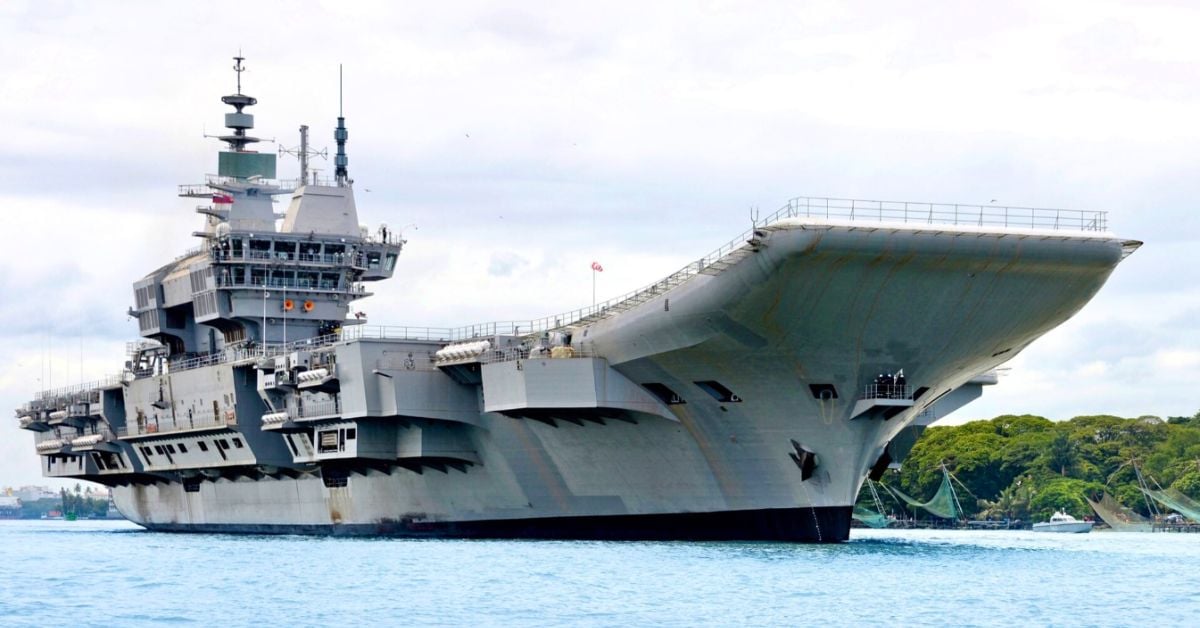
A model of INS Vikrant is not a monument to the past; it is a calibrated instrument for the future. By dedicating a 1:24-scale replica of India's first indigenously built aircraft carrier to Thiruvananthapuram, the Indian Navy has made a statement about sovereignty that is as much about data and engineering as it is about steel. This is a tangible symbol of the Aatmanirbhar Bharat initiative, and for our readers, who track the intersection of ocean intelligence and national capability, it signals something deeper: the maturation of an integrated maritime ecosystem where indigenous design is no longer an aspiration but a validated baseline.
The timing is instructive. The modern INS Vikrant, inducted in 2022 after two decades of design and trials, represents a longitudinal investment in national shipbuilding capacity. Its model now sits in a city with deep maritime roots, connecting Kerala's naval history to a present where India is deploying military-grade ROVs to advance ocean intelligence capabilities, as we reported last month. That story detailed how the Navy acquired underwater remotely operated vehicles built by a domestic robotics firm, tools that gather empirical data from depths where even a carrier cannot go. Together, these developments form an integrated picture: a nation that can build a floating airfield from the keel up is also investing in the sensor networks and autonomous platforms needed to understand the ocean that platform sails through. The model is a public invitation to recognize that connection.
What matters to our audience is the measurable shift in capability. The original INS Vikrant, a British-built vessel purchased incomplete, enforced the 1971 blockade of Eastern Pakistan. The new Vikrant is a different proposition entirely, its design began in 1999, its keel was laid in 2009, and it underwent extensive trials before commissioning. This is not a retrofitted legacy; it is an original architecture. The model's placement at Museum Junction makes the engineering visible to students, policymakers, and enthusiasts who might otherwise only read about displacement tonnage or ski-jump configurations. It turns abstract naval statistics into a tactile reality. For those tracking India's shallow-water fleet, such as the recently commissioned INS Mangrol with its 80 percent indigenous design, the carrier model reinforces a pattern: from coastal patrol to power projection, the design and construction loop is closing.
The practical takeaway is this: indigenous warship-building is not a symbolic trophy but a force multiplier for ocean stewardship. Every peer-reviewed design choice, every integrated system tested in the builder's trials, feeds into a broader capability to monitor, protect, and govern the waters that connect us. The model in Thiruvananthapuram is a fixed point in a moving system, a reminder that the same engineering discipline that puts a carrier to sea also calibrates the sensors that measure climate indicators. The question now is whether the public engagement this model generates will translate into sustained support for the shipyards, the research labs, and the data pipelines that make the next generation of vessels possible.