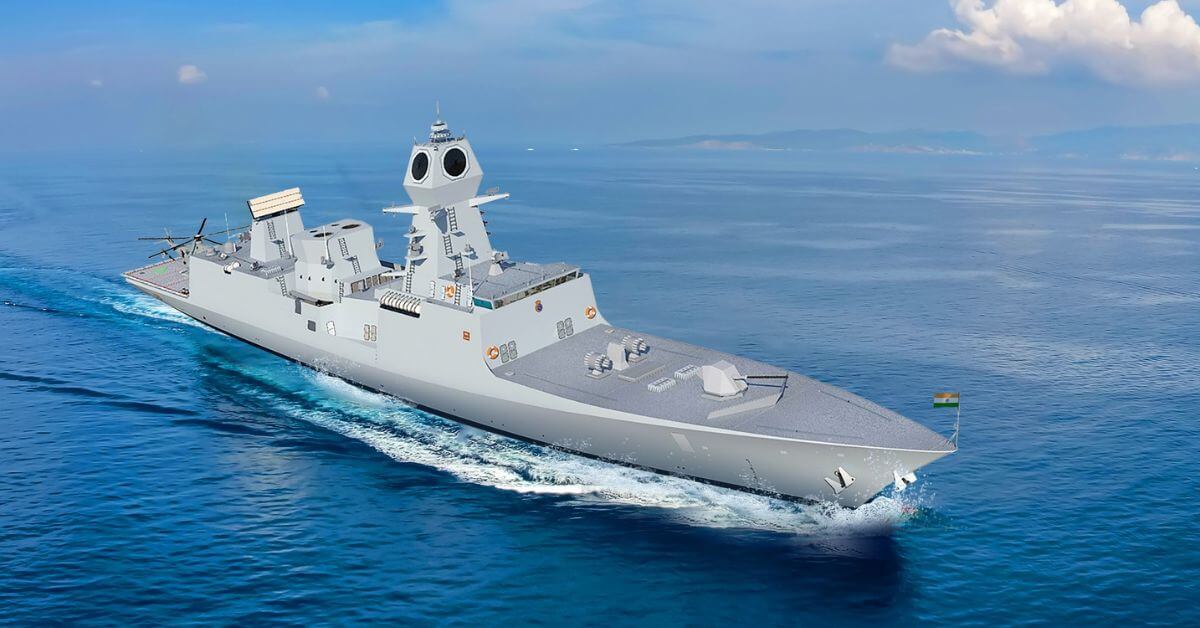
India's decision to build seven next-generation stealth frigates under Project 17B is a measured, strategically coherent move, but the process by which it is being executed matters as much as the hardware itself. By opting for competitive bidding across multiple state-owned shipyards, the Indian Navy is introducing a layer of procedural rigor that should improve cost discipline and delivery timelines, two variables that have historically hampered large naval programs. This is not merely a procurement update; it is a signal that the navy is treating industrial efficiency as a component of combat readiness. For readers tracking global naval modernization, the shift from a nomination route to an open competition among four Category A yards, Mazagon Dock, Garden Reach, Goa Shipyard, and Cochin Shipyard, represents a tangible break from past practice. The navy's stated goal of adding more than 60 warships and submarines over the coming years, as confirmed by Admiral Krishna Swaminathan, makes this procedural evolution essential. The related 28 Firms Selected to Validate Next-Gen Naval Electronic Warfare Systems story shows that the U.S. Navy is pursuing a similar logic, broadening its industrial base through a $7.125 billion contract awarded to 28 companies. Both navies are recognizing that modern electronic warfare and stealth capabilities depend on a distributed, competitive supplier ecosystem, not a single prime contractor.
What makes Project 17B particularly worth watching is the integration of improved stealth and sensor suites with multi-role missile systems capable of engaging air, surface, and subsurface threats. These frigates are designed to be among the most capable surface combatants in the Indian fleet, which means their operational role will extend well beyond territorial defense. The Indian Ocean Region is seeing rising strategic competition, and the navy's push for a larger, more modern fleet is directly tied to the SAGAR-Mahasagar vision of security and growth for the entire region. India's insistence on designing and building these warships domestically, Admiral Swaminathan explicitly called the navy *Atmanirbhar*, or self-reliant, reduces dependence on foreign suppliers and builds long-term industrial knowledge. This aligns with the argument made in Global Shipbuilding Strategy Must Include Foreign Investment for Frigate Fleet, where the U.S. Navy's nominee emphasized the need for foreign investment in American shipyards. India is taking the opposite approach, keeping construction entirely domestic, but the underlying principle is the same: a navy's strength is tied to the health and capacity of its shipbuilding base.
The concrete question that emerges from this announcement is whether competitive bidding will deliver the intended transparency and efficiency without creating friction between yards. Under Project 17A, Mazagon Dock built four Nilgiri-class frigates and Garden Reach built three, with roles assigned by nomination. Project 17B introduces a two-yard model where both yards will compete and share the work, with the lowest bidder selected by March 2027 and the final contract expected by March 2028. That timeline is ambitious, and the real test will be how the navy manages cost-sharing, technology transfer, and quality control across two separate production lines. Readers should watch for how the navy handles intellectual property rights for the stealth and sensor upgrades, and whether the competitive model produces measurable cost savings compared to the nomination route. Those are the data points that will validate whether this procedural shift is a genuine reform or just a new label on an old system.