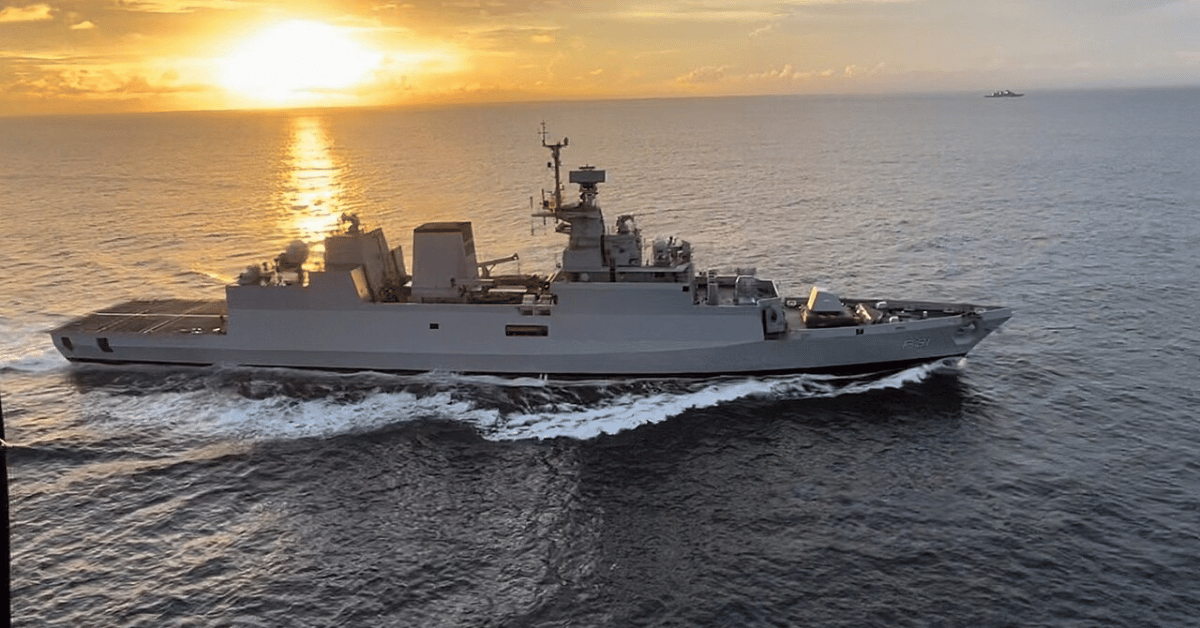
India's decision to acquire eight Next Generation Corvettes is a measured, strategic investment in maritime intelligence, not merely a naval expansion. By committing ₹53,866.50 crore to indigenously designed warships built by Garden Reach Shipbuilders & Engineers and Goa Shipyard Limited, the Ministry of Defence is placing a clear bet on integrated, sovereign capability. This is not about projecting power for its own sake; it is about building a persistent, calibrated monitoring architecture for the waters that sustain global trade and climate stability.
The practical consequence for our readers, researchers, policymakers, and ocean professionals, is a significant expansion of validated, real-time data collection capacity across the Indian Ocean Region. These corvettes, equipped with advanced sensor suites and weapons systems, will operate across air, surface, and sub-surface domains. That means a measurable increase in longitudinal ocean intelligence: continuous tracking of maritime traffic, environmental conditions, and sub-surface activity. This directly supports the kind of integrated data ecosystem that transforms raw observation into climate indicators and actionable security insights. The timing is critical. As noted in our coverage of the INS Kesari Incident Underscores Need for Real-Time Vessel Monitoring, gaps in situational awareness at the dockyard level can cascade into operational vulnerabilities. A fleet of modern corvettes, built for persistent surveillance, addresses that gap at scale.
This project also reinforces a shift toward indigenous manufacturing that has direct implications for ocean science and defence logistics. The corvettes are the first warships designed by the Indian Navy and constructed by Defence Public Sector Undertakings selected through competitive bidding. The anticipated 72 lakh person-days of employment in shipyards and 460 lakh person-days in ancillary industries over the next decade will deepen the domestic supply chain for sensors, materials, and calibration equipment. That is not a peripheral economic note; it is the foundation for self-reliant ocean monitoring. When India greenlit a ₹40,000 crore naval warship project earlier this year, as covered in India greenlights ₹40,000 crore naval warship project to strengthen maritime defence, the emphasis was on strengthening the industrial base. The corvette contract extends that logic, embedding long-term capacity for maintaining and upgrading ocean intelligence platforms without external dependency.
What remains to be seen is how these vessels will be integrated with existing monitoring networks, including satellite-based observation and coastal radar arrays. The press release highlights their role in safeguarding trade routes and conducting anti-submarine warfare, but the deeper question for the ocean data community is whether the sensor data from these corvettes will be shared in formats usable for climate research and marine conservation. A fleet that generates peer-reviewed, empirical data on ocean conditions could become as valuable for science as for defence. The specific detail to watch is the data-sharing architecture that accompanies these vessels. If the Indian Navy treats the corvettes as nodes in an open, integrated data ecosystem, the return on this investment will extend far beyond maritime security.