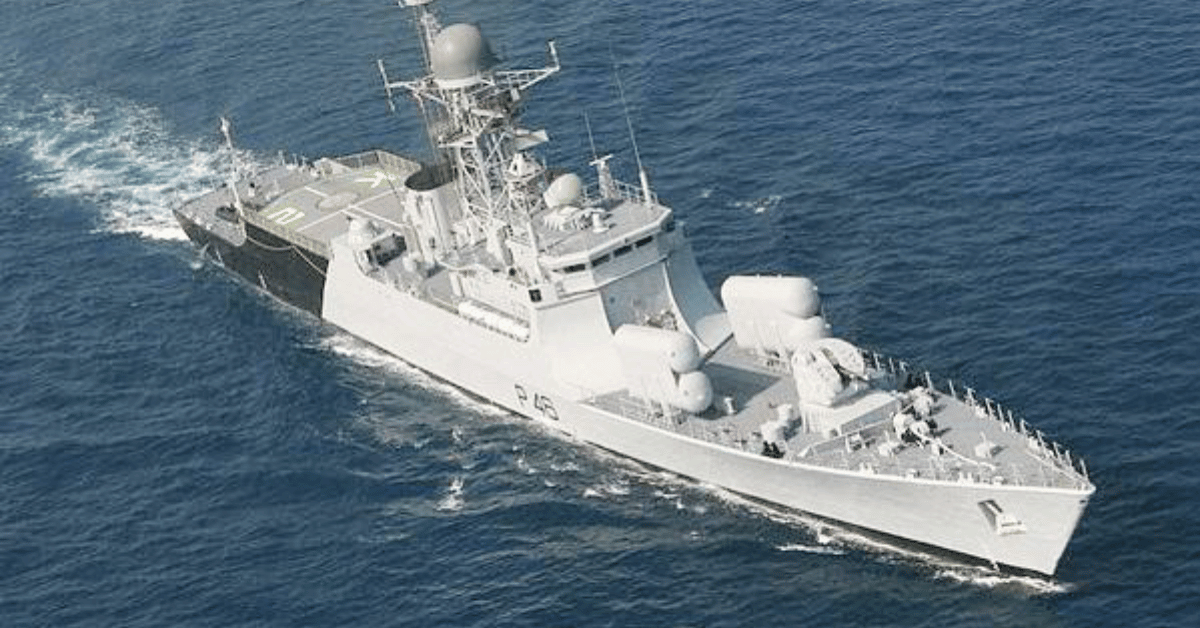
India's $5.6 billion order for eight next-generation corvettes is a measured, necessary response to a fleet that is simply too old to do its job. This is not about projecting power for its own sake; it is about maintaining the basic capacity to monitor, patrol, and respond in the Indian Ocean, a region where the margin for error is shrinking. As GlobalData's fleet analysis makes clear, 41.2% of India's corvette fleet averages more than 30 years of service, and the oldest hulls are already leaving active duty. The new vessels protect fleet numbers first and enhance capability second, a distinction that matters when a navy's primary challenge is keeping enough ships at sea. This renewal also directly supports the kind of persistent ocean intelligence that our readers track closely, whether through commercial shipping lanes or deep-sea research. A related piece on a Hijacked Iranian vessel poses new threat to commercial shipping lanes shows how quickly a single rogue platform can disrupt maritime security, while our coverage of Eight new corvettes strengthen India's ocean intelligence and maritime monitoring frames this procurement as a strategic investment in sustained situational awareness.
The practical reality is that a corvette in its final years of service spends more time in maintenance than on patrol. That is not a theoretical problem. India's Chief of Naval Staff has stated that the People's Liberation Army Navy maintains six to eight combatants in the Indian Ocean at any given time, backed by a large number of research vessels. Meanwhile, Pakistan's Hangor-class submarine program has already demonstrated live anti-ship missile capability in the North Arabian Sea. These are not abstract threats; they are operational pressures that demand hulls capable of long-duration missions. The new corvettes, with their stealth design and multi-role configuration, are built for exactly those tasks, escorting merchant shipping, shadowing foreign warships, and holding a continuous surveillance picture. The decision to build them domestically, through GRSE and GSL, also ensures sovereign control over long-term support, a factor that becomes critical when fleet readiness depends on predictable maintenance cycles rather than foreign supply chains.
What stands out here is the discipline of the procurement strategy. India is not chasing a flashy new capability; it is replacing the oldest vessels on a managed schedule rather than a forced one. The remaining Kora-class ships, commissioned between 1998 and 2004, can now be retired in an orderly way, preserving fleet numbers without a gap. This approach reflects an understanding that ocean intelligence is not just about sensors and satellites, it depends on platforms that can stay at sea, day after day, in all weather. The same logic applies to the growing Chinese survey vessel presence in the region, a topic we explored in our piece on AI-Enhanced Jiaolong Completes Deep-Sea Trials in the Philippine Basin. Persistent underwater research and mapping by state actors is a form of intelligence gathering that cannot be countered by a fleet that is in port for repairs.
The specific consequence to watch is how these eight hulls affect the operational tempo across the Indian Ocean over the next five years. If the new corvettes are delivered on schedule and integrated with India's existing surveillance network, the Navy will have the modern platforms needed to sustain patrols, respond to incidents like the hijacked Iranian vessel, and counter submarine activity without relying on aging ships that can barely leave port. That is a measurable shift in regional maritime balance, and it will be visible in the data long before it makes headlines.