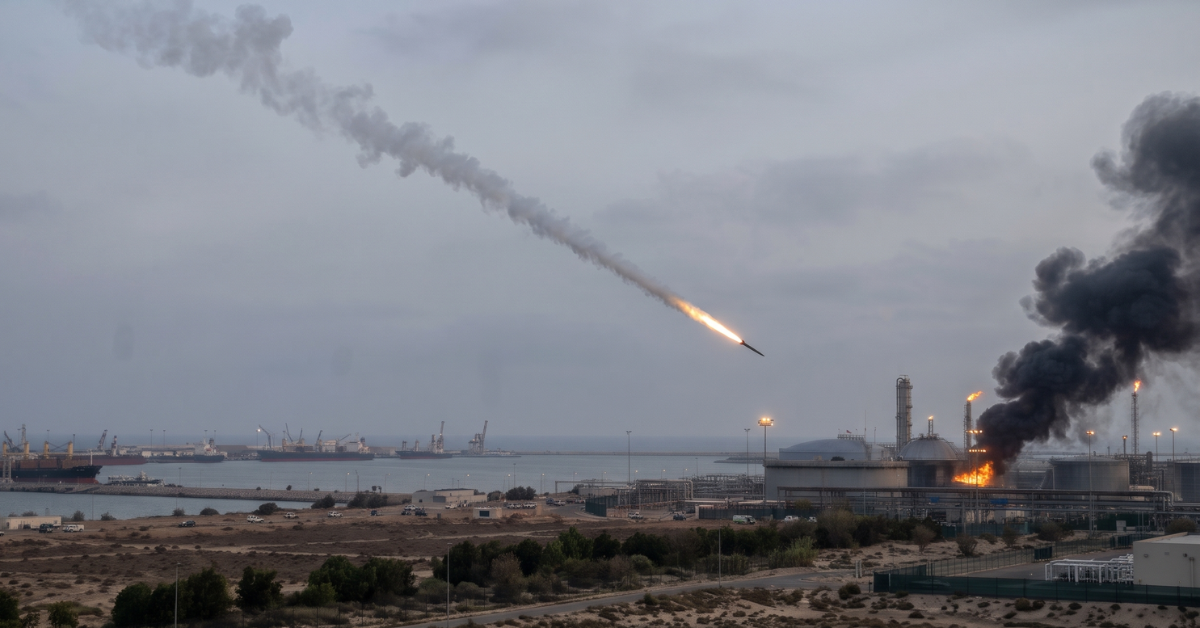
The Houthi strike on Jazan port is not a random escalation, it is a calculated attack on the Red Sea's commercial lifeline, and the international community must treat it as such. This is no longer a peripheral conflict; it is a direct threat to maritime infrastructure that sustains millions. For our readers, researchers, policymakers, and those monitoring ocean-based trade, the practical takeaway is clear: the Red Sea's role as a global shipping corridor is being weaponized, and the data we rely on for supply chain security must now account for kinetic risk alongside environmental and economic variables.
The November 25 projectile that struck Jazan port, causing minor damage but no casualties, followed a drone interception near Jeddah Islamic Port, Saudi Arabia's busiest maritime hub. These are not isolated incidents. They are part of a broader Houthi campaign that explicitly targets Red Sea ports, as seen in the coalition's strikes on Hodeidah port and the subsequent warnings to shipping firms. As we reported in Coalition Strikes Hodeidah Port Following Civilian Evacuation Order, the cycle of threat and response is tightening. The Houthis have named Jeddah as a target, and the coalition has acted on Hodeidah. The question is no longer whether these ports are vulnerable, but how quickly the damage, economic and humanitarian, can be measured and mitigated. The attack on Jazan, located just 60 kilometers from the Yemeni border, underscores the geographic proximity of this threat to critical trade infrastructure. Meanwhile, the unrelated but parallel risk to maritime chokepoints is illustrated by Unverified Report Links Strait of Hormuz Mine to LNG Tanker Fire, reminding us that the region's sea lanes are under multiple, simultaneous pressures.
This escalation demands a recalibration of how we assess risk in the Red Sea. For ocean intelligence systems, the empirical data on port operations, vessel traffic, and cargo throughput must now be integrated with real-time security feeds. A port closure, even a temporary one caused by a projectile strike, disrupts the flow of food, fuel, and humanitarian aid. Hodeidah port alone handles the majority of supplies for northern Yemen's civilian population. Any military action there carries measurable consequences for food security, and those consequences are already being documented. The coalition's evacuation warning before striking Hodeidah, and the Houthi response targeting Jeddah and Jazan, form a feedback loop that our readers should track as a climate indicator of regional instability. The specific detail to watch is the type of projectile used at Jazan. If it proves to be a guided missile rather than a drone, that signals a qualitative shift in the Houthis' ability to threaten port infrastructure from a distance, raising the bar for defensive countermeasures and complicating the calculus for commercial shipping insurers.