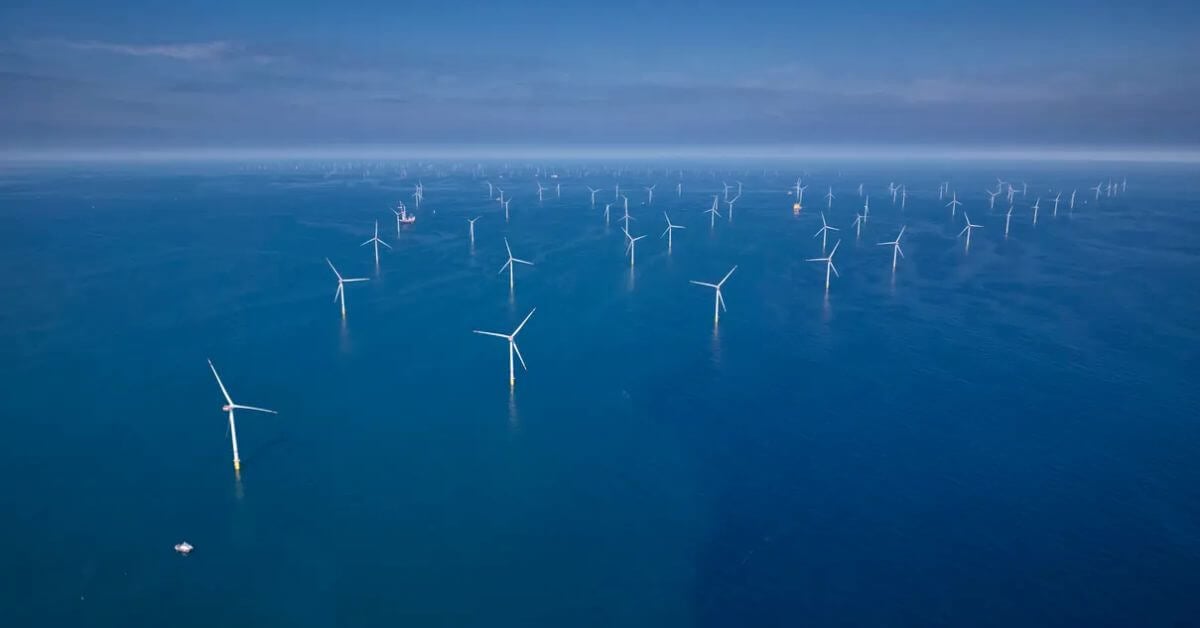
The He Dreiht wind farm's first turbines are now feeding 960 megawatts into the German grid, and that number deserves a moment of calibrated attention. This is not a pilot project or a symbolic gesture; it is a working industrial asset in the North Sea, built to convert measured wind into dispatchable electrons at scale. For our readers, the practical takeaway is straightforward: the infrastructure for ocean-based renewable energy is no longer a proposal or a contested promise. It is operational, and it is delivering.
This development lands in sharp contrast to the policy turbulence documented in our coverage of the Offshore Wind Lease Reversal: Administration Offers $4 Billion Reimbursement, where the Trump Administration has moved to cancel offshore wind projects in favor of fossil fuel development. Germany's decision to push forward with He Dreiht, while the United States retreats on similar infrastructure, creates a measurable divergence in ocean energy strategy. The North Sea is becoming a proving ground for what happens when governments commit to integrated data ecosystems and long-term climate indicators. The wind farm is not just generating power; it is generating empirical evidence that offshore wind can be commissioned, connected, and made reliable under real-world conditions. That evidence is what policymakers on both sides of the Atlantic will reference in the coming years, whether they admit it or not.
What we would tell a reader who asks us about this story is to watch the data trail, not just the megawatt figure. He Dreiht's value will be validated by how its output is monitored, integrated, and shared across the grid. This is where our related piece on Integrating Data Infrastructure with Ocean Ecosystems: A Calibrated Approach becomes directly relevant. A wind farm of this scale generates more than electricity; it generates longitudinal performance data on turbine loads, marine interactions, and grid stability. The question is whether that data will be made openly available to the research community or remain proprietary. Our position is clear: ocean intelligence only improves when it is shared. The more calibrated and peer-reviewed the operational data from He Dreiht, the better informed every future offshore project will be, from the Baltic to the Atlantic.
The concrete point to watch is grid integration speed. Germany has committed to expanding renewable capacity while retiring baseload nuclear and coal. He Dreiht will test whether the grid can absorb variable wind without resorting to emergency back-up generation. If the farm's output is managed with precision, it sets a replicable standard. If not, the gap between installed capacity and delivered energy will widen. We would tell our readers to track the farm's capacity factor and curtailment rates over the next twelve months. Those numbers, not the inauguration ceremony, will tell the real story of whether Germany's offshore bet is a model for the global energy transition or a cautionary tale in engineering ambition.